































Staff Reporter:
At a time when election campaigning has begun and a newly elected government is expected to assume office in less than a month, the interim government led by Dr. Yunus has taken a major policy decision.
Last Wednesday, the National Pay Commission recommended a 100 to 140 percent increase in salaries and allowances for government employees.
However, the number of grades (tiers) has been kept unchanged at 20. The ratio between the lowest and highest salaries has been fixed at 1:8, compared to the previous 1:9.4.
Under the proposal, the minimum basic salary has been increased from BDT 8,250 to BDT 20,000, while the maximum basic salary has been raised from BDT 78,000 to a proposed BDT 160,000.
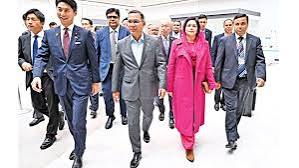
The 23-member Pay Commission, headed by former Finance Secretary Zakir Ahmed Khan, submitted its report with these recommendations to Chief Adviser Professor Muhammad Yunus at the state guesthouse Jamuna on Wednesday.
Finance Adviser Salehuddin Ahmed, Special Assistant to the Chief Adviser Anisuzzaman Chowdhury, Finance Secretary Khairuzzaman Mazumder, and other commission members were present at the time.
After receiving the report, the Chief Adviser said, “This is a very significant piece of work. People have been waiting for this for a long time. From the outline, it appears to be a very creative effort.”
While submitting the report, Commission Chairman Zakir Ahmed Khan said that implementing the recommendations would require BDT 106,000 crore.
He also noted that the government currently spends BDT 131,000 crore on salaries and pensions for 1.4 million government employees and 900,000 pensioners.
Under the proposed structure, the basic salary in the second grade would increase from BDT 66,000 to BDT 132,000.
Similarly, the third grade would rise from BDT 55,500 to BDT 113,000; the fourth from BDT 50,000 to BDT 100,000; the fifth from BDT 43,000 to BDT 86,000; the sixth from BDT 35,500 to BDT 71,000; the seventh from BDT 29,000 to BDT 58,000; the eighth from BDT 23,000 to BDT 47,200; the ninth from BDT 22,000 to BDT 45,100; the tenth from BDT 16,000 to BDT 32,000; the eleventh from BDT 12,500 to BDT 25,000; the twelfth from BDT 11,300 to BDT 24,300; the thirteenth from BDT 11,000 to BDT 24,000; the fourteenth from BDT 10,200 to BDT 23,500; the fifteenth from BDT 9,700 to BDT 22,800; the sixteenth from BDT 9,300 to BDT 21,900; the seventeenth from BDT 9,000 to BDT 21,100; the eighteenth from BDT 8,800 to BDT 21,000; and the nineteenth from BDT 8,500 to BDT 20,500.
Sources at the Finance Division said that after submitting the report for civilian government employees, separate pay commissions would be finalized for the military and judiciary.
For the Cabinet Secretary, the Principal Secretary to the Prime Minister/Chief Adviser, and senior secretaries, the Finance Division will create a grade outside the existing 20-tier structure, which will later be issued through a gazette notification.
The government’s decision, taken just ahead of the election, has sparked strong reactions.
First, a fundamental question has arisen: can a government take such a decision after the election schedule has been announced? A long-standing democratic convention holds that once the election schedule is declared, the government’s activities are limited to routine administration, with its sole responsibility being to ensure a free and fair election.
This government is not even an elected one; it is an interim government. Legal and constitutional experts believe that the current government does not have the authority to take such a decision, and that only an elected government can do so.
Second, such a sweeping salary increase in the public sector would have severe negative effects on the economy. It would create a major crisis in the private sector.
Salary hikes for government employees would inevitably put pressure on private-sector employers to raise wages as well.
Over the past year and a half, the private sector has been in a dire state. Many factories have shut down, and business owners and industrial entrepreneurs are struggling to keep their operations afloat. Export earnings have declined, and even well-established companies are failing to repay bank loans.
There is no new investment. In such circumstances, wage increases in the private sector are virtually impossible. Experts fear that the pressure created by this pay hike could force many private-sector enterprises to close down.
Industrial production is already being severely disrupted by acute shortages of gas and electricity. Due to the lack of uninterrupted energy supply, many factories have had to reduce production or shut down temporarily. This has increased production costs and made it difficult to remain competitive.
As a result, entrepreneurs are losing interest in new investments, industrial expansion has stalled, and no new employment opportunities are being created.
At the same time, high interest rates, policy uncertainty, and rising import costs are deepening the private sector crisis. In this context, the government’s decision will push the private sector into even greater uncertainty.
The garment industry will be the worst affected by this pay scale. The sector is already in a fragile condition. The new pay scale will create momentum for wage hikes for garment workers, triggering movements and protests in garment-producing areas.
The struggling garment industry could face an existential crisis. Not only the garment sector, but every labor-intensive industry may experience instability and worker unrest. How industrial entrepreneurs will cope with such an adverse situation remains a serious question.
Third, the new pay scale will drive up market prices. Research shows that every time a pay scale is announced, prices rise in three phases. The first increase occurs when the pay scale is announced (as happened on Wednesday).
The second occurs when the implementation timeline is set, and the third when employees begin receiving salaries under the new scale. Economic studies indicate that essential commodity prices rise by 50 to 100 percent following each pay scale revision.
There are fears that this time prices may more than double. Already, low-income and middle-class people struggle in the markets, where prices are abnormally high and beyond the reach of most. This decision will further worsen the market situation.
The government has failed to control inflation over the past year and a half, and inflation currently exceeds eight percent. Many fear that inflation could rise to 20–25 percent once the new pay scale is implemented.
Fourth, government revenue has declined at an alarming rate. This year has seen the lowest revenue collection in three decades.
The government is borrowing from banks to meet salary and administrative expenses. Given the current revenue situation, the government lacks the capacity to implement these recommendations. The report does not explain where the additional BDT 106,000 crore will come from.
If the government attempts to increase revenue by raising indirect taxes such as VAT, the burden will fall directly on ordinary people. Amid high inflation, the general public has no capacity to bear additional tax burdens.
In the past, salaries and allowances have been increased with the argument that doing so would reduce bribery and corruption and improve efficiency in government work.
In reality, however, these problems have not been significantly resolved. By taking such a decision, an unelected or interim government would place additional pressure on the next elected government.
This decision by the government is a final, devastating blow to an already crisis-ridden economy.