








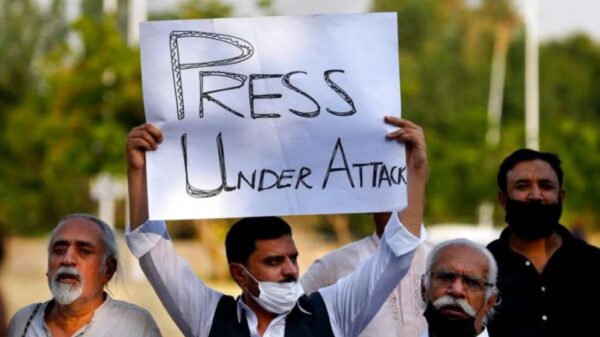




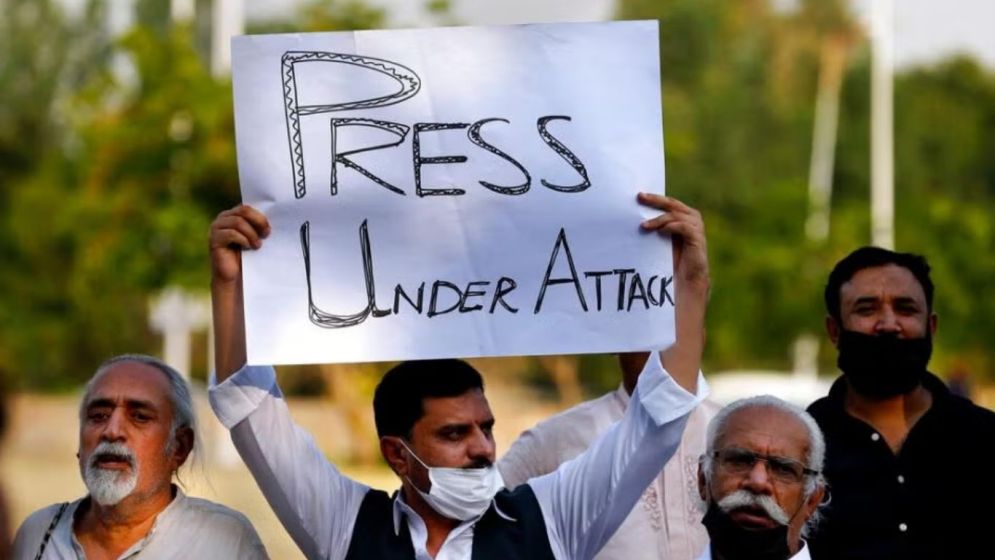
Pakistan’s media regulator has imposed new restrictions on television coverage of terrorist attacks, explosions, shootings and other vaguely defined “unpleasant” incidents, prompting the Committee to Protect Journalists (CPJ) to call for their withdrawal.
The Pakistan Electronic Media Regulatory Authority (PEMRA) issued a directive on 13 October ordering all satellite television channels to refrain from broadcasting, rebroadcasting or airing live coverage of any “unfortunate” or “unpleasant” incident, according to a copy of the directive reviewed by CPJ.
PEMRA warned that broadcasters failing to comply could face legal action. It said television channels could air only information verified by the relevant government departments or law enforcement agencies. The directive also requires broadcasters to use time delays and maintain independent editorial boards.
The CPJ urged Pakistani authorities to withdraw the restrictions, warning that they could undermine independent journalism and lead to censorship.
“Preventing journalists from independent reporting of major security incidents and requiring them to rely on information authorized by state and security agencies risks turning legitimate safety safeguards into a system of official information control and censorship,” said Waliullah Rahmani, CPJ’s representative for Afghanistan and Pakistan.
He called on the authorities to rescind the restrictions and allow newsrooms to make responsible editorial decisions without fear of regulatory retaliation.
The directive reiterates restrictions PEMRA first introduced in February 2023, when it accused television channels of broadcasting unverified and speculative information during militant attacks.
In August, Pakistan’s Ministry of Information and Broadcasting issued guidelines requiring foreign journalists and their associates in Pakistan, as well as people working with international media, to register with the ministry and obtain a certificate before undertaking reporting assignments outside Islamabad, Lahore and Karachi.
The latest directive comes amid heightened political and security instability in Pakistan, including the imposition of emergency rule in Khyber Pakhtunkhwa province.
Pakistan’s Ministry of Information and Broadcasting did not respond to CPJ’s email seeking comment, according to the press freedom organisation.