





















Staff Reporter
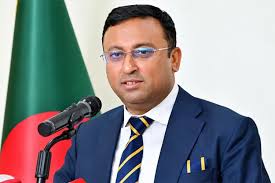
State Minister for Foreign Affairs Humaiun Kobir yesterday said Bangladesh was positively considering the Makkah Defence Agreement, with any decision to be guided by national interests and the potential contribution of the country’s peacekeeping expertise to regional peace and stability.
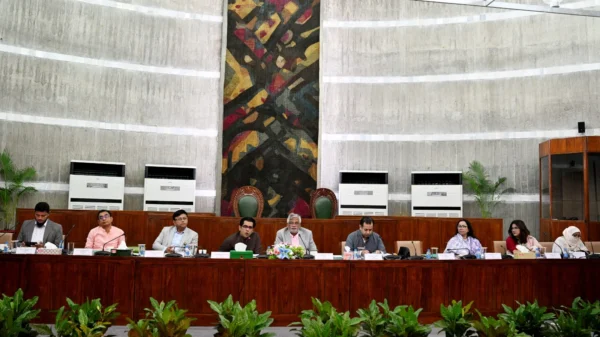
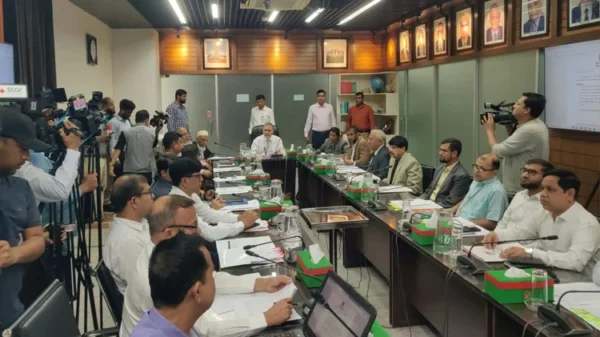
“We are having positive discussions on the Makkah Defence Agreement. We are viewing it positively,” he said while addressing a national seminar at the Foreign Service Academy in the capital.
Kobir said Bangladesh could take a favorable decision if the agreement served its national interests and its peacekeeping expertise could contribute to the welfare of Muslim nations and help maintain peace and stability in the Middle East.
“If it falls within the national interests of Bangladesh and converges, and we feel that our peacekeeping expertise can add value in serving Muslim nations and keeping a stable, peaceful Middle East, then there is every scope to take a positive decision on the matter,” he said.
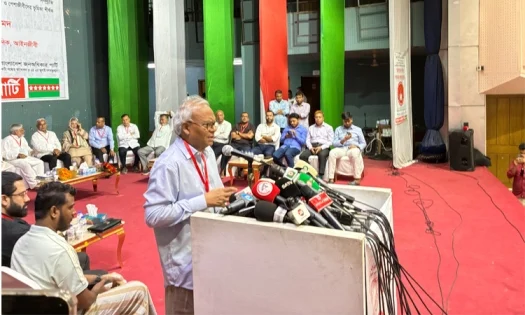
The Bangladesh Institute of International and Strategic Studies (BIISS) and the Center for Migration Studies of North South University (NSU) jointly organized the seminar titled “From Workforce to Strategic Partnership: Reimagining Bangladesh-KSA Relations.”
The state minister also said Prime Minister Tarique Rahman had accepted an invitation from Saudi Arabia’s Crown Prince to visit the Kingdom.
“He has accepted and will do so at some point very soon,” Kobir said.
He said the Crown Prince had also expressed interest in visiting Bangladesh, adding that Dhaka would welcome him at a mutually convenient time.
Kobir said the proposed visits reflected growing political ties between the two countries. He also described Bangladesh as a strong partner of Saudi Arabia in maritime security.
Calling for a comprehensive economic and strategic partnership, he said bilateral relations should expand beyond their traditional focus on labour migration and remittances.
“While that foundation remains important, it cannot be the ceiling of our ambition,” he said.
He said Saudi Arabia’s Vision 2030 and Bangladesh’s economic transformation had created common interests in investment, human capital, technology and connectivity.
Discussions were underway on a possible investment fund to facilitate joint investments and partnerships in priority sectors, he added.
“The next chapter of Bangladesh-Saudi Arabia relations should therefore be defined by value creation rather than volume alone,” he said.
Saudi Arabia’s Ambassador to Bangladesh Dr Abdullah Zafer bin Abiyah addressed the seminar as the guest of honor.
Foreign Ministry Secretary (Bilateral) Dr Md Nazrul Islam and Expatriates’ Welfare and Overseas Employment Secretary Md Mokhtar Ahmed spoke as special guests.
BIISS Director General Major General A S M Ridwanur Rahman and NSU Vice-Chancellor Professor Abdul Hannan Chowdhury also addressed the seminar.