

























• Houthis enter war: Yemen’s Iran-backed Houthi rebels said they carried out the “first military operation” in support of Iran, after Israel’s military earlier said it detected a missile from Yemen.
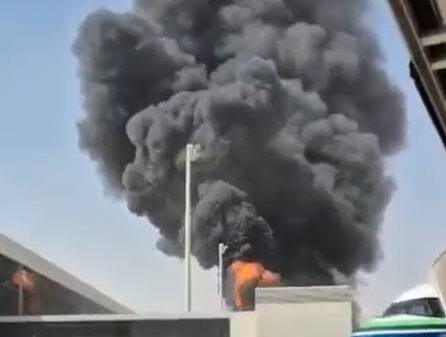
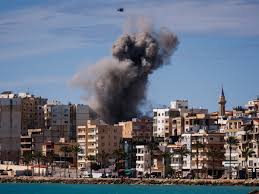
• Latest strikes: Israel attacked Iranian nuclear sites and industrial plants after threatening to “es-calate and expand” strikes on Tehran. Elsewhere, in the Gulf, falling debris caused fires at an in-dustrial hub in the United Arab Emirates, authorities said, and a drone attack damaged the radar system at Kuwait International Airport.
• Death toll climbs: Three people, including a Lebanese journalist working for a Hezbollah-owned network, have been killed in an Israeli strike in Lebanon. Thousands have been reported killed across the Middle East since the start of the war one month ago.
• Talks continue: Pakistan’s prime minister held a one-hour call earlier with Iran’s president as the country continues to act as an intermediary in talks between Tehran and Washington.
Falling debris from a missile interception injured 11 people and damaged several buildings in Eshtaol, central Israel earlier today, according to the country’s national emergency service, Magen David Adom (MDA).
Those injuries, which are all minor, were caused by glass shrapnel, MDA said.
Images and footage from the scene show bombed-out buildings, mangled trees and crater sites where debris from the Iranian missile landed. The total damage radius was approximately 150 me-ters centered around two craters about 10 meters apart, MDA said.
“This is a large-scale scene with damage to several buildings. Firefighters are conducting thorough searches to rule out the presence of trapped individuals and addressing secondary hazards, in order to ensure the safety of residents,” said Zecharia Rafael, a chief fire officer at MDA leading the re-sponse to the incident.
From London: Russia is reportedly transferring upgraded drones to Iran, including advanced ver-sions of the Iranian drone technology Moscow previously acquired for use in Ukraine, U.S. and European officials told The Associated Press.
The move comes as Iran has been conducting drone attacks on Israel, Gulf countries, and U.S. ba-ses across the Middle East following recent U.S.-Israeli strikes. While Tehran maintains its own Shahed drones, Russian enhancements reportedly include improved navigation, AI piloting, jet engines, cameras, anti-jamming systems, and satellite-linked communication capabilities.
European officials said discussions between Russian and Iranian authorities have been “very ac-tive” this month regarding drone transfers, though the exact number of drones and method of de-livery remain unclear. Some shipments may be disguised as humanitarian aid via trucks or rail through Azerbaijan, according to intelligence reports.
Moscow and Tehran are also sharing targeting and intelligence data. Russian specialists have adapted the Shahed drones, creating decoys and advanced variants intended to overwhelm air de-fenses, while Iran provides information in return, including on military developments.
A U.S. defense official noted that any delivery of advanced drones to Iran could complicate U.S. and allied efforts to intercept attacks in the region, particularly if the drones are jet-propelled or equipped with AI and Starlink-linked guidance systems.
Russia and Iran signed a $1.7 billion deal for Shahed drones after Moscow’s invasion of Ukraine in 2022. Production and refinement of the drones in Russia has continued, creating capabilities that could influence ongoing conflicts in the Middle East, officials said. – March 28, (Net).