



















Commerce reporter:
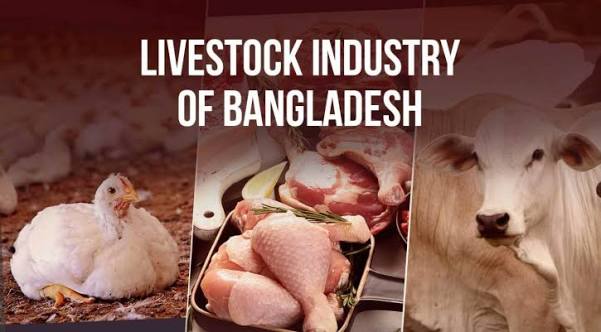
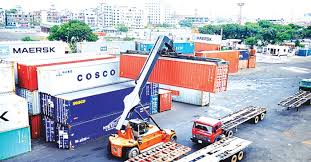
The country’s livestock product exports have surged 217 percent in the six months from March to August 2026, reaching US$104.64 lakh, compared with US$32.99 lakh in the previous six-month period from September 2025 to February 2026.
Meanwhile, domestic production of meat and eggs has exceeded national demand, ensuring per capita availability above the minimum dietary requirements, according to the Department of Livestock Services (DLS).
The country now produces around 90.70 lakh tonnes of meat and 2,509.41 crore eggs annually, against estimated demands of 78.14 lakh tonnes of meat and 1,855.36 crore eggs.
However, milk production still falls short of domestic demand, according to the latest DLS statistics.
With rising production, per capita meat availability has reached 139.29 grams a day, exceeding the minimum requirement of 120 grams. Annual per capita meat availability now stands at 50.84 kg, against the minimum requirement of 43.8 kg.
However, the latest Household Income and Expenditure Survey by the Bangladesh Bureau of Statistics (BBS) recorded annual per capita meat consumption at only 14 kg.
Similarly, annual per capita egg availability has exceeded 140 pieces, against a requirement of around 104 pieces.
Meat and egg production increased by 26.78 percent and 68.04 percent, respectively, over the decade between fiscal years 2016-17 and 2025-26.
Meat production, with broiler chicken accounting for nearly 40 percent, now exceeds domestic demand, while egg production has also reached a level sufficient to meet national demand.
Milk production, despite increasing by 69.71 percent over the past decade to nearly 157.53 lakh tonnes, remains below the annual demand of 162.79 lakh tonnes. Daily per capita milk availability stands at around 241 ml, against the estimated requirement of 250 ml.
In fiscal 2025-26, meat production increased by 1.16 lakh tonnes to 90.70 lakh tonnes from 89.54 lakh tonnes in the previous fiscal year. Egg production also rose by 2.83 percent to 2,509.41 crore pieces from 2,440.65 crore pieces.
Talking to media, DLS Director General Md Shahzaman Khan attributed the growth in production to government policy support, the development of entrepreneurship and improvements in cattle and poultry breeds.
He also said efforts to ensure antibiotic-free production across the supply chain had contributed to the sector’s progress.
Regarding export performance, Shahzaman said livestock product exports earned US$154.47 lakh, equivalent to Tk 193.08 crore, in the first three months of fiscal 2026-27 (July-September). The earnings in the entire fiscal 2025-26 stood at US$82.06 lakh, or Tk 102.57 crore.
He said the DLS is working to maintain product quality and food safety standards, ensure compliance with international sanitary and phytosanitary (SPS) requirements, improve cold-chain facilities and make export prices competitive. It is also working to diversify export destinations to sustain the growth.
Speaking about the sector’s production potential, Bangladesh Livestock Research Institute (BLRI) Director General Dr Shakila Faruque said the country needs to increase livestock production significantly, preferably to at least three times the current level.
She said Bangladeshis consume around 140 eggs per person annually, while the figure reaches about 400 in developed countries. Chicken consumption in Bangladesh is also considerably lower than in developed countries.
Noted economist Dr Jahangir Alam stressed the need to introduce modern technology and improve production efficiency to make livestock products more affordable.
He said meat, milk and egg prices in Bangladesh were higher than those in neighbouring India, partly because of inefficient production systems.
He urged the government to extend support to grassroots entrepreneurs and prevent corporate players from manipulating the market and controlling prices.
He also called for wider distribution of modern equipment, including milking machines, grass cutters, tractors, hay cutters, milk cans, cream separators and pasteurisation plants, among livestock, dairy and poultry farmers.
Alam said mechanisation has become essential as the availability of agricultural workers is declining. He added that each farm should be developed as a modern production unit.
Former BLRI Director General Dr Shahidul Huq also called for stronger government support for livestock farmers, similar to the incentives provided to the agricultural sector.
He stressed the need for an animal identification and recording system, stronger livestock policies and laws, and insurance facilities to protect marginal farmers.
He also recommended improving the quality of livestock breeds through research and the introduction of high-yielding and hybrid varieties, including suitable breeds from abroad.
Huq said the government should introduce a pricing mechanism and reduce the number of intermediaries to ensure fair prices for both farmers and consumers.
He proposed establishing a livestock marketing department under the DLS to address marketing challenges and help farmers receive fair prices for their products.
He said Bangladesh still had considerable scope to expand livestock production despite the declining availability of agricultural land, which is being converted to non-agricultural uses at an annual rate of around one percent.
Rural households could contribute to the sector’s expansion by rearing broilers, layers, cattle, goats and sheep, he said, adding that export opportunities for meat, milk and eggs could encourage new farms and create employment.
In fiscal 2025-26, the livestock sector contributed 1.81 percent to the country’s GDP and 16.56 percent to agricultural GDP. Around 43.64 percent of households are involved in livestock and poultry rearing.
Nearly 20 percent of the country’s population depends directly on the livestock sector, while around 50 percent depends on it indirectly.
For fiscal 2026-27, the combined allocation for agriculture, food, fisheries and livestock stands at Tk 43,355 crore, equivalent to 0.63 percent of GDP.