





















Staff Reporter:
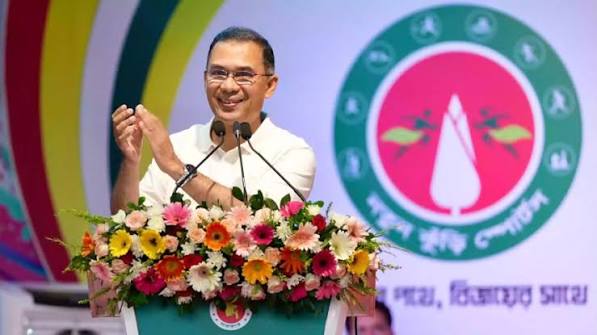
Prime Minister Tarique Rahman yesterday said the electricity crisis could be tackled through affordable solar and other cost-effective measures rather than ‘looting’ in the name of quick-rental power plants, adding that the government aims to add 3,000 to 4,000 megawatts of solar power to the national grid before next summer.
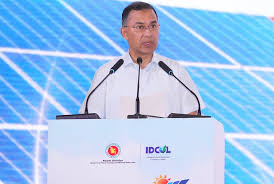
“Instead of looting in the name of quick rentals, it is certainly possible to resolve the electricity problem through affordable means,” he said while inaugurating the two-day Bangladesh Solar Expo 2026 at the Bangladesh-China Friendship Conference Centre in the capital this morning.
The prime minister said, “The government is aware of public suffering over the country’s energy and electricity situation and has taken comprehensive measures to ensure long-term energy security.”
The government is simultaneously working to stabilize energy and power supplies, review expenditure and contracts in the power sector, intensify domestic gas exploration, diversify energy sources and accelerate solar power expansion, he said.
Tarique Rahman said the government set a target of generating 20 percent of the country’s electricity from renewable sources by 2030 and 30 percent by 2040.
As part of efforts to expand solar power, the government initially allocated Tk 1,500 crore in a fund to facilitate financing for the sector, he said, adding that further funds would be arranged gradually.
Describing renewable energy as no longer merely a promising sector but an unavoidable reality for Bangladesh, he said the government wanted to ensure that entrepreneurs and investors in the sector did not fall behind for lack of financing.
The prime minister said the government aimed to add 3,000 to 4,000 megawatts of solar power to the national grid before the beginning of the next summer season, provided everything progressed as planned.
To facilitate solar power installation and expansion, the government had already formulated the ‘Special Solar Power Installation Ordinance 2026′ and introduced policy support, tax and tariff benefits and financial incentives to encourage investment, he added.
He said the government would purchase surplus electricity supplied to the national grid under the net metering system at Tk 10.50 per unit, including incentives, from February 2027.
The prime minister expressed hope that unused rooftops of government and private offices, educational institutions, hospitals, industries, commercial establishments and residential buildings would be brought under solar power generation.
He said the government had been taking steps to gradually convert electricity-powered irrigation pumps into solar-powered ones to reduce farmers’ production costs, protect the environment and save electricity from the national grid.
Tarique Rahman said the country had been made heavily dependent on imported energy, leaving it vulnerable to disruptions in global supply chains caused by international conflicts.
To keep the country’s energy and electricity situation as normal as possible, the government had provided Tk 43,000 crore in subsidies to the power sector in the 2025-26 fiscal year, he said.
He added that the government increased diesel reserves, taken initiatives to ensure coal supplies and stocks for coal-fired power plants, maintained contact with alternative suppliers and allocated Tk 600 crore for procuring fuel oil for power generation.
The premier said ensuring adequate electricity to meet public demand is the government’s responsibility, while its efficient and economical use was the responsibility of citizens.
After inaugurating the expo with the theme “Utilise Every Inch of Rooftop, Increase Income from Solar Power”, the prime minister visited different stalls at the exhibition.
Jointly organised, for the first time, by the Power Division, the Ministry of Power, Energy and Mineral Resources, and the Infrastructure Development Company Limited (IDCOL), the exhibition showcases modern solar power technologies, bringing together policymakers, government agencies, development partners, financial institutions, technology providers and entrepreneurs.
Seeking support from development partners, the prime minister said they could extend financial and technical assistance not only to large projects but also to solar power initiatives undertaken by local small entrepreneurs and businesses.
He also highlighted investment opportunities for expatriate Bangladeshis in the sector.
The prime minister said the government, entrepreneurs, financial institutions, development partners and the public would have to work together to achieve the renewable energy targets.
He urged people to make maximum use of natural light during the daytime and switch off unnecessary lights, fans and electronic devices at homes, offices and business establishments.
He also said the government had allocated Tk 500 crore annually in the current budget for startups to ensure that innovative ideas, particularly those of young entrepreneurs, did not disappear due to a lack of funds.
The exhibition at the expo showcases modern solar power technologies, bringing together policymakers, government agencies, development partners, financial institutions, technology providers and entrepreneurs.
It also highlights key aspects of the renewable energy sector, including government incentives, environment-friendly technologies, tax and tariff benefits, green and climate financing, carbon credits, solar-powered irrigation, and training and skills development opportunities.
The event aims to support the implementation of the National Renewable Energy Development Strategy (2026-2030) and familiarise stakeholders with government policies and incentives for promoting solar power.