


















Staff Reporter:
The next meeting of the Joint Working Group of Bangladesh and India on the conservation of bio-diversity of the Sundarbans will be held in Bangladesh.
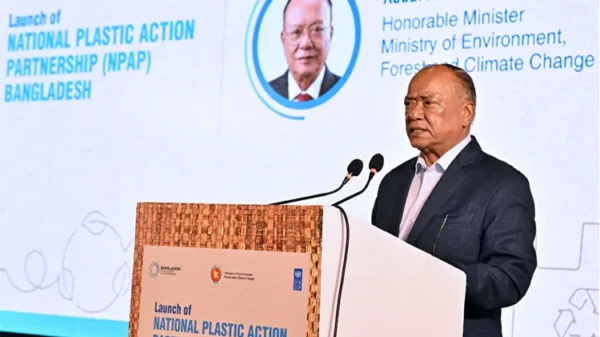
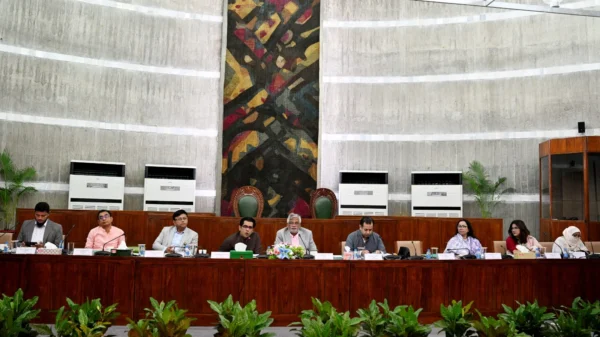
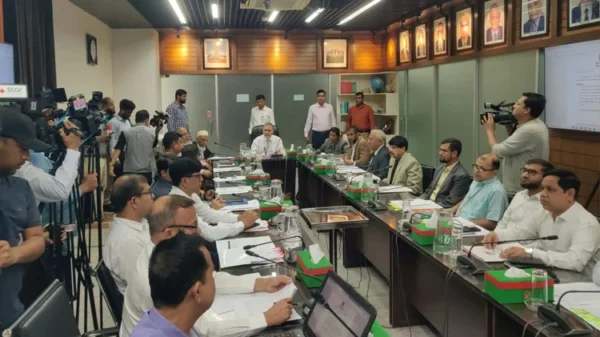
The decision was taken when Indian High Commissioner in Dhaka Dinesh Trivedi met Environ-ment, Forests and Climate Change Minister Abdul Awal Mintoo at the Bangladesh Secretariat yes-terday.
State Minister for Environment Shaikh Faridul Islam was present at the meeting.
During the meeting, the two sides agreed to hold the next meeting of the Joint Working Group of the two countries on the Sundarbans conservation in Bangladesh under the existing Memorandum of Understanding (MoU) between Bangladesh and India.
They also agreed to hold the next bilateral meeting in Bangladesh in continuation of the protocol signed between the two countries on the conservation of the Bengal Tiger.
However, it was decided to hold the next meeting on trans-boundary Asian elephant conservation in India.
They discussed environment and climate change, trans-boundary environmental problems, carbon credits, carbon emission reduction and development of green economy.
At the meeting, Environment Minister Abdul Awal Mintoo said as Bangladesh and India are close neighbors, the environmental and ecological interests of the two countries are also closely related to each other.
Challenges such as climate change, floods, droughts, river and water resource management, air pollution and biodiversity degradation are not limited to any single country, he said.
To address these problems, Mintoo said, mutual trust, exchange of information and experience and effective regional cooperation need to be further strengthened.
He also said Bangladesh is keen to advance positive and constructive relations with India based on mutual respect and common interests.
The minister hoped that cooperation in the environment and climate sectors would deepen further in the coming days to ensure the welfare and sustainable future of the people of the two countries.
He said it is important to maintain a balance between environmental protection and economic de-velopment to ensure sustainable development.
In this regard, he said, exchange of technology, knowledge and successful experiences between South Asian countries can play an important role.
Faridul Islam highlighted the importance of joint initiatives to conserve the common ecologically important areas and biodiversity of Bangladesh and India, including the Sundarbans.
He said the Sundarbans is a common natural resource of the two countries and this mangrove for-est acts as an important buffer zone to combat climate change and natural disasters.
Exchange of research, technology and management experience can be further enhanced to protect the environment and wildlife of the Sundarbans, he said.
Dr. Fahmida Khanam, Acting Secretary of the ministry, was also present at the meeting.