













Staff Reporter:
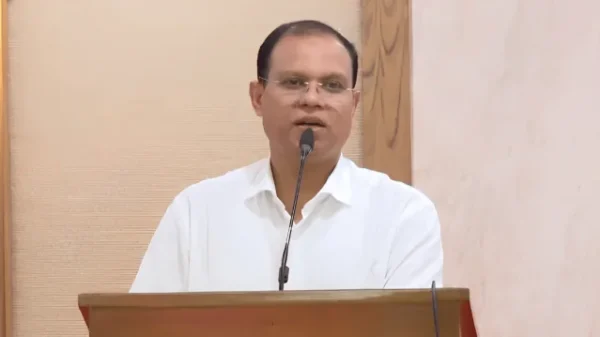
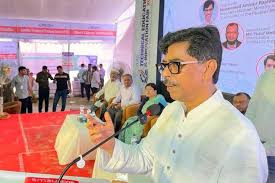
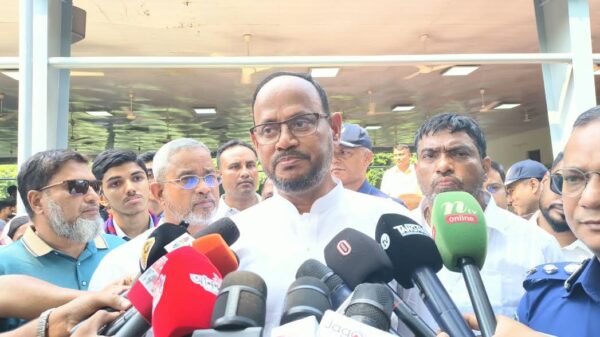
Information and Broadcasting Minister Zahir Uddin Swapon yesterday said the government directly
purchased the media rights for the FIFA World Cup 2026 from FIFA at a nominal cost, ending the
hundreds of crores of taka transactions, irregularities, and corruption and intermediary syndicates
associated with the broadcasting rights of the previous Qatar World Cup.
"Thanks to the far-sighted and cost-effective policy of the government led by Prime Minister Tarique
Rahman and successful sub-licensing, we have been able to bring the broadcasting cost of this World Cup
football tournament down to almost zero. In contrast, nearly Tk 140 crore was transacted through
intermediaries during the Qatar World Cup 2022,” he said.
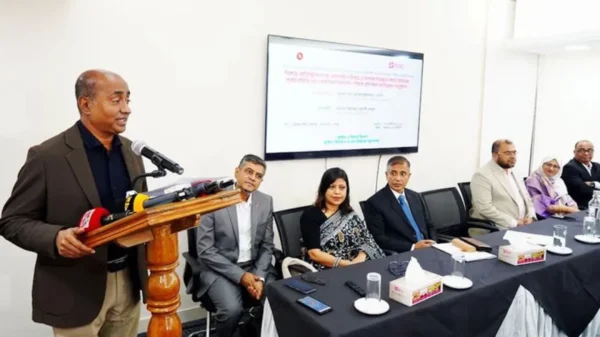
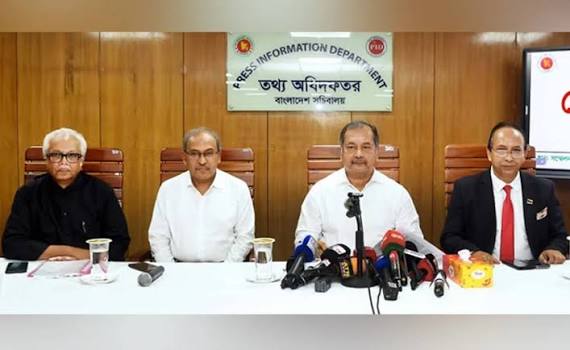
The minister made the remarks at a press conference held at the conference room of the Press Information
Department (PID) here this morning.
Acting Secretary of the ministry Md Shah Alam, Principal Information Officer Syed Abdal Ahmed and
Bangladesh Television (BTV) Director General Md Mahbubul Alam were present.
Presenting a comparative picture of the broadcasting costs of the 2022 and 2026 World Cups, the
Minister highlighted the transactions and transparency of the current government in contrast with the
purchase of the broadcasting rights for the Qatar World Cup 2022.
Zahir Uddin Swapon said a Singapore-based company had purchased the media rights for the World Cup
2022 from FIFA for US$ 3.2 million. Later, a Bangladeshi private company named "Toma Construction",
which had no involvement in the media sector, was brought in as an intermediary.
The then Sheikh Hasina government subsequently purchased the broadcasting rights for BTV from that
intermediary company for Tk 98 crore, using taxpayers' money following a cabinet decision, he said.
Besides, other private media outlets in the country sub-licensed the rights from the same company for
nearly Tk 39 crore, he said, adding that of the amount, T-Sports purchased the rights for Tk 22 crore
while Trophy acquired them for Tk 17 crore.
Altogether, around Tk 140 crore of taxpayers' money was siphoned off through a huge turnover to benefit
a private company, he mentioned.
Speaking about the government's cost-saving strategy, the minister said Prime Minister Tarique Rahman
had given strict instructions to ensure the right of millions of football lovers in the country to watch the
matches while ensuring that not a single taka of taxpayers' money was wasted amid the country's difficult
economic situation.
Following the Prime Minister's directive, BTV purchased the media rights directly from FIFA this time
through continuous negotiations without any intermediary for only US$ 3.85 million, equivalent to about
Tk 47 crore in Bangladeshi currency, he said.
Later, almost the entire expenditure was recovered by sub-licensing the rights to four more media outlets
in the country, he said, mentioning that at present, only a small deficit of around Tk 4 to Tk 5 crore
remains, which is expected to be fully offset through advertisements and revenue sharing, ultimately
bringing the cost down to zero.
The minister said, "The previous government turned the immense passion and enthusiasm of the country's
young generation for football into a tool for corruption, just as it had done by holding the power sector
hostage through the Indemnity Act.
A comparison between the corruption of 2022 and the successful and cost-effective performance of the
Tarique Rahman government in 2026 will make everything clear to the people."
The Information Minister said BTV officials and employees, led by the Director General of the state-run
television, worked tirelessly to ensure the successful broadcast of the matches.
He thanked the country's sports reporters, the Bangladesh Football Federation (BFF), the State Minister
for Information and the Prime Minister's Information Adviser for providing accurate information and
assisting BTV and the ministry during the negotiation process.
He added that with yesterday's final match, the current phase would come to an end. However, the
Ministry of Information and Broadcasting would begin planning from now so that future World Cup
broadcasting could not only achieve zero cost, or zero deficit, but also be transformed into a profitable
venture through the use of more advanced technology.