



























Commerce reporter:
Bangladesh has significant potential to mobilise additional revenues without increasing existing tax rates by expanding the tax net, preventing tax evasion and introducing effective taxation on wealth, according to a new study.
The findings emerged from a joint study conducted by Research and Policy Integration for Development (RAPID) and Friedrich-Ebert-Stiftung (FES) Bangladesh.
The study, titled “Missing Revenues in Bangladesh: Tax Potential, Gaps and Distributional Consequences”, analysed the country’s tax revenue potential, tax evasion and the distributional impact of the existing tax system.
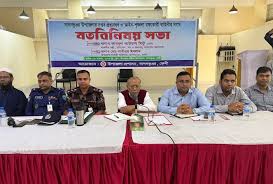
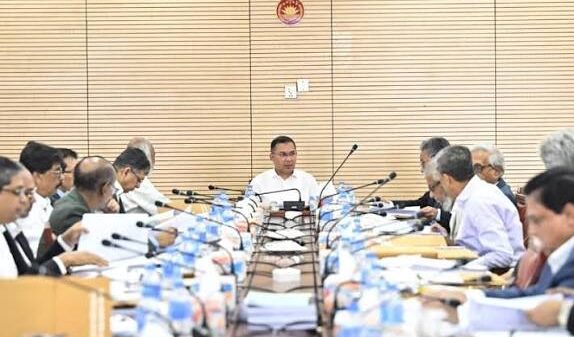
The findings were presented at a discussion meeting at a hotel in the capital today.
The study used data from the Bangladesh Bureau of Statistics’ (BBS) Household Income and Expenditure Survey (HIES) 2022 to examine personal income tax, domestic value-added tax (VAT), tax compliance and the distribution of personal wealth.
RAPID Chairman Dr MA Razzaque led the research team, while RAPID Research Director and Dhaka University Economics Department Professor Dr Md Deen Islam and RAPID Senior Research Associate Tahsin Rifat worked as co-researchers.
Finance Division Secretary Dr Md Khairuzzaman Mozumder attended the programme as the chief guest, while National Board of Revenue (NBR) Member (VAT Implementation and Data Integration) Syed Mushfiqur Rahman attended as the special guest.
Friedrich-Ebert-Stiftung Bangladesh Resident Representative Dr Felix Gardes delivered the welcome address.
Policy Research Institute Chairman Dr Zaidi Sattar, Dhaka University Economics Department Professor Dr Sayema Haque Bidisha and Economic Reporters’ Forum (ERF) President Daulat Akhtar Mala joined the discussion as panellists.
RAPID Executive Director and Dhaka University Development Studies Department Professor Dr M R Yusuf moderated the discussion.
The study found that although consumers bear the burden of VAT, the entire amount does not reach the government exchequer.
business registration, concealment of sales information and delays in VAT deposits create opportunities for revenue leakage, it said.
The study noted that Bangladesh could collect additional revenue by improving tax compliance and strengthening administrative monitoring rather than raising VAT rates.
It also highlighted that wealth inequality in Bangladesh is significantly higher than income inequality.
According to the findings, the wealthiest 10 percent of households own more than 76 percent of the country’s total personal wealth, while the richest one percent alone hold more than 47 percent.
In urban areas, the wealth share of the richest one percent exceeds 53 percent, the study said.
The researchers directly considered the value of household land, houses, financial assets and other properties in estimating wealth distribution.
However, the study acknowledged that its estimates might differ from some international estimates because of limitations in tax-record-based information and methodological differences in wealth valuation.
Against this backdrop, the researchers recommended expanding income tax coverage by prioritising high-income groups, improving VAT collection and compliance instead of increasing rates, and considering the introduction of inheritance tax in view of the significant concentration of wealth.
The study also recommended reassessing the rationale for corporate tax exemptions and special tax benefits, avoiding harassment in the name of revenue collection, and working with local communities and professional organisations to expand the tax net.
Modernising tax administration also emerged as an important recommendation.
Presenting the findings, Dr MA Razzaque said revenue collection should not be judged solely by the amount of money collected.
“How fair and transparent the tax system is, whether taxpayers can operate without harassment, and how much quality public service people receive in return for their taxes must also receive equal importance,” he said.
The study’s central message was that Bangladesh could mobilise substantial additional revenue within the existing tax framework.
Rather than increasing tax rates, expanding the tax base, preventing revenue leakage and improving administrative efficiency could deliver significant progress in revenue mobilisation, Razzaque added.