



























Staff Reporter:
Politics has a curious way of proving that governments are often brought into trouble not by grand conspiracies but by small tongues.
Every now and then, a careless remark becomes the spark that ignites a fire already smouldering beneath society. The issue itself may have existed for months or even years, but one unfortunate sentence transforms frustration into outrage.
Bangladesh has seen this before. During the quota protests, Sheikh Hasina’s rhetorical question asking whether only the “grandchildren of Razakars” should receive opportunities was widely perceived by protesting students as branding them with one of the country’s most loaded political labels. What might have been intended as political rhetoric became a rallying cry, helping broaden the movement far beyond its original demand.
More recently, Education Minister Ehsanul Hoque Milon reportedly found himself at the centre of a controversy over his reported remarks about Higher Secondary Certificate (HSC) examinees. Students, already anxious about their examinations, could not accept his comment. The controversy quickly overshadowed the policy discussion and handed critics an easy slogan.
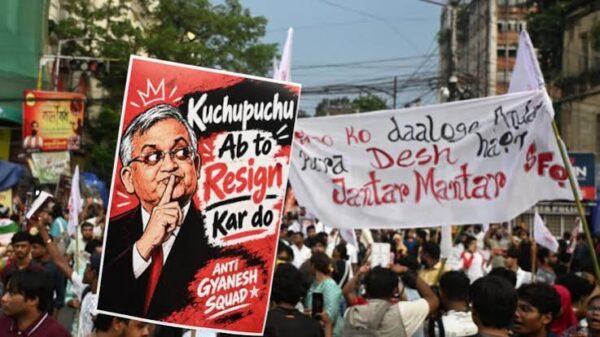
India witnessed a similar lesson when Chief Justice Surya Kant’s remarks comparing certain unemployed youth to “cockroaches” triggered public outrage. Whatever the intended context, the metaphor escaped it. People rarely remember the explanation; they remember the insult.
There is a pattern here. Citizens can tolerate difficult policies, delayed services, and even unpopular decisions. What they seldom tolerate is humiliation.
Perhaps that is because democracy rests on a simple but frequently forgotten principle: the people are not subjects. They are sovereign. Politicians, ministers, and public officials are temporary custodians of power, not its owners.
It would therefore be wise for every office bearer to keep a small note on the desk that reads: “Do not insult your employer.”
There is another lesson, one that should concern governments and oppositions alike. Public anger is political capital. If those in power squander public goodwill through arrogance or careless language, someone else will gladly reap the dividends. Vested interests, opportunists, hostile foreign powers, and ambitious rivals have always known how to convert wounded pride into political momentum. A single gaffe can become a slogan; a slogan can become a movement; and a movement can reshape a nation’s politics.
This is not an argument for scripted speeches or manufactured politeness. Democracies need candid debate. But candour should never be confused with contempt.
Words spoken from high office carry consequences far beyond the microphone. They can calm a nation or provoke it. They can strengthen institutions or weaken them. Above all, they can remind citizens that they are respected—or convince them that they are not.
For any government, that is a distinction worth remembering before the next press statement.