


















Staff Reporter:
Bangladesh and Malaysia have agreed to elevate their longstanding bilateral relations to a new level through enhanced cooperation in trade, investment, labor migration, defence, energy, digital economy and regional affairs, while Malaysia reiterated support for Bangladesh’s RCEP and ASEAN aspirations.
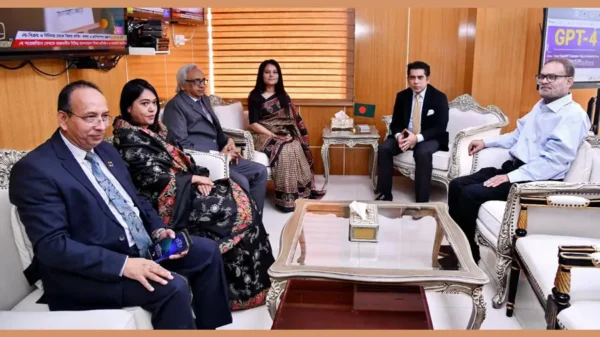
The Malaysian government assured during a bilateral meeting between Bangladesh and Malaysia led by Prime Minister Tarique Rahman and Malaysian Prime Minister Dato’ Seri Anwar Ibrahim their respect-ed side yesterday, according to a joint statement issued following bilateral talks between the two leaders.
The visit marked Tarique Rahman’s first official foreign trip since assuming office in February this year and his first visit to Malaysia as Prime Minister.
During the meeting, both leaders expressed strong determination to take bilateral relations to “new heights” and witnessed the exchange of several bilateral documents aimed at expanding cooperation, said the joint statement disseminated by the foreign ministry here.
Prime Minister Anwar Ibrahim expressed deep congratulation to Tarique Rahman on assuming office, describing it as the beginning of a new chapter for Bangladesh with hopes for peace, stability and pro-gress.
FTA negotiations gain momentum
A major outcome of the visit was the reaffirmation of commitment by both countries to advance nego-tiations on the proposed Malaysia-Bangladesh Free Trade Agreement (MBFTA), with the aim of con-cluding the deal in 2027.
The two leaders noted that Bangladesh remains Malaysia’s second-largest trading partner in South Asia and underscored the importance of expanding two-way trade and investment flows.
They also welcomed progress in establishing the Malaysia-Bangladesh Joint Business Council (JBC), which will serve as a structured platform for engagement between the private sectors of the two coun-tries.
The leaders identified a broad range of sectors for enhanced collaboration, including telecommunica-tions, energy, infrastructure, ports and logistics, halal industry, agro-processing, education and skills development, digital economy, semiconductors and smart manufacturing.
Malaysia backs Bangladesh’s RCEP bid
In a significant diplomatic development, Malaysia expressed support for Bangladesh’s aspiration to join the Regional Comprehensive Economic Partnership (RCEP), the world’s largest trade bloc.
The Malaysian side acknowledged Bangladesh’s growing economic importance and strategic role in the region, saying Dhaka’s future participation in RCEP would strengthen regional economic integration, trade, investment and supply chains. Bangladesh welcomed the support and reaffirmed its commitment to undertaking the necessary measures for accession.
Support for ASEAN engagement
Prime Minister Tarique Rahman reiterated Bangladesh’s strong desire to formalise its engagement with the Association of Southeast Asian Nations (ASEAN) through obtaining Sectoral Dialogue Partner sta-tus.
Prime Minister Anwar welcomed Bangladesh’s interest and assured Malaysia’s constructive support for Dhaka’s aspirations within the ASEAN framework.
Labor migration coopn to continue
Labour migration featured prominently in the discussions, with both leaders recognising the important contribution of Bangladeshi workers to Malaysia’s economy and development.
Malaysia acknowledged Bangladesh’s proposal regarding worker recruitment while noting that approvals for new foreign worker quotas would continue to be assessed on a case-by-case basis in line with current Malaysian policy.
The two countries agreed to convene a Joint Working Group (JWG) to evaluate the existing labour mi-gration Memorandum of Understanding and prepare a new, updated framework that reflects current real-ities and requirements.
They also reiterated their commitment to ensuring transparent, fair and non-discriminatory recruitment processes through credible agencies.
Coopn in digital economy, AI, semiconductors
The leaders agreed to deepen cooperation in emerging technologies, particularly artificial intelligence (AI), digital economy, fintech, cybersecurity and digital governance.
They encouraged closer collaboration among government agencies, universities, research institutions and private-sector stakeholders and welcomed greater Malaysian investment in Bangladesh’s digital econo-my, including technology parks, digital public infrastructure and special economic zones.
Recognising Malaysia’s global strength in semiconductor packaging and testing, the two sides also dis-cussed a bilateral talent development framework to train and upskill Bangladeshi engineering graduates through expert exchanges and knowledge-sharing programs.
Halal industry coopn
Both leaders acknowledged the growing commercial importance of the global Islamic economy and agreed to strengthen collaboration in developing Bangladesh’s halal sector.
They welcomed ongoing cooperation between Malaysia’s Department of Islamic Development (JAKIM) and Bangladeshi regulatory authorities and pledged enhanced cooperation in halal certification, regulato-ry frameworks, research, innovation, capacity building and institutional strengthening.
Education, tourism, skills dev
The two prime ministers noted the presence of around 11,000 Bangladeshi students in Malaysia and agreed to expand cooperation in higher education, university partnerships, joint research initiatives and technical and vocational education and training (TVET).
They also emphasized the need for mutual recognition of qualifications, joint degree programs and stronger alignment of academic curricula with labor market demands.
The leaders expressed optimism about expanding tourism cooperation, particularly in the context of Ma-laysia’s “Visit Malaysia 2026” and “Malaysia Year of Medical Tourism 2026” campaigns, while agreeing to enhance tourism promotion and cultural exchanges.
Energy sector investment encouraged
Energy cooperation emerged as another key area of engagement. Both sides agreed to maximize the po-tential of the existing bilateral memorandum on liquefied natural gas (LNG) supply, LNG infrastructure and petroleum products.
Bangladesh invited Malaysian companies to invest in oil and gas exploration in the Bay of Bengal, ex-traction of untapped mineral resources, including coal and limestone, and renewable energy projects.
The two countries also encouraged cooperation between national energy companies and private-sector stakeholders to strengthen energy security and sustainability.
Defence and security ties deepen
The leaders praised the longstanding defence relationship between the two countries and pledged to fully operationalise the existing defence cooperation memorandum.
They agreed to broaden collaboration in military science, technical expertise and defence industry part-nerships and looked forward to convening the Joint Committee on Defence Cooperation (JCDC) to for-mulate a structured roadmap for future cooperation.
The two sides also reaffirmed their commitment to supporting UN peacekeeping operations through joint training, tactical exercises and knowledge exchanges while strengthening cooperation against terrorism, violent extremism, human trafficking and transnational crime.
Support on Rohingya issue
On regional and international issues, both leaders expressed concern over the protracted Rohingya crisis.
Malaysia commended Bangladesh’s humanitarian efforts in hosting the forcibly displaced Rohingyas and reaffirmed its solidarity with Bangladesh.
Kuala Lumpur reiterated support for achieving a durable solution through the safe, dignified and sustain-able repatriation of the Rohingyas to Myanmar.
Bangladesh, in turn, appreciated Malaysia’s continued advocacy on the Rohingya issue at bilateral, re-gional and international forums, including ASEAN, the Organization of Islamic Cooperation (OIC) and the United Nations.
Shared positions on global issues
The two leaders exchanged views on developments in the Middle East and reiterated support for a just and lasting peace for the Palestinian people through continued dialogue and diplomatic efforts.
They also stressed the need for joint action to address climate change, food security, human trafficking, transnational crime and other traditional and non-traditional security challenges.
Both countries pledged closer coordination within international organizations, including the United Na-tions and the OIC, and reaffirmed their commitment to promoting justice, strengthening the international order and upholding international law.
Prime Minister Tarique Rahman expressed gratitude to Prime Minister Anwar Ibrahim and the Malaysian government for the warm hospitality extended to him and his delegation during the visit.