






























Staff Reporter:
Serious unrest and disorder have emerged in Bangladesh’s coal transportation sector, raising concerns over the country’s energy security as lighter vessel owners allege they are suffering heavy financial losses due to a syndicate of influential intermediary logistics companies.
Ship owners and service providers claim that despite existing government policies and fixed freight rates, a group of middlemen is manipulating the transportation system for coal supplied to coal-fired power plants, forcing vessel operators to carry cargo at nearly half the officially determined rates.
Industry insiders warn that unless the government intervenes immediately, the crisis could disrupt coal supply to major coal-based power plants such as Rampal Power Plant and Payra Power Plant, potentially triggering severe load shedding and instability in the national power sector.
Bangladesh currently has five coal-fired thermal power plants. Except for the Matarbari Power Plant, large mother vessels cannot directly reach the other plants due to geographical and navigational limitations.
As a result, coal must be unloaded from large vessels at the outer anchorage of Chattogram Port and transported inland by smaller lighter vessels through river routes.
According to ship owners, technical incompatibilities have further complicated the situation. Coal unloading cranes used at Rampal and Payra power plants have large grabs measuring around 35 cubic metres, while many local lighter vessels have smaller cargo holds that cannot accommodate such equipment.
Affected operators allege that the Bangladesh Water Transport Coordination Cell (BWTCC) often allocates technically unsuitable vessels without considering operational requirements. They claim that several intermediary logistics companies have exploited these weaknesses to form a powerful syndicate.
The allegations mainly target two companies — QNS Shipping Logistics and AMMS Logistics — both reportedly linked to influential business figures from the previous Awami League administration.
Ship owners allege that these firms receive subcontracts from the primary coal transportation contractors for Rampal and Payra power plants despite lacking sufficient lighter vessels of their own. They then rent vessels from independent owners while allegedly paying rates far below the government-approved fares.
According to the allegations, vessel owners transporting coal from Chattogram to Mongla or Payra are being paid nearly half the rates fixed by the Department of Shipping and BWTCC.
Operators say soaring fuel prices, rising maintenance costs, crew salaries and inflation have made it nearly impossible to continue operating under the reduced rates. Many claim they are incurring significant losses on every trip.
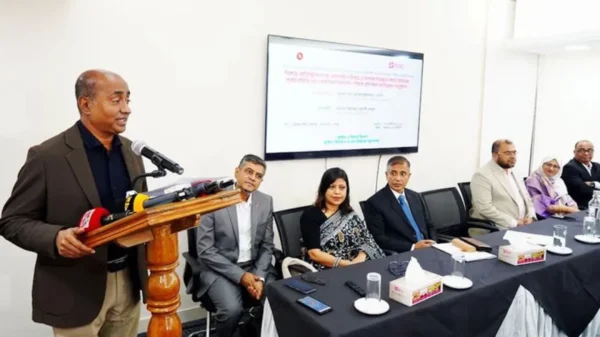
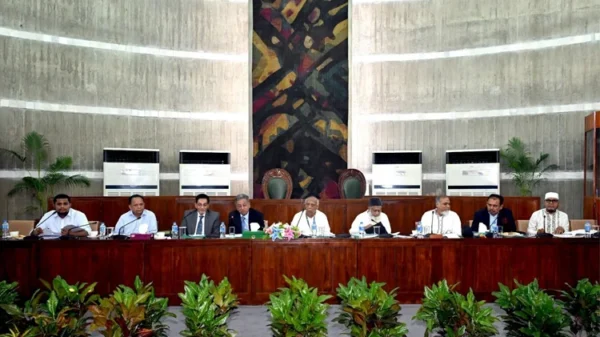
Following the complaints, an emergency meeting was held at the Department of Shipping on 17 May. Ship owners staged protests against the alleged syndicate and demanded full implementation of BWTCC policies.
A senior representative of one of the country’s major coal transport operators, speaking anonymously, said the sector requires a rational and sustainable system. He stressed that while taxes, fuel prices and operational expenses continue to rise, freight rates cannot be reduced unfairly through intermediary manipulation.
BWTCC Convener Shafik Ahmed said the 17 May meeting decided that the Department of Shipping would create a separate vessel serial system for Payra operations and that vessel rates for Payra would also be determined by the government.
He emphasised that uninterrupted electricity generation remains a national priority and said both the government and vessel owners would cooperate to protect national interests.
Shafik also noted that more than 1,000 lighter vessels currently operate under the BWTCC system, while privately owned industrial vessels transport their own cargo separately. Under government regulations, all other lighter vessels must operate within the BWTCC pool system.
Parvez Ahmed, vice chairman of the Inland Vessel Owners Association of Chattogram, said a policy decision had been made requiring coal transport operators to obtain vessels from the official BWTCC pool.
He acknowledged that only vessels meeting specific technical standards — particularly those with cargo holds at least 28 feet wide to accommodate large unloading grabs — would be suitable for Payra operations.
Out of approximately 1,000 vessels, only 200 to 300 meet those specifications, he said.
Parvez also admitted that intermediary companies involved in subcontracting often possess very few vessels of their own and instead operate by hiring vessels from independent owners at reduced rates, contributing to instability in the sector.
Industry stakeholders have urged the Department of Shipping and BWTCC to adopt strict monitoring measures to prevent logistics companies from forcing vessel owners into loss-making operations. They also demanded cancellation of licenses for companies violating government-approved freight policies.
Officials have acknowledged the complaints. Mirza Saifur Rahman, chief engineer and ship surveyor of the Department of Shipping, said authorities discussed the issue and decided to strengthen monitoring efforts.
He expressed hope that the ministry would soon make a final decision.
Responding to the allegations, QNS Shipping Logistics Chairman Nurul Kaiyum Khan denied wrongdoing, stating that freight rates for coal-carrying vessels are determined through mutual agreement with vessel owners.
AMMS Group Managing Director Shafiqul Alam Jewel could not comment directly, saying he was currently hospitalised for treatment.