





















Staff Reporter:
Despite significant agricultural progress over the past five decades, Bangladesh’s journey toward a sustainable food system remains obstructed by contradictions and inconsistencies within its agricultural policies, say experts.
At a national policy dialogue on Thursday they emphasised the urgent need to align existing policies and incorporate agroecology into the national agricultural framework to ensure long-term sustainability.
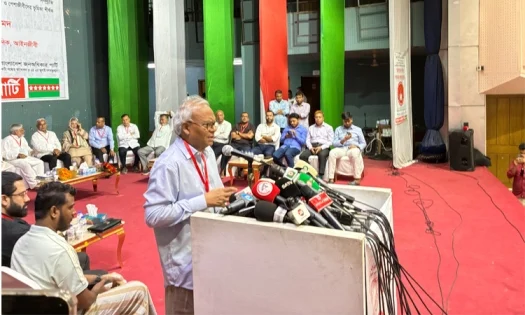
The dialogue, titled “Dimensions of National Agricultural Policy and Challenges and Pathways in the Agri-Food System”, was jointly organised by the Agroecology Coalition Bangladesh, Palli Karma-Sahayak Foundation (PKSF), and the Germany-based development organisation Welthungerhilfe (WHH).
The event was held at the conference room of Bonik Barta in Dhaka, with Bonik Barta also serving as media partner.
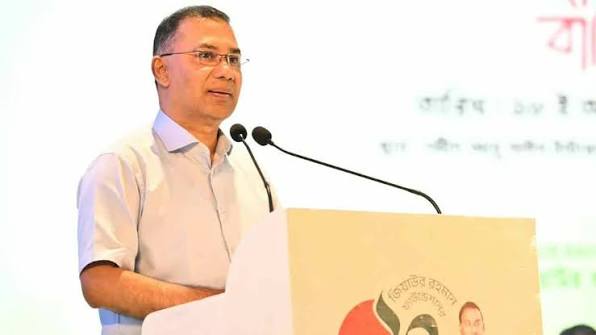
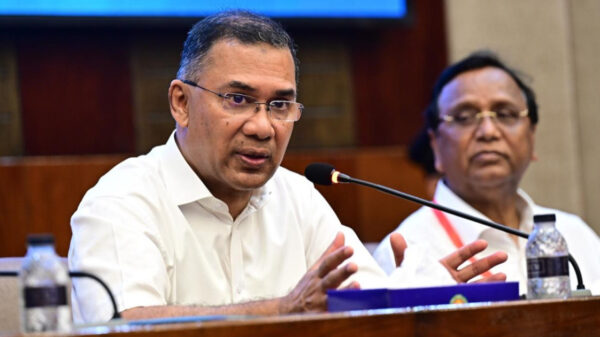
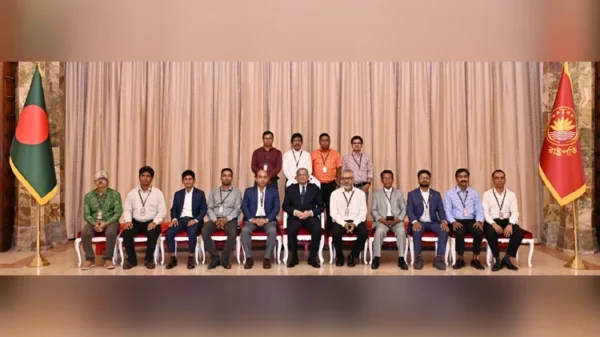
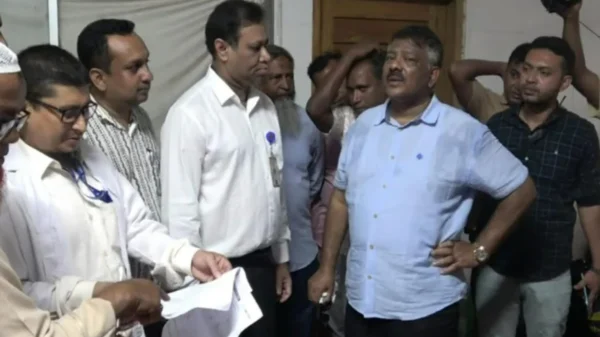
Md Fazlur Kader, managing director of PKSF, chaired the event. Dr Md Emdad Ullah Mian, secretary of the Ministry of Agriculture, attended as the chief guest. SM Sohrab Uddin, director general of the Department of Agricultural Extension, was present as special guest, while Mohsin Ali, convenor of Agroecology Coalition Bangladesh and executive director of WAVE Foundation, delivered the welcome remarks.
Other special guests included Md Harunur Rashid, director of SAARC Agriculture Centre; Dr Md Raju Ahmed, component director (deputy secretary), Department of Agricultural Marketing; Narun Nahar, country director, Heifer International Bangladesh; Mamunur Rashid, project head, WHH; Md Monjurul Alam, national agriculture and technical specialist, FAO Bangladesh; Dr Ganga D Acharya, director (Research), CIRDAP; Prof Md Mahbub Islam, Sher-e-Bangla Agricultural University; Mashiath Chowdhury, country program analyst, IFAD; and Sahanowar Said Shaheen, president of the Bangladesh Agricultural Journalist Forum.
Grassroots representatives also shared insights, including Mizanur Rahman, Convenor of the National Farmers’ Platform; Jannatul Mawsumi from Manikganj; and Md Mohammad Ali from Chuadanga.
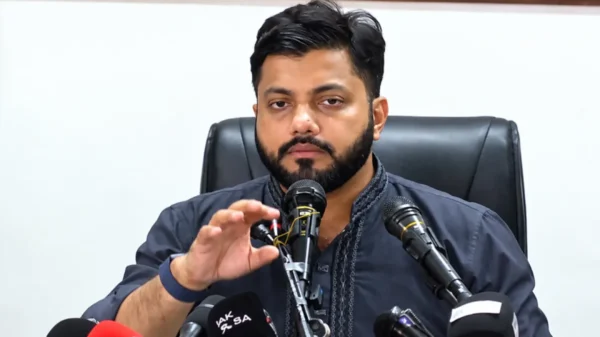
In his welcome speech, Mohsin Ali highlighted various agroecology and safe food projects implemented in districts like Chuadanga, Meherpur, Jhenaidah, and Manikganj, reaching over 250,000 beneficiaries.
He emphasised that although not all donor-supported initiatives fully adopt the agroecology approach, many contain essential elements of it. The “Go Green Center” established by WAVE Foundation in Chuadanga exemplifies environment-friendly agricultural practices, and a similar center is being planned for Manikganj with WHH support.
The keynote presentation was delivered by Ahmed Borhan, director of Research at the Center for Social Research.
He identified four key objectives of the dialogue: transforming the current agri-food system, promoting agroecology, conducting a comparative analysis of major national policies (Agricultural Policy 2018, Agricultural Extension Policy 2020, and Organic Agriculture Policy 2016), and fostering coordination among policymakers, farmers, researchers, development partners, and civil society.
Borhan noted Bangladesh’s success in crop, fish, livestock, and fruit production since independence, contributing significantly to food security and employing nearly 45% of the workforce in the agricultural sector.
He warned of mounting challenges: overuse of chemical fertilisers and pesticides leading to soil and water pollution, loss of biodiversity, and climate-induced threats to production.
He said greenhouse gas emissions from the agricultural sector have reached 39%. Food contamination with heavy metals is rising, weakening immune systems. Research indicates that excessive pesticide exposure is contributing to increased cancer cases among farmers.
Despite positive elements in the current policies, Borhan highlighted contradictions: for example, while the 2018 Agricultural Policy promotes sustainable farming, it also encourages chemical fertiliser use.
He added, the Extension Policy 2020 lacks emphasis on environment-friendly farming, and traditional knowledge is often undervalued. Simultaneously, subsidies and support are heavily tilted toward chemical inputs, undermining the goal of “chemical-free farming.”
He criticised poor market infrastructure and weak value chains, which fail to ensure fair prices for farmers and affordable access for consumers, despite the intent expressed in Policy Section 12.1.
He also pointed out that although diversification and local nutrition-sensitive crops are emphasised in policy, access to nutritious food remains limited for many.
Borhan recommended revisiting the 2018 Agricultural Policy to eliminate contradictions and include agroecology and agri-food system frameworks.
He urged greater investment in organic inputs, formation of Farmer Producer Organizations (FPOs), promotion of renewable energy and cold storage in agriculture, and development of agroecology-focused curricula and training for extension workers and farmers. He emphasised evidence generation through action research.
In his concluding speech, Agriculture Secretary Dr Md Emdad Ullah Mian acknowledged the lack of coordination across departments and agencies.
He noted that many promising initiatives remain underutilised due to institutional inefficiencies. “Agriculture has the potential to transform our economy if managed properly”.
He informed the audience that his ministry is now working with a long-term vision, targeting 2050, and has identified 13 thematic focus areas—many of which include agroecological elements. Initiatives around organic fertiliser subsidies, cold storage, and agro-processing centers have already begun.
“As our population grows and arable land shrinks, we have structured our plans accordingly. Successful implementation will now require close collaboration among government agencies, NGOs, and the private sector,” the Secretary added.