



















Staff Reporter:
Prime Minister Tarique Rahman’s ongoing official visit to Malaysia has been described as a turning point in Bangladesh–Malaysia relations, opening a “new horizon” of cooperation that extends far beyond traditional manpower and trade ties.
The two-day visit, the Prime Minister’s first bilateral foreign tour since taking office, is expected to ele-vate relations into a comprehensive strategic partnership encompassing trade expansion, investment, en-ergy cooperation, education, and emerging technologies.
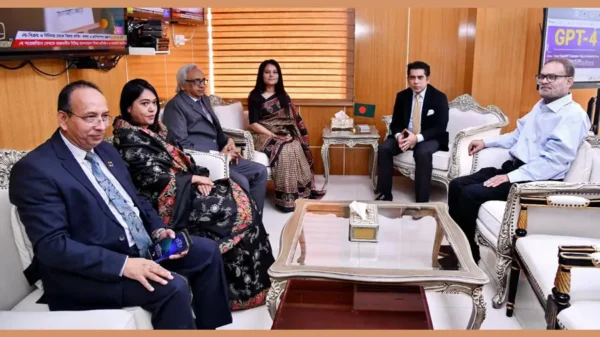
The Prime Minister is scheduled to hold a high-level meeting with Malaysian Prime Minister Anwar Ib-rahim, followed by delegation-level talks expected to set the direction for long-term economic integra-tion.
Regarding the Prime Minister’s visit, Foreign Secretary Asad Alam Siam told the media that a Memo-randum of Understanding (MoU) on the Terms of Reference (ToR) for the proposed Free Trade Agree-ment (FTA) between Bangladesh and Malaysia is expected to be signed.
Another MoU on cultural cooperation may also be signed.
He said discussions between the two heads of government will focus on expanding cooperation in trade and investment, labour markets, education, agriculture, energy, the halal industry, semiconductors, and other promising sectors.
Issues such as recruitment of new Bangladeshi workers in various Malaysian sectors, Bangladesh’s membership in ASEAN, and Malaysia’s support for the safe repatriation of Rohingyas will also be raised, he added.
Malaysia is one of Bangladesh’s most important economic partners in Southeast Asia.
It is a major labour market for Bangladesh and also a key supplier of energy, palm oil, industrial raw materials, and various consumer goods.
On the other hand, although there is growing potential for exports from Bangladesh in ready-made gar-ments, leather goods, ceramics, pharmaceuticals, and agricultural products, a significant trade imbalance still exists between the two countries.
According to business leaders, progress in FTA negotiations could help expand the market for Bangla-deshi products and reduce the trade deficit.
More than five decades after the establishment of diplomatic relations, business leaders see the visit not merely as a formal state visit but as a key opportunity to further strengthen the foundation of future eco-nomic partnership.