












Staff Reporter:
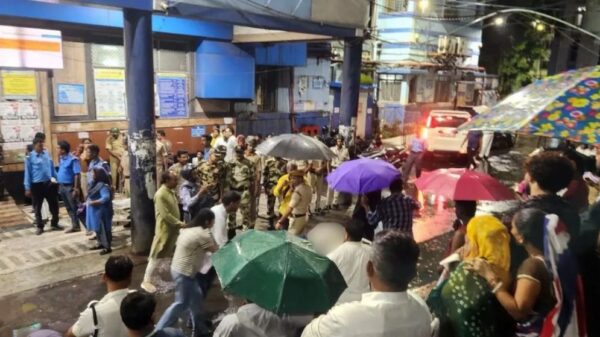
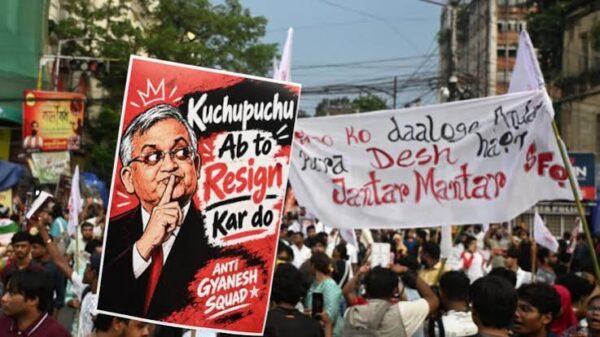
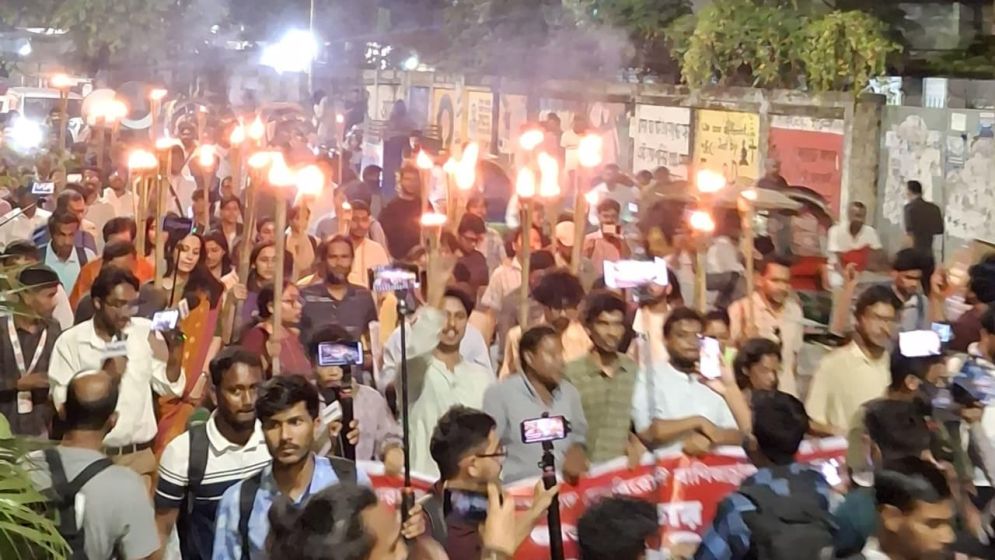
Democratic Students’ Alliance activists held a torch procession and protest rally at Dhaka University on Friday night demanding the cancellation of a trade agreement signed between the United States and the interim government led by Muhammad Yunus.
The march commenced from the Teacher-Student Centre (TSC) on Friday, parading through various campus roads before concluding with a short rally at the starting point. Leaders and activists from various leftist student organisations joined the demonstration.
During the rally, speakers alleged that the trade deal could jeopardise the agricultural, industrial, and economic independence of the country.
They claimed specific clauses might restrict the policy-making authority of the Bangladesh government and enable foreign control over critical decisions, including the provision of subsidies.
Protesters further argued that the agreement poses significant risks to farmers already struggling with agricultural crises, poor seed supply, and natural disasters.
They warned that the domestic dairy and poultry sectors could face severe damage.
The demonstrators also raised concerns regarding the pharmaceutical industry. They stated that strict adherence to patent laws mandated by the agreement could disrupt local medicine production, leading to price hikes that would make essential drugs unaffordable for the general public.
Jabir Ahmed Jubel, general secretary of the Revolutionary Students’ Unity, said during the rally that the agreement might force Bangladesh to import specific quantities of agricultural products with limited quality control.
He argued this would harm domestic markets and producers, urging the public to unite to protect national interests and demanding an immediate cancellation of the deal.
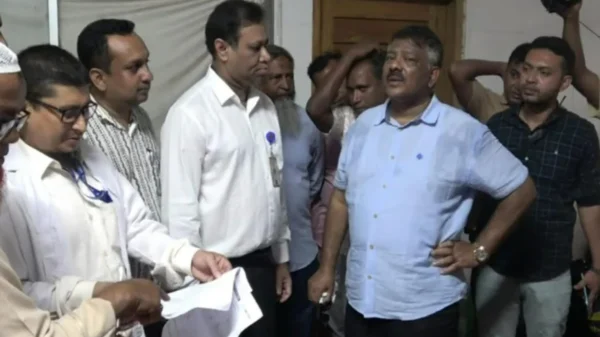
Meanwhile, Commerce Minister Khandakar Abdul Muktadir addressed the issue while speaking to reporters in the Baishitila area of Sylhet on the same day.
He noted that there is scope to amend the trade agreement with the United States if necessary.
The minister explained that an international agreement is a structured bilateral process rather than a personal decision, meaning it cannot be cancelled arbitrarily.
However, he assured that any clause found to be against the interests of Bangladesh during its implementation could be revised through prescribed diplomatic channels. He added that such agreements are built on mutual understanding and diplomatic realities.
The interim government signed the controversial trade agreement with the United States on 6 February, just three days before the 13th National Parliamentary Election. The deal continues to face intense scrutiny and criticism from various sectors.