


























Staff Reporter:
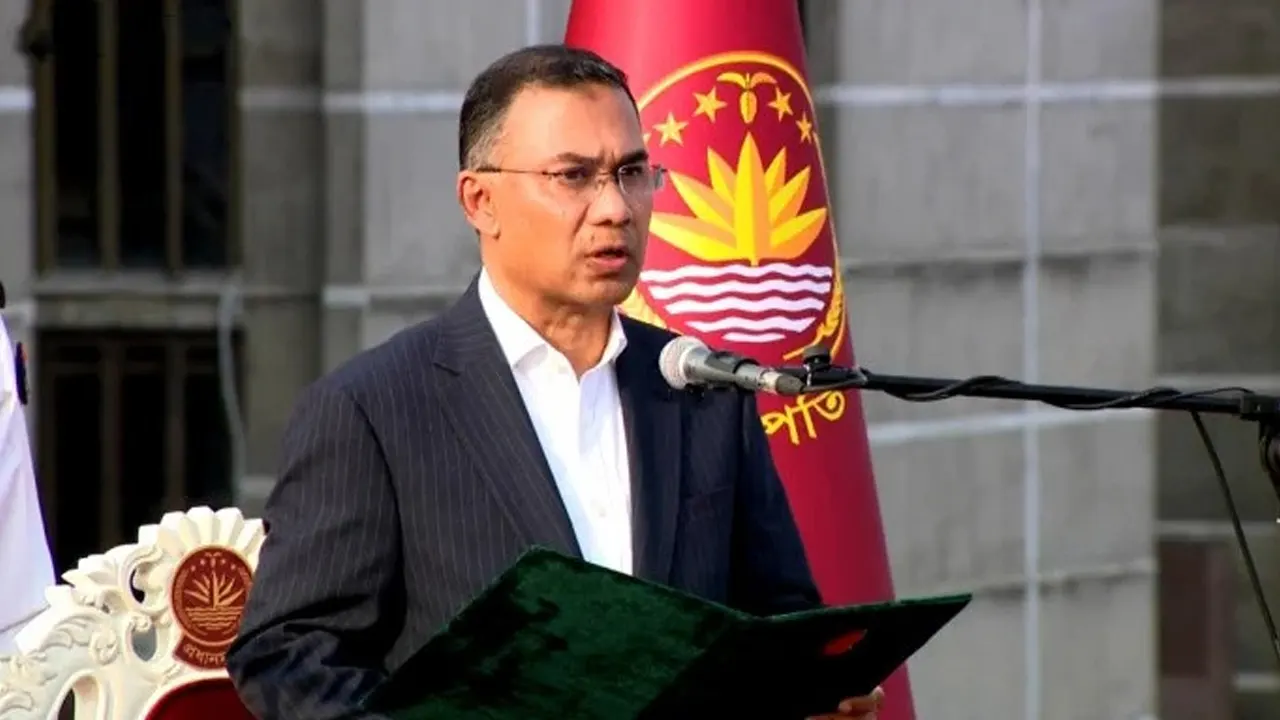
After assuming office with a decisive mandate in the 13th parliamentary election, BNP Chairman and Prime Minister Tarique Rahman has embarked on an ambitious agenda to rebuild a nation weakened by years of misgovernance under the previous fascist regime, led by Sheikh Hasina.
Within just weeks of taking oath, the new government has rolled out a series of initiatives at a pace rarely seen before. Officials claim that 28 decisions were taken and implemented within the first 28 days.
These initiatives span key sectors, including social protection, the economy, education, healthcare, administration, and law enforcement. Unlike many past governments accused of limiting their efforts to announcements, the current leadership has moved swiftly towards execution.
However, past experience in Bangladesh underscores a critical lesson: without proper monitoring and transparency, even the most ambitious programmes risk failing to benefit the people. Previous large-scale initiatives often suffered from weak oversight, lack of accountability, and widespread corruption, which ultimately eroded public trust.
Widespread allegations of plundering, misuse of public funds, and poor planning plagued many programmes during the AL regime, ultimately rendering them ineffective. In many cases, public welfare initiatives remained confined to ceremonial inaugurations rather than meaningful implementation. The absence of consistent monitoring made these projects vulnerable to corruption and led to significant waste of resources.
Various reports and investigations have pointed to entrenched corruption, weak transparency, and systemic misuse of state funds during the 15-year rule of the Awami League, contributing to growing public dissatisfaction. This discontent eventually culminated in a mass uprising that led to the fall of the government.
The new government has introduced several welfare-oriented programmes under its “Bangladesh First” philosophy. These include nationwide canal excavation, distribution of Family Card for women, plans for Farmers’ Card and upcoming e-health cards aimed at ensuring broader healthcare access. Measures such as loan waivers for small farmers, anti-dengue campaigns, and support for religious leaders reflect an attempt to address diverse societal needs.
In addition, steps have been taken in education and youth development, including scrapping re-admission fees, reforming school admissions, and expanding support to ensure bank guarantees of up to Tk1 million for higher education. Initiatives in sports, including recruiting trainers at the upazila level and opening fields of educational institutions for public use, signal a broader social approach.
Economic stabilisation has also been prioritised. Market monitoring during Ramadan, energy supply management, LNG procurement, and steps to attract foreign investment indicate efforts to maintain stability amid global uncertainty. Measures to open closed factories and ensure workers’ wages further highlight the government’s employment focus. The government introduced free Wi-Fi facilities at Dhaka, Chattogram and Sylhet airports, and on moving trains.
The government has distributed relief and essential items, including sarees, three-piece sets, and Hajj towels, among poor and underprivileged families across constituencies, alongside special Eid gifts for sanitation workers.
It has also taken initiatives to institutionalise the Zakat system and to appoint around 9,000 religious teachers in educational institutions, aiming to strengthen social welfare and moral education.
Among other initiatives, the government has taken steps to curb extortion and directed law enforcement agencies to adopt stricter measures to maintain law and order. It has also introduced plans for “pink buses” to ensure safer transportation for women, alongside efforts to combat cyberbullying and prevent violence against women and children.
Equally significant is the shift in governance culture within the ruling party. The prime minister has set a personal example by maintaining punctuality, regularly attending office, and even working on Saturdays – the weekly holiday – to accelerate official activities.
As part of austerity measures, he has reduced VVIP protocols to ease public movement and improve traffic conditions, while encouraging citizens to follow traffic rules. In a similar spirit, ruling party lawmakers have voluntarily given up various government privileges.
Yet, the ultimate success of these initiatives will depend not on announcements or early momentum, but on sustained oversight and transparency. Ensuring that benefits reach the grassroots remains the biggest challenge.
For instance, fair and transparent selection of beneficiaries under programmes like Family Card and Farmers’ Card is essential to prevent political bias. Similarly, strict monitoring of infrastructure projects such as canal excavation through digital tools, satellite mapping, or drone surveillance could help minimise misuse of funds.
Strengthening institutional transparency, particularly in the banking sector, will also be crucial if the government is to deliver on its promise of good governance and reduced political interference.
Equally important is citizen participation. Establishing local monitoring bodies or citizen advisory councils could enhance accountability and create pressure for proper implementation at the field level.
The prime minister has already declared a “zero-tolerance” stance on corruption. Translating this commitment into measurable outcomes will require a robust system of monitoring, evaluation, and public access to information, including effective use of the Right to Information framework.
Tarique Rahman has rightly emphasised that development cannot succeed without active public participation. In this regard, the formation of Citizen Advisory Councils or local monitoring committees could play a vital role in tracking project progress. Such mechanisms will not only enhance transparency but also create moral accountability among field-level officials, thereby reducing the scope for irregularities.
The overarching goal of the government is to raise per capita income and build a more inclusive, discrimination-free society. However, achieving these ambitions will require more than policy announcements – it demands effective planning, transparency, and rigorous monitoring and evaluation at every stage of implementation.
At the same time, all stakeholders must remain vigilant against any attempts to undermine these efforts. A stable and accountable governance framework, supported by public oversight, is essential to ensure that development initiatives are not derailed.