




























Staff Reporter:
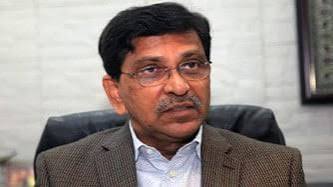
Posts, Telecommunication and Information Technology Minister Faqir Mahbub Anam yesterday said the government is working to create 10 lakh jobs in the digital sector in the next five years and turn Bangladesh into a regional hub of information technology and artificial intelligence (AI).
“The government is committed to building a modern, technology-driven and knowledge-based Bangladesh in the light of the “Bangladesh First” policy under the leadership of Prime Minister Tarique Rahman,” he said.
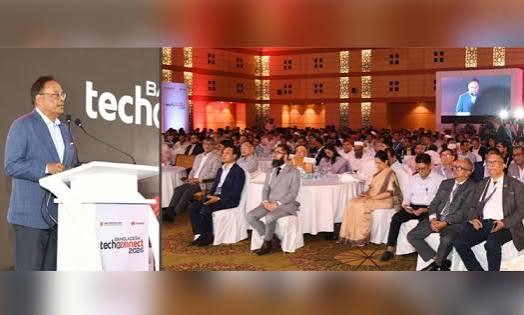
Faqir Mahbub Anam, also Science and Technology Minister, said this while addressing “Bangladesh TechConnect 2026” as the chief guest, according to a ministry release.
The conference was jointly organised by the Posts and Telecommunications Division and Huawei at the Bangladesh-China Friendship Conference Centre here.
The minister said it is essential to ensure reliable, secure, high-speed and affordable digital connectivity in every region of the country. For this, modern telecommunications infrastructure must be developed, digital skills increased, investment attracted and local innovation encouraged, he said.
Faqir Mahbub Anam also said effective use of AI and digital technology will play an important role in increasing productivity, creating new jobs and accelerating economic growth.
At the same time, cyber security, privacy of personal data and responsible use of technology must be ensured, he opined.
Emphasising coordinated initiatives of the public and private sectors, the minister said an inclusive and competitive digital economy can be built through the collective efforts of the government, local industries and international technology partners.
Posts and Telecommunications Division Secretary Dr Md Kamruzzaman said with the participation of representatives of the government, industry, educational institutions, development partners and the media, the conference has created scope to strengthen cooperation between policymakers and the industry.
He said digital infrastructure is no longer a luxury, but one of the main foundations for building a prosperous, investment-driven and knowledge-based economy.
Information and Communication Technology Division Secretary Md Mamunur Rashid Bhuiyan said the government has set five strategic priorities to accelerate the country’s digital transformation. These are a strong legal and policy framework, reliable connectivity, digital public infrastructure, AI and cyber security, and local production.
He said work has begun on formulating a national AI policy, which is expected to be completed within the next three to four months.
Huawei South Asia President Jason Wu said Huawei is committed to working with the government and industry partners to develop Bangladesh’s digital infrastructure and expand the use of technology.
He expressed determination to use the company’s capabilities in connectivity, cloud and AI to enhance the skills of local industries, innovate new services and contribute to Bangladesh’s long-term digital growth.
Posts and Telecommunications Division Joint Secretary Saida Afroz presented the keynote paper at the conference.
Three panel discussions were held on “Future Technology and Connectivity”, “Role of Technology in Enhancing Skills in the Industrial Sector” and “Artificial Intelligence: Global Trends, Impact and Bangladesh’s Preparedness”.
The panel discussions focused on the development of 5G and connectivity, enhancing industrial skills through technology, and Bangladesh’s preparedness for using AI.
The commercial potential of 5G, fixed wireless access and enterprise connectivity in sectors including the readymade garment industry, ports, agriculture and healthcare was also discussed.
Speakers highlighted ways to increase productivity, reduce operating costs and improve government services through cloud computing, automation, AI-based security systems and smart technologies.
They stressed reliable cloud infrastructure, data readiness, skilled human resources and supportive policies to ensure effective use of AI in banking, manufacturing, and freight, supply chain and government services.
The technology exhibition at the conference showcased various solutions on digital transformation, smart government, smart education, digital power, Smartphone technology and AI. High-level roundtable meetings were also held on digital power, AI and enterprise, and the digital economy and employment.
More than 500 participants, including government officials, policymakers, representatives of regulatory bodies, top executives of different organizations, technology experts, industrial entrepreneurs, academics and representatives of development partners, attended the conference.