
























Staff Reporter:
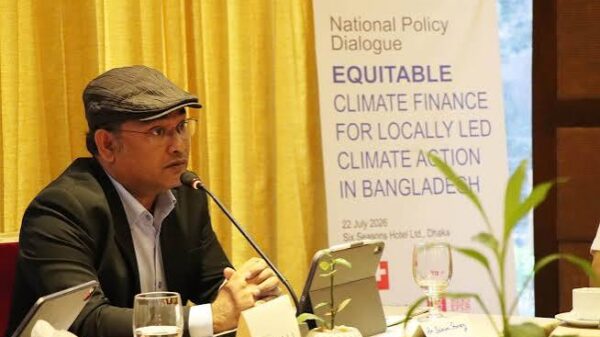
Dr Saimum Parvez, special assistant to the Prime Minister on Environment, Forest and Climate Change, yesterday reaffirmed the government’s commitment to presenting the tangible outcomes of its climate initiatives to people through concrete figures and measurable achievements.
He said the government is working relentlessly to bring about meaningful change and ensure the effective implementation of its commitments.
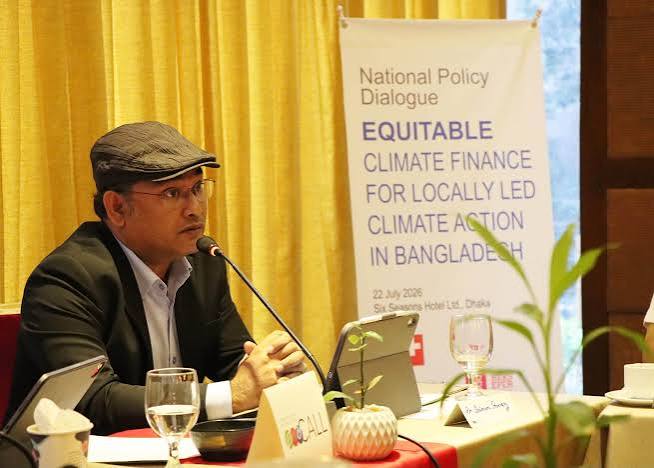
Dr Parvez made the remarks while addressing an event as the chief guest at the Bangladesh Pavilion during the 31st Conference of the Parties (COP31) in Antalya, Turkiye, according to a message received yesterday.
The event, titled “Accelerating Climate Finance for Locally Led Adaptation and Agri-Food Systems Transformation: Investment Pathways for Bangladesh,” was jointly organised by the Ministry of Environment, Forest and Climate Change, Government of Bangladesh; the Global Alliance for Improved Nutrition (GAIN); and the CALL Consortium, supported by Switzerland.
Dr. Saimum Parvez said although numerous initiatives, discussions, and commitments had been undertaken in the past to address climate change, their implementation had not achieved the expected level of progress.
The present government is determined to change this situation by implementing initiatives that deliver positive and visible impacts on people’s lives.
He said the government’s objective is not merely to formulate plans or make commitments, but to ensure concrete and measurable outcomes through effective implementation.
The government intends to provide the public with a clear account of the changes achieved in the climate sector, the extent of progress made, and the impacts of these initiatives on people’s lives, he said.
The special assistant further said the government is working to ensure that, after five years, citizens will be able to assess its performance based on concrete data, tangible progress, and measurable achievements, and make informed decisions on whether to re-elect the government in the next election.
Highlighting the importance of recognising the needs and practical experiences of local communities in addressing the impacts of climate change, he said aligning climate finance and investment with local priorities is essential for ensuring effective adaptation measures.
He particularly stressed the need for prioritising locally led adaptation initiatives to strengthen the capacity and resilience of climate-vulnerable communities.
He also underscored the importance of developing climate-resilient and sustainable agri-food systems, noting that greater access to effective financing and investment is necessary to ensure food security, reduce climate risks, and protect the lives and livelihoods of local communities.
AKM Sohel, additional secretary of the Economic Relations Division and Head of the International Climate Finance Cell, attended the event as a special guest.
The session was chaired by Mohammad Navid Shafiullah, additional secretary of the Ministry of Environment, Forest and Climate Change.
The keynote presentations were delivered by Mohammad Mahmudul Hasan, Head of the Water, Food and Climate Program at HELVETAS Swiss Inter-cooperation Bangladesh, and Dr. Mohammad Monirul Hasan, Head of Policy at the Global Alliance for Improved Nutrition (GAIN).
The panel discussion featured Shirin Sultana Lira, Senior Programme Manager for Governance, Climate Change and Environment at the Embassy of Switzerland in Bangladesh; Mirza Shawkat Ali, Director for Climate Change and International Conventions at the Department of Environment; Jahan-Zeb Chowdhury, Lead Technical Specialist in the Environment, Climate and Communities Division of the International Fund for Agricultural Development (IFAD); and Dr. Asadul Islam, Professor of Economics at Monash Business School, Australia.