

















Staff Reporter:
The fall of an authoritarian government cannot be the end of the democratic transition; rather, sustained social dialogue is imperative to strengthen democracy, justice and mutual understanding, speakers said at a symposium in Dhaka on Thursday.
They also warned that while digital platforms can broaden public participation, they can simultaneously deepen polarisation and division.
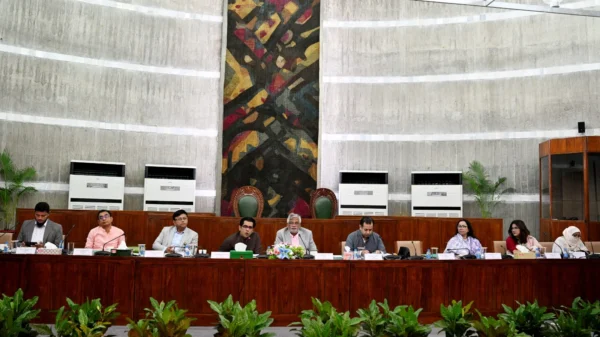
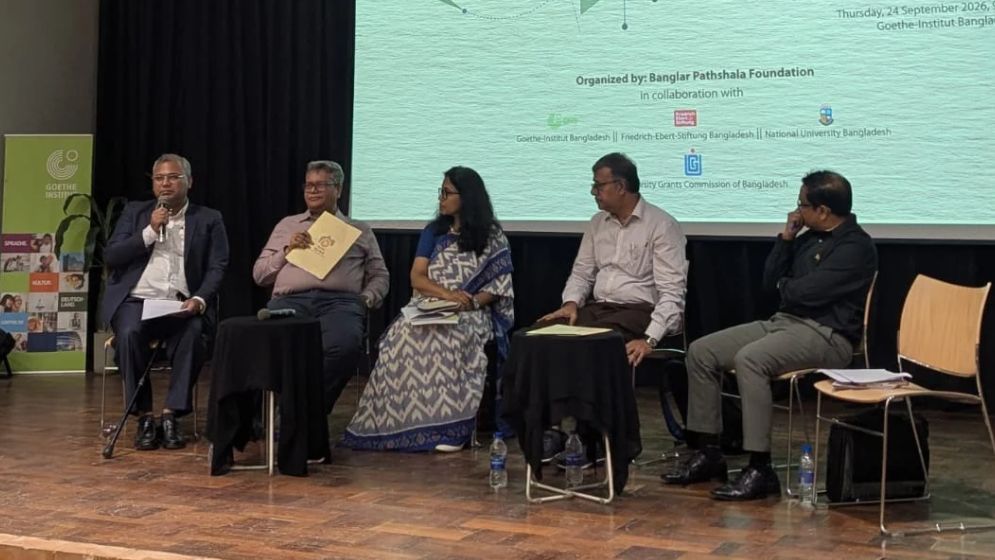
The day-long international symposium, titled “Jürgen Habermas in a Fractured World: Democracy, Public Sphere and the Future of Critical Reason,” was held at Goethe-Institut Bangladesh in the capital’s Dhanmondi.
Banglar Pathshala Foundation organised the event in cooperation with Goethe-Institut Bangladesh, Friedrich-Ebert-Stiftung Bangladesh, National University Bangladesh and the University Grants Commission.
Prof AI Mahbub Uddin Ahmed of Dhaka University said Facebook, WhatsApp, videos and hashtags created alternative channels of communication during the July 2024 movement, allowing different groups to voice their views outside mainstream media.
But the digital sphere can also fuel polarisation, making it important to use such platforms for reasoned discussion and democratic practices, he said.
Prof S Aminul Islam said a balance between the political-economic “system” and people’s social and personal lives – the “lifeworld” – is essential. When that balance breaks down, powerful structures can dominate people’s lives, creating alienation and a crisis of meaning.
Ahmed Javed Chowdhury, founder and chairman of Banglar Pathshala Foundation, said the fall of an authoritarian government was not enough.
“Dialogue is needed to strengthen democracy, establish truth, reduce inequality and address people’s sense of helplessness,” he said.
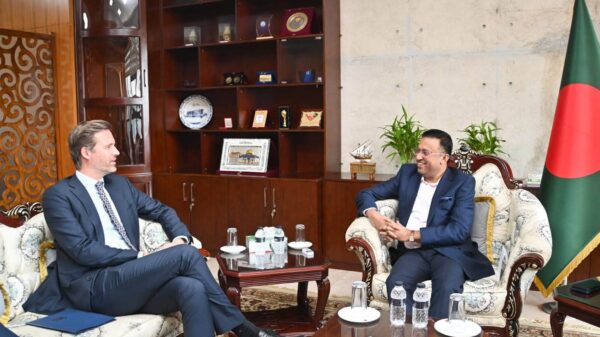
German Embassy Deputy Head of Mission Daniel Blum highlighted differing views over Bangladesh’s political and economic challenges and the future of the global order.
Friedrich-Ebert-Stiftung Resident Representative Felix Gerdes stressed knowledge-building, research, training and exchange of views to strengthen democracy.
Goethe-Institut Bangladesh Director Frank Werner said global markets, commercialisation, algorithms and social media were weakening reasoned and participatory public debate, while emotions and populism were increasingly occupying the space.
Academics, researchers, students, journalists, public intellectuals and civil society representatives attended the symposium.