












Staff Reporter:
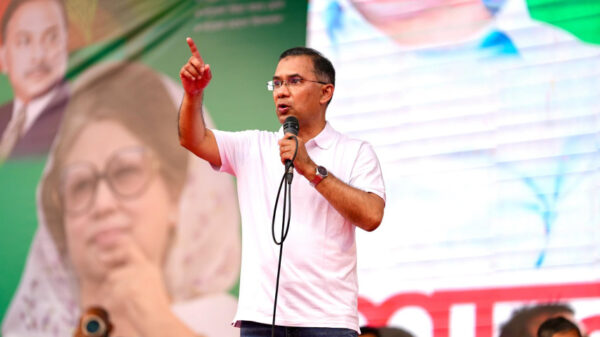
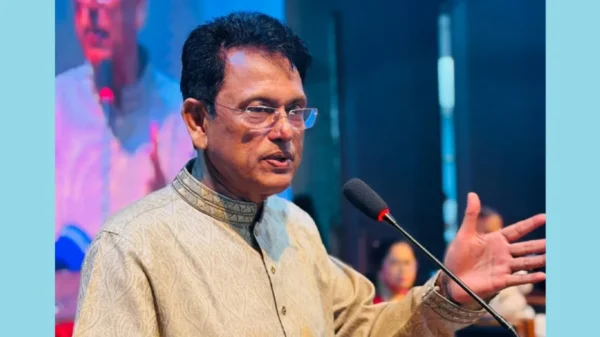
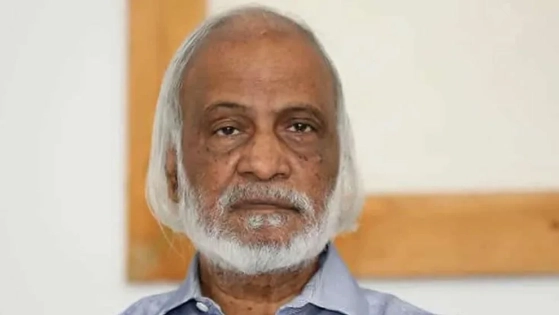
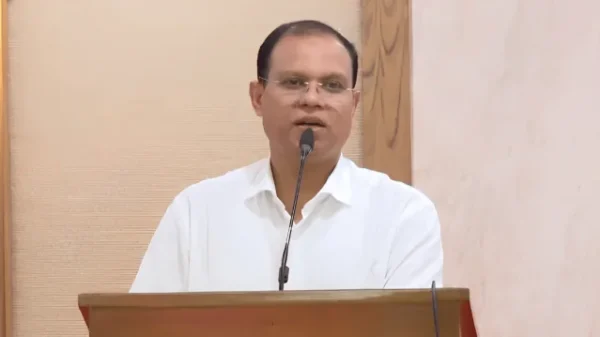
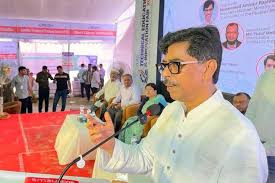
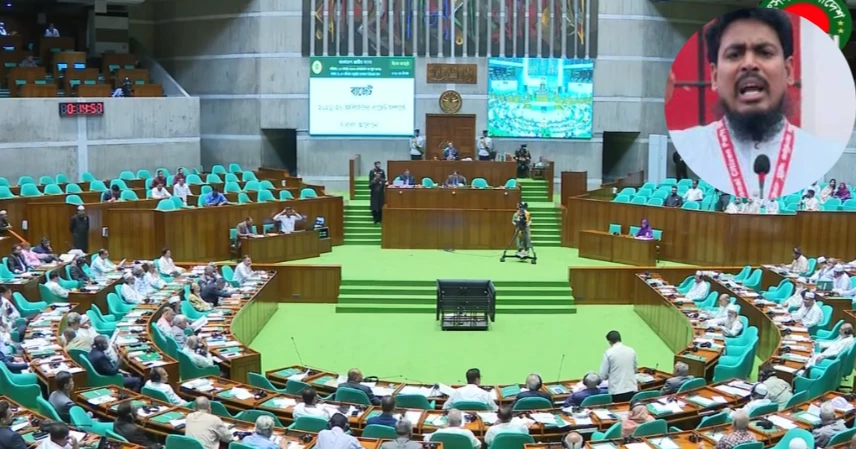
National Citizen Party (NCP) MP Akhter Hossen on Monday questioned the government’s decision to allow BNP women MPs elected to reserved seats to perform what he described as “additional responsi-bilities” in constituencies represented by opposition lawmakers, asking whether it signalled a move to-wards a one-party system.
Raising the issue on a point of order in Parliament, he sought clarification on the constitutional basis and scope of such responsibilities.
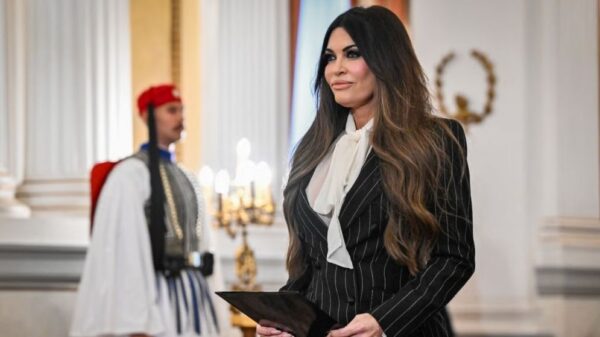
The matter surfaced after BNP reserved seat MP Zeeba Amina Khan, while asking a supplementary ques-tion during the question-and-answer session, said she visited Pirganj and Mithapukur under her “addi-tional responsibility” on Sunday.
She referred to the government’s decision to upgrade a 50-bed hospital to a 100-bed facility and high-lighted the shortage of healthcare staff.
The women MP also asked about government initiatives to train young people so they could assist as support personnel in hospitals.
Akhter Hossen initially sought to raise a point of order immediately, but proceedings were suspended for Asr prayers.
After the recess, he said BNP activists in the two Rangpur constituencies have been claiming that the elected MP was not the real representative and that the reserved seat MP should be regarded as the con-stituency’s MP.
The NCP lawmaker also recalled that State Minister Mir Shahe Alam earlier stated that no one has been assigned any additional responsibility, while the BNP woman MP claimed otherwise.
“Which statement is correct? What is the scope of this additional responsibility? How will it be exer-cised, and what is its constitutional basis?” he said, alleging
that such responsibilities were assigned only in constituencies represented by opposition MPs.
“This raises concerns. Is the BNP trying to establish a one-party system by assigning its reserved seat women MPs responsibilities in opposition constituencies?” Akhter Hossen said, demanding an explana-tion from the government.
Deputy Speaker Kayser Kamal later asked Home Minister Salahuddin Ahmed to respond.
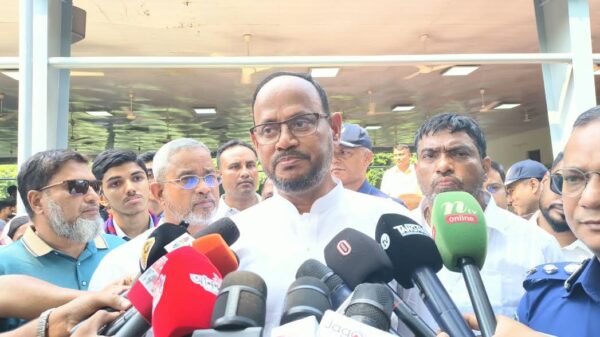
The home minister said reserved seat women MPs do not have any specific geographical constituencies and are entitled to perform their parliamentary responsibilities anywhere in Bangladesh.
Although the issue did not formally qualify as a point of order for the day’s proceedings, he said it re-quired clarification after it was raised in Parliament at the Deputy Speaker’s direction.
Referring to Article 65 of the Constitution, Salahuddin said the Jatiya Sangsad consists of 300 directly elected members and an additional 50 members elected to reserved seats for women.
He explained that while general seat MPs are elected from clearly demarcated constituencies, those terri-torial boundaries do not apply to reserved seat MPs.
“Their limited area is the whole country, Bangladesh,” he said.
The minister said reserved seat MPs enjoy the same status as other MPs and may allocate resources re-ceived from ministries and government agencies anywhere in the country.
He said a reserved seat MP could choose to allocate resources in Cox’s Bazar, Banshkhali or Satkania, or any other part of Bangladesh.
Salahuddin also remarked that when a reserved seat MP referred to one or two constituencies as “my area”, they unnecessarily restricted their own mandate.
“They should say the whole of Bangladesh is their area,” he said, adding that the concept of a fixed geo-graphical constituency does not apply to reserved seat women MPs.