





















Staff Reporter:
Cambridge University Press & Assessment has expressed its interest in building a long-term partnership with the Bangladesh government to develop the country’s education sector.
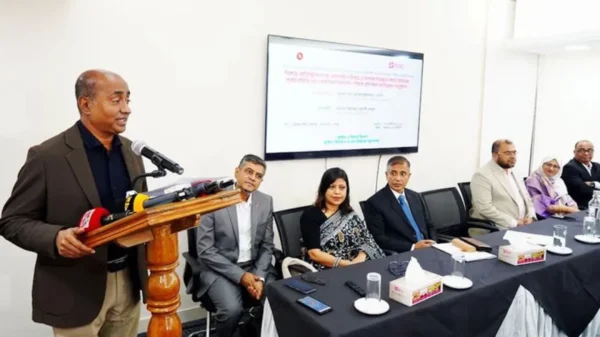
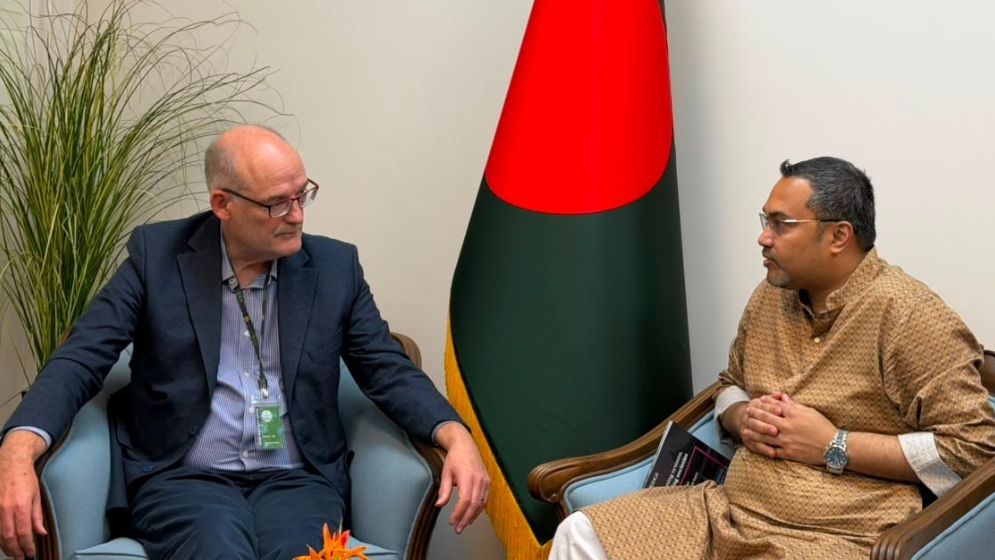
The matter was revealed when a delegation led by Rod Smith, managing director of international education at the organisation, met with Mahdi Amin, adviser and spokesperson to the prime minister, at the Prime Minister’s Office in Dhaka on Thursday, according to a press release.
The meeting focused on the development of Bangladesh’s education sector, curriculum reform, modernisation of the assessment system, teacher training, and skills development.
The delegation also conveyed its willingness to directly support teacher training, certificate courses, pedagogy-based training, and school leadership development programmes.
They expressed interest in helping make the primary education curriculum more effective and dynamic, improving the quality of English-language education, and supporting skills development and curriculum design.
During the meeting, the delegation praised various reform initiatives undertaken by the government in the education sector, including the “Learning with Happiness” programme.
They also highly commended the potential of Bangladeshi students and expressed interest in collaborating at the primary, secondary, and higher education levels.
Outlining the government’s education development plans under the leadership of Prime Minister Tarique Rahman, Mahdi Amin said that efforts are underway to make education more practical, employment-oriented, and aligned with industry needs.
He highlighted initiatives to integrate sports, culture, and co-curricular activities more deeply into the education system.
He also emphasised the importance of compulsory third-language education, the expansion of technical and vocational education, and equipping students with practical skills.
Mahdi Amin said that teacher training is one of the most critical components of improving the education system.
He noted that the government is working to build an education system that is suited to Bangladesh’s realities by adopting modern teaching methods, developing skilled teachers, and leveraging international experience.
Both sides expressed interest in working together on the basis of mutual cooperation and partnership to advance educational development.