























Staff Reporter:
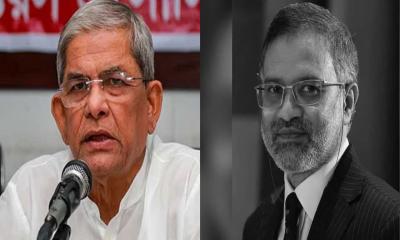
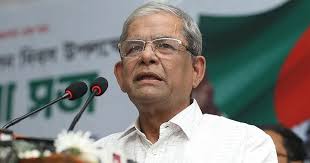
Local Government, Rural Development and Cooperatives Minister Mirza Fakhrul Islam Alamgir yester-day strongly emphasized republishing the closed newspapers Dainik Bangla, Bangladesh Times and the popular weekly Bichitra to create employment opportunities for journalists who became jobless due to discrimination during the previous Awami autocratic regime.
“These media outlets have historical and traditional values. Therefore, they should be reorganized to cre-ate new employment opportunities,” he said.
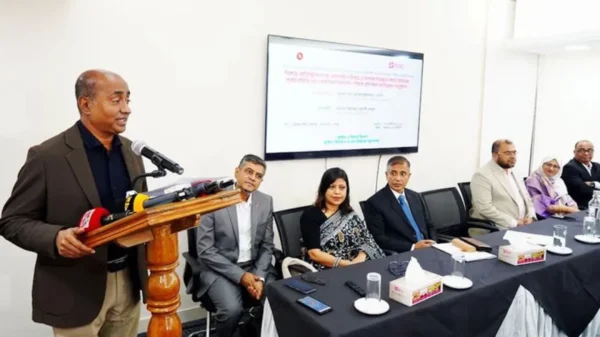
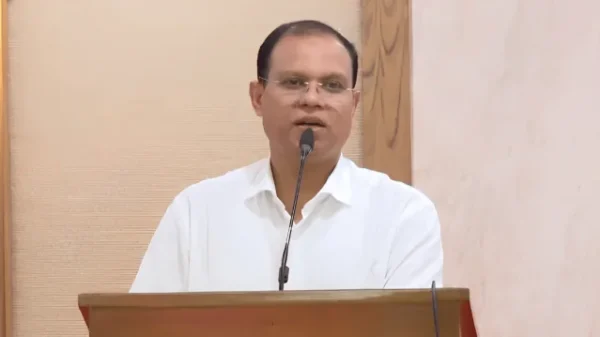
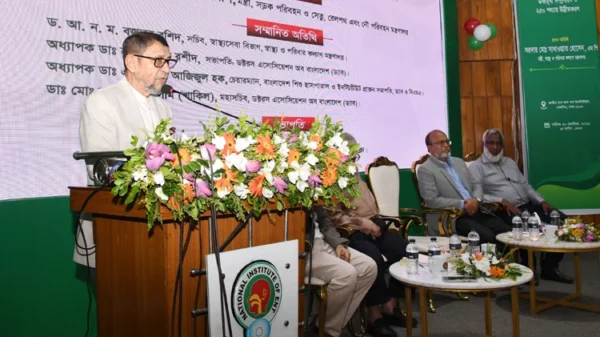
Mirza Fakhrul, also BNP Secretary General, made the remarks while addressing a discussion as the chief guest marking the “Black Day of Newspapers” at the Jatiya Press Club yesterday afternoon.
Bangladesh Federal Union of Journalists (BFUJ) and the Dhaka Union of Journalists (DUJ) jointly or-ganized the discussion.
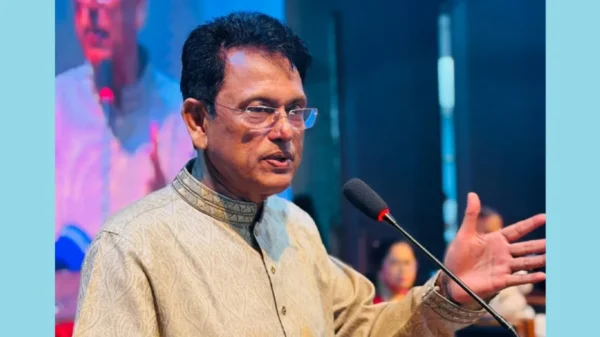
Information and Broadcasting Minister Zahir Uddin Swapon also spoke at the event as a special speaker.
With DUJ President Md Shahidul Islam in the chair, Acting General Secretary Didarul Alam Didar moderated the discussion, while BFUJ Secretary General Kader Gani Chowdhury presented the keynote paper.
Mirza Fakhrul Islam Alamgir said although many aspects of society and technology have changed over time, adequate employment opportunities for all journalists have not been created, which is extremely unfortunate.
“We have a competent information minister. I hope he will take necessary state initiatives to relaunch these traditionally important closed media houses,” he said.
He also called for creating new media platforms, if necessary with the involvement of stakeholders, to ensure the livelihoods of journalists.
Criticizing the political history of the Awami League, the BNP secretary general said a review of history shows that the Awami League and democracy never go together. It did not happen during the one-party BAKSAL rule in 1975, and it was again proven during the terrible fascist misrule of the past 15 years.
Mentioning that no joint or comprehensive book documenting of the dreadful misrule of the last 15 years has yet been published, he urged journalists and researchers to work quickly on the issue and re-quested the information minister to oversee the matter.
He said the dark chapter of newspaper closures that began on June 16, 1975, must never return to the country, and ensuring this remains the responsibility of the present generation.
Among others, National Press Club President Poet Hasan Hafiz, Television Editors’ Council Convener and Bangla Vision Editor-in-Chief Dr Abdul Hai Siddique, and Protidiner Bangladesh Editor Maruf Kamal Khan Sohel addressed the discussion.
BFUJ Vice-Presidents Khairul Bashar and AKM Mohsin, Assistant Secretary General Dr Sadikul Islam, Publicity Secretary Shahjahan Saju, Organizing Secretary Erfanul Haque Nahid, and leaders of different journalists’ bodies also spoke at the program.