




















Staff Reporter:
Parliament is set to let 20 ordinances issued during the interim government’s tenure lapse in the current session, while recommending repeal of several key legal instruments and further scrutiny of others before reintroduction as new bills.
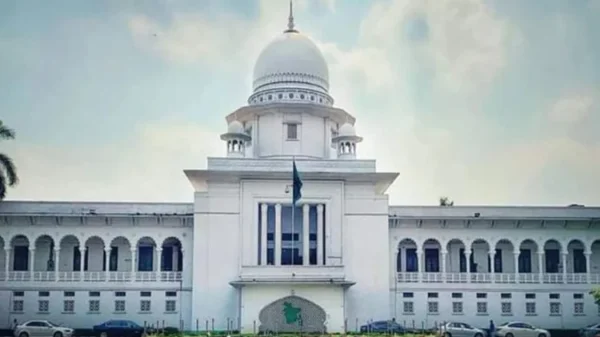
A special parliamentary committee has recommended repeal of four ordinances, including the Supreme Court Judges Appointment Ordinance, 2025 and the Supreme Court Secretariat Ordinance, 2025, alongside the Supreme Court Secretariat (Amendment) Ordinance, 2026 and the National Parliament Secretariat (Interim Special Provisions) Ordinance.
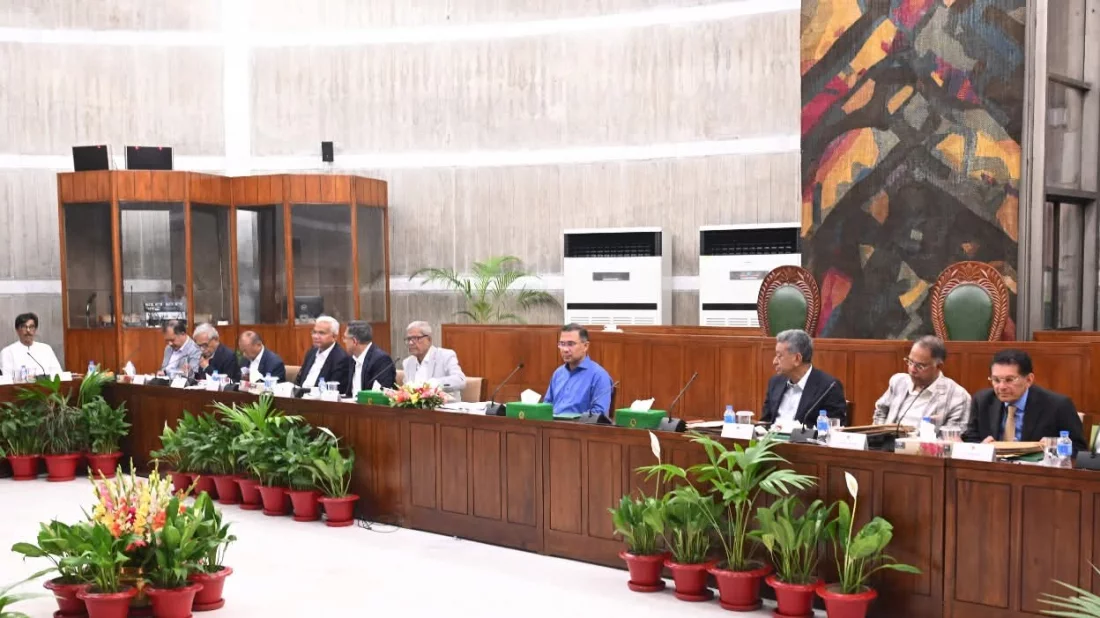
The committee’s report was presented in the National Parliament on Thursday by its chairman, Zainul Abedin.
20 ordinances to lapse
In total, 133 ordinances issued during the interim government were placed before parliament earlier this month.
Following review, the committee recommended that 20 ordinances should not be approved in their current form.
Under the Constitution, any ordinance not approved within 30 days of being tabled in parliament automatically lapses.
Of these 20, 16 ordinances have been recommended for further scrutiny and redrafting before being introduced as fresh bills at a later stage.
These include the National Human Rights Commission Ordinance, the Referendum Ordinance, the Prevention and Remedy of Disappearances Ordinance, and the Anti-Corruption Commission (Amendment) Ordinance, 2025.
The committee suggested strengthening these laws through detailed review rather than rushing them into parliamentary approval.
98 ordinances to be placed as bills
The committee recommended that 98 ordinances be placed before parliament as bills for approval.
Among them are several politically significant measures, including the July Uprising (Security and Liability Determination) Ordinance, which addresses legal protections related to the July uprising.
Other ordinances recommended for passage include amendments to laws governing Bangladesh Bank, the energy regulatory framework, cyber security, and various public institutions.
15 ordinances to be revised
Another 15 ordinances have been recommended for introduction in amended form, although the report does not specify the exact changes.
These include the Anti-Terrorism (Amendment) Ordinance, the Police Commission Ordinance, and amendments related to labour law, telecommunications regulation, and public procurement.
The Anti-Terrorism amendment, in particular, includes provisions related to restricting the activities of certain political entities, which has drawn attention.
Dissent from opposition
Three members of Jamaat-e-Islami submitted notes of dissent over the committee’s recommendations on 20 ordinances, including those proposed for repeal and further review.
They also opposed the repeal of key judicial ordinances, arguing against the withdrawal of measures related to judicial appointments and administration.
The Supreme Court Judges Appointment Ordinance, 2025, introduced during the interim government, sought to establish a Supreme Judicial Appointments Council led by the Chief Justice to recommend judicial appointments.
Similarly, the Supreme Court Secretariat Ordinance, 2025 aimed to create an independent administrative structure for the judiciary, transferring control over postings, promotions and discipline of lower court judges to a dedicated secretariat.
The repeal of these ordinances indicates a potential shift in the approach to judicial governance.
Interim laws under review
The ordinances were issued under the interim government led by Professor Muhammad Yunus, covering a wide range of areas including governance, finance, law enforcement and institutional reform.
The committee’s recommendations suggest a selective approach—retaining some measures, revising others, and discarding those deemed unsuitable in their current form.
With parliament moving to review and replace many of these ordinances through new legislation, the coming sessions are expected to shape the long-term legal and institutional framework in several key sectors.