
























Staff Reporter:
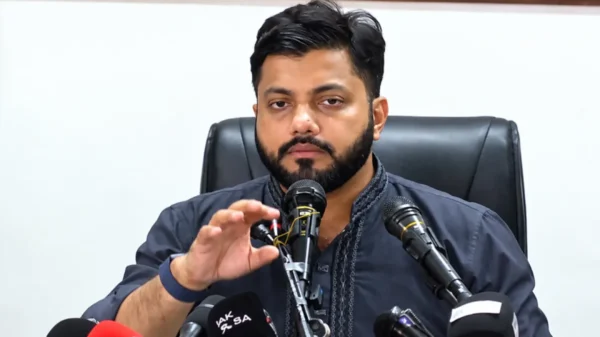
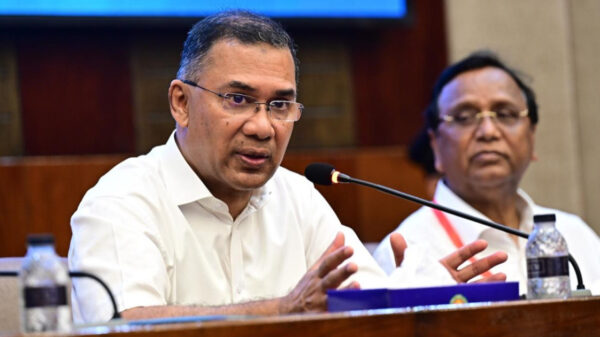
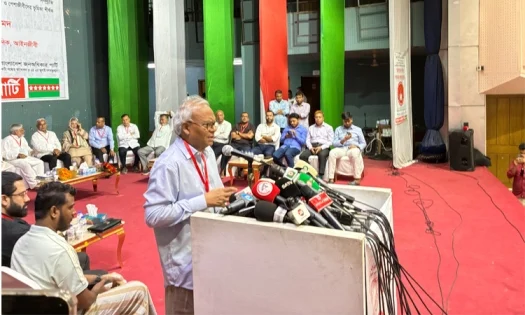
National Citizen Party (NCP) Convener Nahid Islam has called upon the people from all walks of life to actively engage in politics, saying that politics should no longer remain confined to the rich and power-ful but belong to ordinary citizens who dream of changing the nation.
“Those who dream of transforming the country must take ownership of politics. Politics must be won by the people,” Nahid told a video message last night.
Nahid said politics is not a distant affair; it directly determines how a country is governed and the direc-tion in which the state moves. “The time for despising politics is over. Politics must be for and by the common people,” he added.
Recalling the historic day of August 5, 2024, when students and people entered the National Parliament area, Nahid said, “That day, we came with the dream of establishing an egalitarian and democratic Bang-ladesh. The dream is yet to be fully realized, but the struggle has not stopped.”
Paying tribute to the martyrs of the uprising, he said that the movement was made possible through the participation of ordinary people—fathers, mothers, sisters, and brave young students—whose sacrifices will continue to inspire the movement for change.
Describing the National Parliament as the guiding institution of the country, Nahid said, “It is from the parliament that laws are made and the constitution takes shape.”
He said that on August 5, the people reclaimed the parliament, which had become detached from public representation. He termed the upcoming parliament “the most significant in Bangladesh’s history,” em-phasizing that it must implement the reforms outlined in the “July Charter” through the formation of a Reform Council.
Calling for new leadership free from corruption, Nahid said, “We do not want to see the same corrupt and exploitative businessmen entering parliament with black money as before. This time, we want genu-ine representatives—honest, patriotic and visionary individuals—to contest and lead.”
The NCP convener urged professionals from all walks of life—teachers, professors, entrepreneurs, wom-en’s rights activists, environmentalists, student leaders, Islamic scholars, labor leaders, and farmers—to take part in the nation’s policymaking process.