





















Staff reporter:
Industrial activities have started returning to normalcy following the announcement of a new minimum wage structure for readymade garment (RMG) workers.
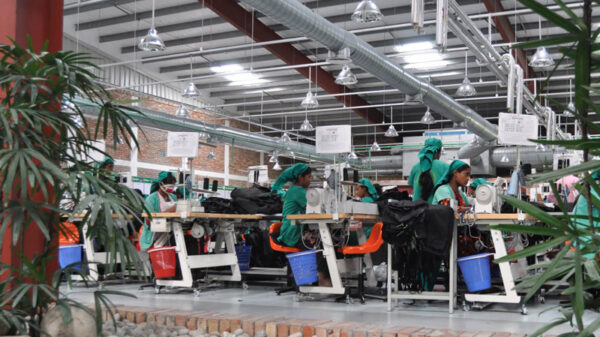
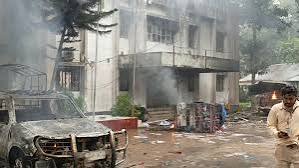
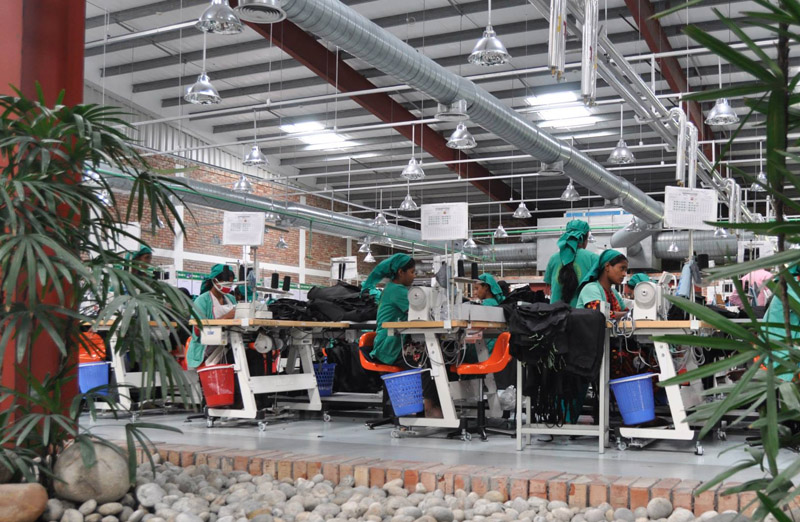
Production has resumed in most of the factories, while industrial areas, including Savar and Ashulia, have gradually regained momentum with a large number of workers resuming work after days of labour unrest, work stoppages and demonstrations.
The announcement of the new wage structure, coupled with appeals from labour leaders to return to work and calls from factory owners to maintain production, has received a positive response from workers.
Workers were seen voluntarily joining their workplaces at different factories in Savar and Ashulia this (Thursday) morning.
According to Industrial Police sources, production was continuing peacefully in most of the factories, although work stoppages persisted at a few establishments.
Superintendent of Police of Industrial Police-1 Mohammad Mominul Islam Bhuiyan said workers had voluntarily entered factories and resumed their duties on Thursday morning.
Production was continuing peacefully in most of the factories, he said, adding that police remained alert to maintain overall law and order in the industrial areas.
Industrial Police sources said workers at three factories in Savar and Ashulia were still observing work stoppages, while several other factories remained closed.
However, the overall situation in the Savar-Ashulia industrial belt has improved as most workers have returned to their workplaces, accepting the announced minimum monthly wage of Tk 17,000 and increased allowances.
Earlier, leaders of different labour organisations welcomed the new wage decision on Wednesday and urged workers to resume their duties.
President of the Sammilito Garments Sramik Federation Nazma Akter told BSS that although the decision, reached through voting among representatives of workers, employers and other members of the wage board, did not fully reflect workers’ expectations, they had accepted it considering the prevailing circumstances.
She said the immediate priority should be to ensure how quickly and through what process the announced wages could be implemented.
Nazma Akter said demonstrations were still taking place in some areas despite the announcement, but she hoped the situation would gradually improve.
She said labour leaders would make every effort to encourage workers to return to work and restore a normal working environment in industrial areas.
President of Bangladesh Garments Sramik Sanghati Taslima Akhter also described the new wage announcement as a positive initiative.
Talking to BSS, she said the government had announced a new wage structure within a relatively short period in response to the demands of garment workers.
She expressed hope that workers would welcome the government decision, withdraw from the movement and return to their workplaces with renewed enthusiasm.
Labour leader and adviser to the Sammilito Garments Federation Oikya Parishad Humayun Kabir Khan also urged workers to accept the new wage structure and resume work to maintain production.
He said the new wages did not fully meet workers’ expectations, but labour leaders had accepted the decision for the time being, considering the country’s industrial economy, export trade and overall situation.
Humayun Kabir Khan said amendments to the Labour Act had introduced a provision for forming the minimum wage board every three years instead of five years.
The provision would create opportunities to revise workers’ wages more frequently in line with commodity prices and the rising cost of living, he added.
Meanwhile, Bangladesh Garment Manufacturers and Exporters Association (BGMEA) President Mahmud Hasan Khan expressed hope that the new wage announcement would restore a normal working environment in industrial areas.
He said the competitiveness of the country’s garment industry had been considered while determining the new wage structure and all members of the wage board had signed the revised structure.
Therefore, all concerned parties should accept the decision, he added.
Mahmud Hasan Khan said implementing the new wages could pose challenges for the industry due to rising production costs and declining garment prices in international markets.
Small and medium-sized factories, in particular, would face additional cost pressures, he said, stressing the need for cooperation between workers and factory owners and the maintenance of a normal working environment.
Under the new wage structure, the minimum monthly wage for RMG workers has increased to Tk 17,000 from Tk 12,500, representing an increase of Tk 4,500 or 36 percent.
The monthly wage for senior operators under Grade-1 has been raised to Tk 21,500 from Tk 15,035, an increase of Tk 6,465.
For Grade-2 operators, the wage has increased to Tk 20,000 from Tk 14,273, marking an increase of Tk 5,727.
The monthly wage for junior operators under Grade-3 has been raised to Tk 19,200 from Tk 13,550, an increase of Tk 5,650. The minimum monthly wage for Grade-4 workers has been set at Tk 17,000.
The wage structure was finalised through voting at the fourth meeting of the Minimum Wage Board late Tuesday night following lengthy discussions and negotiations.
Labour representative to the board Babul Akhter said workers’ representatives had proposed a minimum monthly wage of Tk 18,000 in their final proposal, while employers had proposed Tk 17,000.
Of the six board members, four voted in favour of Tk 17,000, while two supported Tk 18,000. The board finalised Tk 17,000 based on the majority decision.
Chairman of the Minimum Wage Board Syed Azad Subhani said the new wage structure would come into effect on December 1.
Consequently, if factories pay December salaries under the revised structure, workers will receive their first increased wages in January.
Alongside implementing the new wage structure, labour leaders have stressed the need to control the prices of essential commodities and house rents to reduce workers’ living costs.
Nazma Akter said temporary measures such as providing food assistance or rice would not be sufficient to improve workers’ living standards.
She called for long-term plans to ensure essential civic facilities, including housing, healthcare, education, recreation and religious institutions.
She also urged the government to take effective measures to control the prices of essential commodities, fuel and food items and prevent further increases in house rents in industrial areas.
Industry insiders believe workers’ return to factories following the wage announcement marks a positive development for the RMG sector.
They said maintaining production through mutual trust and cooperation between workers and employers would help the industry overcome the impact of the recent unrest.
As the country’s largest export-earning sector, the RMG industry needs uninterrupted production and supply chains. Maintaining a peaceful working environment in factories is particularly important to preserve Bangladesh’s competitiveness in international markets.
Stakeholders expressed hope that proper implementation of the new wage structure, protection of workers’ legitimate rights and continued dialogue between employers and workers would help resolve the remaining labour issues in industrial areas.