
































-By Dr. Engr. Md. Zakir Hossain Khan
In Bangladesh, graduates of government-approved medical colleges can generally enter the recognized professional system after completing the prescribed professional requirements. The rationale is straightforward: the institution is recognized by the state, and the graduate has fulfilled the required academic and professional criteria.
But a different question arises in the case of engineers.If an individual completes a BSc in Engineering from a university approved by the University Grants Commission (UGC), why should that graduate face a fundamentally different professional pathway simply because the engineering program is not accredited by the Board of Accreditation for Engineering and Technical Education (BAETE)?
This is not an argument against accreditation. Engineering education must meet appropriate academic and professional standards, and BAETE accreditation has an important role in assuring the quality of engineering programs. The real question is whether a graduate should bear the entire burden of an institutional accreditation gap.
Why should a person suffer professionally after completing a BSc Engineering degree from a UGCapproved university in Bangladesh simply because the particular program has not received BAETE accreditation? If the university is legally authorized to provide higher education and award the degree, and the student has successfully completed the prescribed curriculum, should there not be a fair and transparent mechanism through which that individual can demonstrate professional competence?
This distinction is important. Institutional accreditation and individual professional competence are not necessarily the same thing. A university’s accreditation status may depend on institutional processes, programme reviews, curriculum requirements, facilities, faculty standards and other factors. But an individual graduate should also have an opportunity to establish his or her own professional competence through a nationally recognised assessment.
This is where the question of professional equality becomes relevant. Does the existing system create a situation in which graduates may be treated differently not because of their individual competence, but because of the accreditation status of the programme from which they graduated?If quality control is the objective, a more transparent and competency-based national pathway could be considered. The legal profession, for example, has a system through which law graduates must meet prescribed professional requirements before entering practice. Could a comparable mechanism be developed for engineering graduates?
Such a system could preserve BAETE accreditation as an important quality-assurance mechanism while also providing an alternative route for graduates of UGC-approved but non-accredited programmes to demonstrate their competence. This would allow standards to be maintained without automatically closing the professional door on graduates.
The issue deserves particular attention because engineers are central to Bangladesh’s development. They design and maintain infrastructure, power and energy systems, transportation networks, water and environmental projects, industrial facilities and technological systems. Engineering expertise is fundamental to productivity, innovation and long-term economic growth.
Ceremonial activities and observance of professional days have their place. But for future engineers, practical opportunities may matter even more: regular technical seminars, professional training, mentorship, research opportunities and meaningful industry-academia collaboration.This raises a broader question: Should IEB merely represent engineers who are already established in the profession, or should it also help develop the engineers Bangladesh will need in the future?The answer should be both.
Professional institutions have a responsibility to protect standards while also creating fair opportunities for professional growth. Standards and inclusion should not be treated as competing objectives. A welldesigned system can demand competence while providing qualified graduates with a fair opportunity to demonstrate it.
Bangladesh needs engineers who are technically competent, ethically responsible and continuously updated with global professional practices. Achieving that objective requires rigorous quality assurance and meaningful professional development, but quality assurance should not become synonymous with exclusion.
The debate, therefore, should not be about whether engineering standards should be maintained. They must be maintained. The real question is how those standards can be enforced through a transparent, fair and nationally consistent system.
Engineers deserve professional rights, while society deserves professional competence. Bangladesh needs both.We should demand quality, but not discrimination in the name of quality. We should protect standards, but also provide a fair pathway for every qualified engineering graduate to prove professional competence.
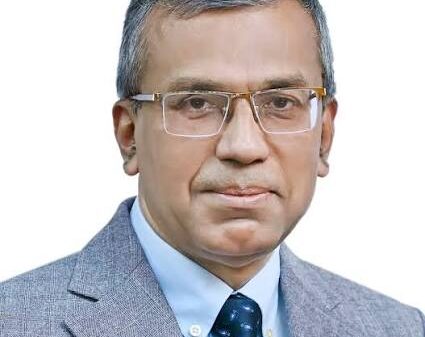
(The writer is Assistant Professor, Department of Civil Engineering, Bangladesh Army University of Engineering & Technology (BAUET).