






















Commerce reporter:
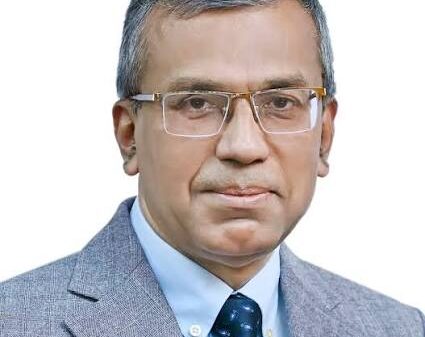
Bangladesh Bank (BB) Governor Md Mostakur Rahman today said the central bank plans to introduce a fully floating exchange rate system within a month to make the foreign exchange market more competitive, transparent and participatory.
“Hopefully, within a month, it will become a fully floating market, like a stock exchange,” he said while speaking at a consultation meeting with business leaders and other stakeholders in Chattogram.
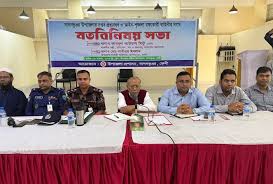
The meeting was organised to formulate the monetary policy for January-March 2027, the third quarter of the current fiscal year.
The governor said the proposed system would allow buyers and sellers to negotiate foreign currency prices directly, reflecting market demand and supply.
He questioned why the Bangladeshi taka had depreciated more sharply than the Indian rupee over the past decade despite the two neighbouring economies recording almost identical cumulative GDP growth.
Citing exchange rate data, he said the Indian rupee depreciated from 67.20 against the US dollar in 2016 to 94.03 in 2026, a decline of around 40 percent.
In comparison, he said, the taka weakened from Tk 78.47 to Tk 124.86 against the dollar, representing a depreciation of nearly 60 percent.
During the same period, India’s cumulative GDP growth stood at 72.4 percent, while Bangladesh recorded 72.1 percent, he said.
The governor also questioned why the exchange rate had continued to rise despite an improvement in foreign currency liquidity, which had increased from US$300 million to US$1 billion at one point. He noted that 51 banks reportedly maintained long positions in foreign exchange.
Bangladesh Bank is reviewing foreign exchange trading practices to ensure greater competition and transparency in the market, he added.
On inflation, the governor said controlling price pressures required more than adjustments to interest rates, stressing the importance of strengthening production, supply and distribution systems.
He said the central bank was prioritising agriculture and small and medium enterprises (SMEs) through financing schemes and incentives to boost production, processing, preservation and distribution.
He also underscored the importance of exchange rate stability in attracting foreign investment and ensuring the smooth operation of domestic businesses.