


































Commerce reporter:
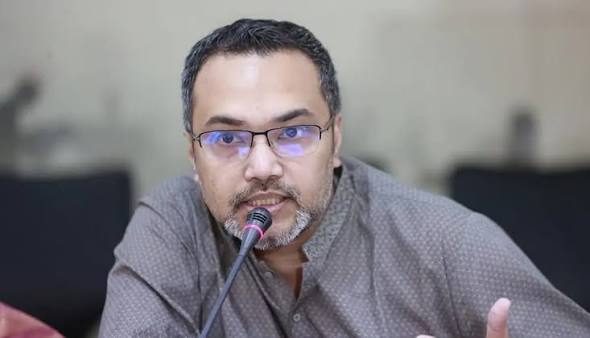
Affordable foreign currency financing has become increasingly important for sustaining Bangladesh’s international trade, industrial production and investment amid mounting economic challenges, ICC Bangladesh President Mahbubur Rahman said.
He made the remarks while delivering his closing speech at a workshop titled “Obtaining Import Financing in Foreign Currency – Challenges and Solutions”, jointly organised by the International Chamber of Commerce (ICC) Bangladesh and Germany-based ODDO BHF SE at Renaissance Hotel in the city on Saturday, said a press release today.
Mahbubur Rahman said Bangladesh is facing inflationary pressures, foreign exchange constraints, subdued private sector investment and uncertainties in global trade.
The Bangladesh Bank’s tight monetary policy to contain inflation has also contributed to slower private sector credit growth, he added.
Highlighting the need for innovative trade financing instruments, he said Usance Payable at Sight (UPAS) Letters of Credit allow importers to enjoy extended payment periods while ensuring timely payments to overseas suppliers.
Similarly, Export Credit Agency (ECA)-backed financing can provide longer-term funding at competitive costs for importing capital machinery, advanced technology and industrial equipment, he added.
These financing instruments could play an important role in industrial modernisation, infrastructure development, renewable energy expansion and export diversification, he observed.
Referring to Bangladesh’s upcoming graduation from the Least Developed Country (LDC) category, the ICC Bangladesh president stressed the need to strengthen economic resilience, export competitiveness, financial sector reforms and international financing capabilities.
He also underscored the importance of sound risk management, regulatory compliance and stronger cooperation among banks, regulators and international financial institutions.
Highlighting bilateral economic relations, Mahbubur Rahman said Germany remains a major trading and development partner of Bangladesh, offering opportunities for cooperation in trade finance, technology transfer and industrial investment.
He reiterated ICC Bangladesh’s commitment to professional capacity-building through workshops and internationally recognised certification programmes offered by ICC Academy and Walbrook Institute London, formerly The London Institute of Banking and Finance (LIBF).
Speaking at the closing ceremony, Muhammad A. (Rumee) Ali, Chairman of the ICC Bangladesh Banking Commission, said bankers are facing growing challenges and need to exercise greater caution in client selection, due diligence and risk assessment.
Thomas Kuerten, Director and Senior Regional Manager of International and Corporate Banking at ODDO BHF SE, Frankfurt, and Ataur Rahman, Secretary General of ICC Bangladesh, also spoke.
The technical sessions were conducted by Karim Dolibois and Uschi Kirchner of ODDO BHF SE, focusing on UPAS Letters of Credit, ECA-backed financing, documentation and risk management.
The Dhaka workshop was attended by 77 participants, including three representatives from KfW and one from the International Finance Corporation (IFC).
Meanwhile, ICC Bangladesh is organising a similar workshop today at Hotel The Peninsula Chittagong, with 35 bankers from 17 banks and 12 corporate clients sponsored by Eastern Bank participating.
The same facilitators are conducting the technical sessions in Chattogram.
Mahbubur Rahman thanked ODDO BHF SE for sponsoring both workshops and appreciated Eastern Bank’s support, expressing hope that the programmes would strengthen Bangladesh’s international trade financing capabilities.