




















Staff reporter:
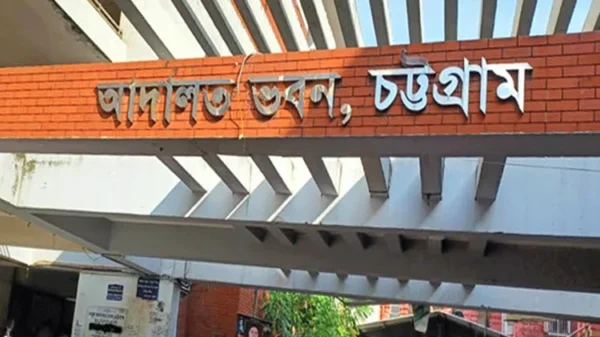
A legal facility known as probation has helped hundreds of minor offenders in Chattogram reform themselves and return to normal life without serving time in prison.
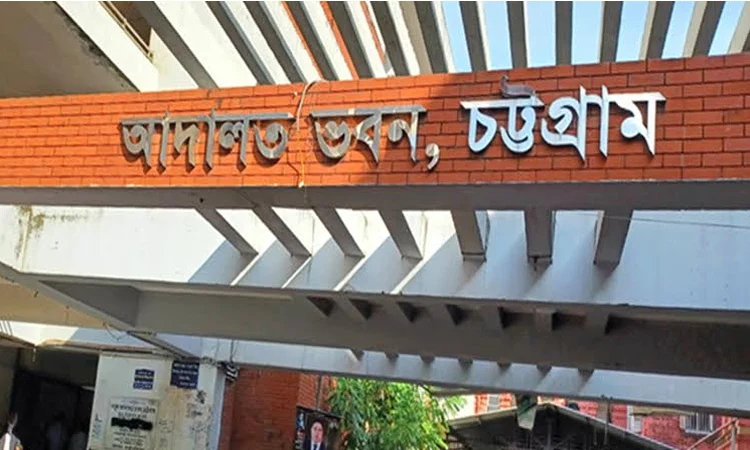
Since the probation office was established at the Chattogram Chief Metropolitan Magistrate (CMM) Court in 2016, a total of 1,551 offenders have received the opportunity to reform under court-supervised conditions.
According to probation office records, 992 individuals are currently under probation supervision, the highest number handled by a single probation office in the country. Another 559 have completed the required conditions and been released from their sentences, officials said.
Probation is a legal mechanism through which a court suspends an offender’s imprisonment and allows the person to remain with their family and reintegrate into society under the supervision of a probation officer, subject to specific conditions.
The story of Abdullah (not his real name) illustrates how the system can change lives.
Abdullah earned a GPA-5 in the 2023 Secondary School Certificate (SSC) examinations from Chattogram Government Muslim High School. Despite his academic achievements and promising future, he became involved with a teenage gang and was arrested by the then Rapid Action Battalion (RAB). He was subsequently sent to a juvenile development centre.
His future took a different turn when the Chattogram Women and Children Repression Prevention Tribunal-5 ordered that he be placed under the supervision of a probation officer instead of being confined.
Probation officer Monjur Murshed involved Abdullah and his family in the rehabilitation process, helping the young man reflect on his mistakes and change his behaviour.
After a period of rehabilitation, Abdullah abandoned his previous habits and began rebuilding his life. The court and probation office later determined that he had fulfilled the requirements for release from his sentence.
Returning his focus to education, Abdullah secured admission to the Department of English at the University of Chittagong.
His journey from juvenile delinquency to university life demonstrates how rehabilitation can offer young offenders a second chance.
The CMM Court and its subordinate courts continue to place eligible accused and convicted persons under conditional supervision through the Department of Social Services’ probation office.
Officials said the system helps offenders reintegrate into society while reducing pressure on overcrowded prisons. It also limits the risk of minor offenders coming into contact with hardened criminals in jail and becoming involved in more serious crimes.
Probationers must fulfil conditions set by the courts within a specified period to qualify for final release. These may include reading books, planting trees, maintaining good behaviour with neighbours, respecting parents, participating in anti-drug activities, following religious practices and undergoing drug tests at hospitals.
Under Section 5 of the Probation of Offenders Ordinance, 1960, eligible male offenders whose crimes are not punishable by death or life imprisonment may receive probation. Female offenders are eligible in cases other than those involving capital punishment.
Under the Children Act, 2013, child offenders may be placed on probation regardless of the nature of their offences, subject to the law’s provisions.
Official sources said nearly 80,000 inmates are held in prisons across the country, against an accommodation capacity of around 46,000. Chattogram Central Jail alone houses about 6,000 prisoners, more than double its official capacity.
Citing a research study, probation officer Monjur Murshed said nearly 52 percent of released prisoners become involved in criminal or unlawful activities again, either after obtaining bail or completing their sentences, highlighting the need for effective rehabilitation.
He estimated that around 80 percent of probationers attempt to comply with the conditions and return to normal life. Those who violate the conditions may be required to serve their original sentences in prison.
However, a shortage of manpower, inadequate logistical support and limited funding are hampering the effective implementation of probation, officials said.
Saeed Ahsan Khalid, an associate professor in the Department of Law at the University of Chittagong, said probation should be viewed as a process of rehabilitation involving society and responsible officials rather than simply as a legal measure.
He said some minor offenders become exposed to hardened criminals in prison and may turn to more serious crimes. After release, they often struggle to readjust to family and society, which may be reluctant to accept them.
“Probation serves as a highly effective mechanism to address these issues,” he said.
Court sources said more than 66,000 cases are pending under the Chattogram Metropolitan Magistrate alone.
Khalid said expanding the use of probation could help ease prison overcrowding and reduce pressure on the justice system.
He also called for greater awareness and motivational programmes involving judicial officials, lawyers, police, prison authorities and social welfare officials to improve the system’s effectiveness.
Advocate Zia Habib Ahasan, secretary-general of the Bangladesh Human Rights Foundation, said probation remained underused partly because many judicial officials and lawyers were unfamiliar with its wider application and imprisonment was often regarded as the default punishment.
He said prison management was expensive, while probation could provide a more cost-effective and socially beneficial alternative in appropriate cases.
Ahasan called for recruiting more probation officers under the Department of Social Services, strengthening monitoring and follow-up and expanding awareness campaigns.
“Prison walls dub a person as a criminal, whereas probation gives them a second chance to be a human being,” he said, urging stakeholders to treat probation not merely as a legal procedure but as an instrument of social and humanitarian reform.