























Staff Reporter:
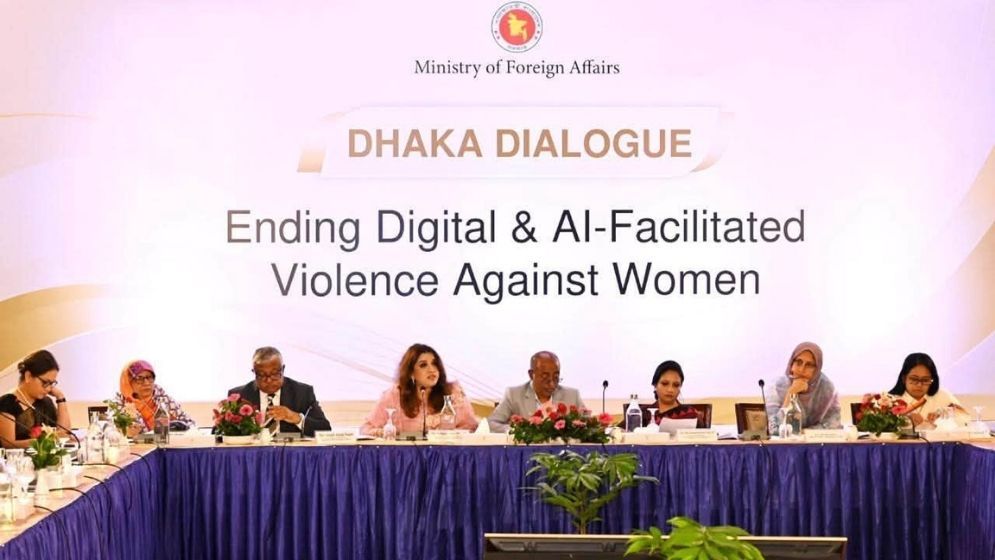
The Ministry of Foreign Affairs brought together ministers, parliamentarians and civil society leaders at the Pan Pacific Sonargaon on Thursday to address the growing use of artificial intelligence to harass, defame and endanger women online.
The meeting was part of Bangladesh’s efforts to establish the Dhaka Dialogue, a government-led platform introduced at the 10th Dakar International Forum on Peace and Security in Africa on 20 April 2026.
The initiative aims to address gaps in shared definitions, political attention, legal and technical capacity, evidence and partnerships in tackling AI-facilitated online abuse.
Foreign Secretary Ambassador Asad Alam Siam moderated the session and outlined five areas in which the Dialogue would operate.
The Dialogue seeks to develop shared language, standards and voluntary guidelines for states on prevention, investigation and remedies, as well as common definitions and classifications to enable countries to report and compare cases.
It also aims to establish benchmarks for platform accountability, including transparency and the labelling and provenance of synthetic media, while keeping the issue on the international agenda through regular high-level meetings and a network of political champions comprising heads of government, ministers and parliamentarians.
The initiative would support states, particularly in the Global South, in drafting and reviewing laws, training police, prosecutors and judges in digital evidence and AI forensics, strengthening survivor helplines, and accessing tools to detect and remove synthetic content while protecting freedom of expression, privacy and minority rights.
It would also bring together governments, UN agencies, technology companies, civil society, academia and survivor networks, while seeking voluntary safety-by-design commitments from AI developers and platforms and working with regional organisations to adapt the agenda to local contexts.
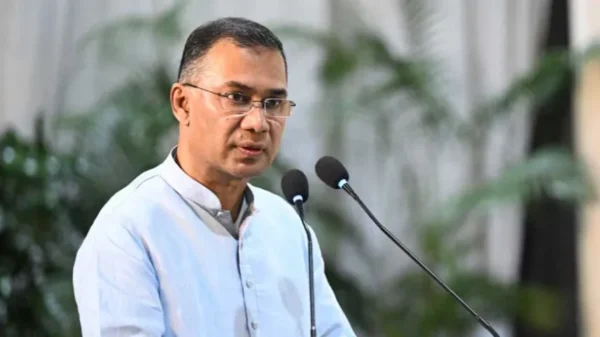
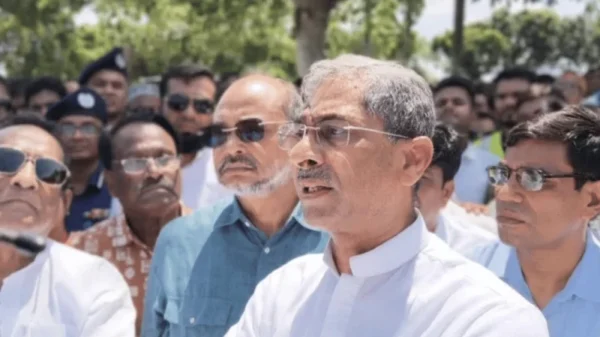
Five speakers addressed the gathering.
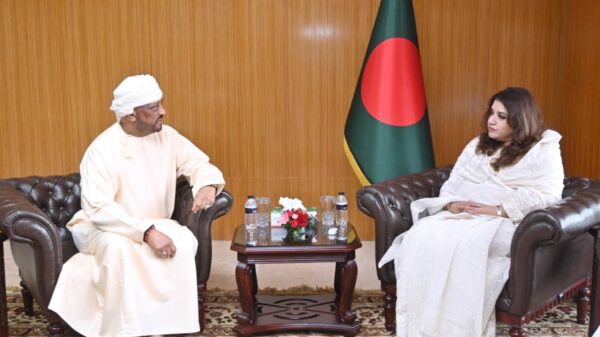
State Minister for Foreign Affairs Shama Obaed Islam described the Dialogue as a flagship initiative of the ministry that links Bangladesh’s foreign policy with the everyday safety of women online.
State Minister for Social Welfare Farzana Sharmin Putul highlighted the role of national social protection systems and survivor support when abuse moves from the street to the digital sphere.
Law, Justice and Parliamentary Affairs Minister Md Asaduzzaman drawing on his experience as attorney general, outlined gaps in law and evidence that continue to make it difficult to investigate and prosecute AI-enabled abuse, including the challenge of proving harm when images or voices are synthetic.
Barrister Jahrat Adib Chowdhury, who previously worked in Bangladesh’s telecommunications industry, said technology platforms must incorporate safety measures from the outset rather than introduce them after harm occurs. She also called for transparency on synthetic media to become a basic requirement.
Sanjida Islam Tulee, MP and founder of Mayer Daak, drew parallels between supporting families of disappeared people and supporting survivors of digital and AI-facilitated abuse.
She called for institutions that believe survivors from the moment they come forward and for helplines and reporting systems that do not force victims to move from one office to another.
An open discussion followed, with participants exchanging views on legislative gaps, platform accountability, the handling of synthetic content and approaches to supporting survivors in different countries.
As a next step, the ministry will invite an initial group of interested member states to join as Friends of the Dialogue and establish a technical working group to draft a reference document on shared definitions and standards for adoption by consensus among the participating states.