





















Staff Reporter:
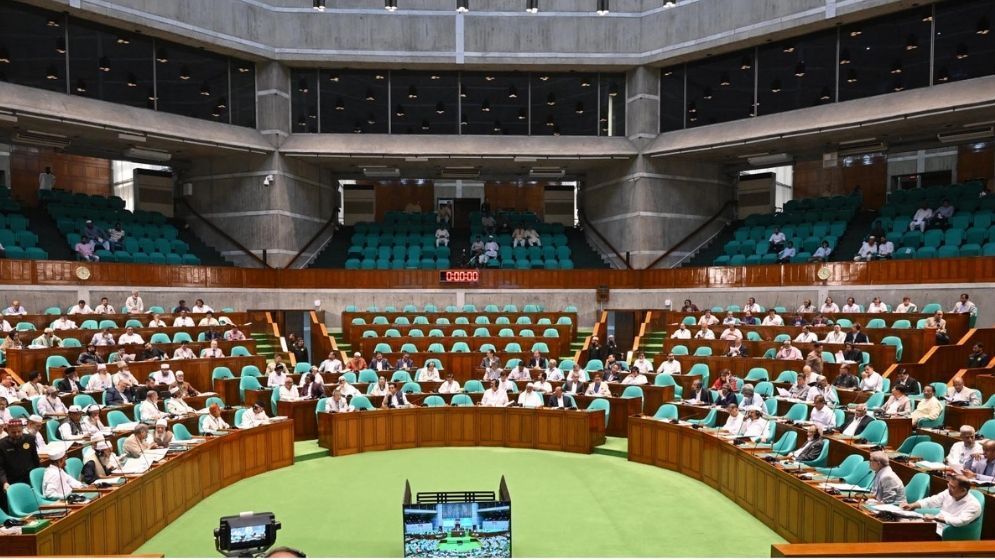
Three key bills– the National Human Rights Commission Bill, 2026; the Enforced Disappearance Prevention and Redress Bill, 2026; and the Transfer of Property (Amendment) Bill, 2026– were placed in the Parliament on Thursday (27 August).
The three bills were subsequently sent to the respective parliamentary standing committees for further scrutiny. However, the opposition MPs staged a walkout shortly before the bills were formally tabled in the House.
Prior to presentation of the bills, opposition MPs voiced protests regarding parliamentary procedures and agenda prioritization. Leader of the Opposition on a point of order spoke on the House.
Despite the opposition’s walkout, treasury bench leaders affirmed their commitment to advancing key legal and human rights reforms, confirming that the committee review process will proceed without delay.
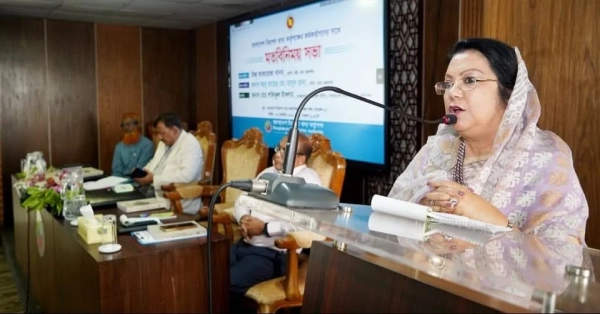
Just after walkout of the opposition, Home Minister Salahddin Ahmed spoke in the House. He called upon the opposition not to boycott the Parliament.
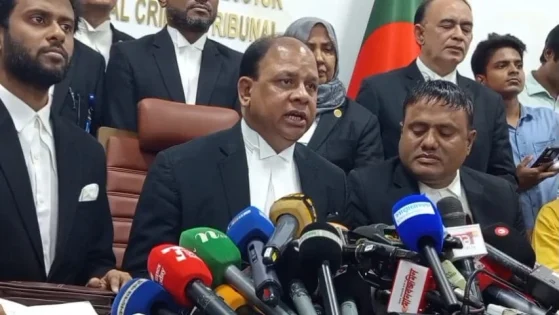
Law Minister Md Asaduzzaman placed the National Human Rights Commission Bill, 2026 aiming to bolster the institutional capacity and investigative mandate of the statutory rights watchdog.
The proposed law provides for a commission consisting of a chairperson and four commissioners, with at least one woman among them. It also prioritises qualified candidates from ethnic minorities and underprivileged communities, based on the recommendations of a search committee.
The search committee for reconstituting the commission must include university professors, civil society representatives, and representatives from ethnic minorities or underprivileged communities.
The law minister also placed the Transfer of Property (Amendment) Bill, 2026 to amend the Transfer of Property Act to allow parents to retain lifetime rights to use and occupy property even after transferring ownership to their children.
Home Minister Salahuddin Ahmed placed the Enforced Disappearance Prevention and Redress Bill, 2026 aiming to outlaw illegal detentions and establish legal mechanisms for accountability.
Meanwhile, several parliamentary standing committees were formed and reconstituted during the day’s proceedings. The changes are part of the process of ensuring effective parliamentary oversight of different ministries and government agencies.