





























-By Dr. A K M Kanak Pervez & Dr. Wenjie Zhao
In most of the Global South, the countryside is a topic discussed with both trepidation and nostalgia. Vil-lages are applauded as cultural core centers, but are subject to policy as regions of stagnation – areas where people must ultimately move out so that they can make it in the world. This is the contradiction in Bangladesh’s development story. Although the country has advanced in agricultural practices and poverty has been reduced, the rural areas continue to experience underdevelopment: young people are moving to cities, farm sizes are decreasing, and people are increasingly exposed to the climate and poor local eco-nomic institutions.
A very similar situation was experienced in China. For a long time, China’s villages provided the labour and food to support urban and industrial development, yet the rewards they received fell far short of their contributions. The interesting part of the Chinese experience is that China did not eradicate rural ills; many of them continue to persist, but rather it intentionally undid the process of political marginali-sation of villages. China was trying to use its Rural Revitalisation Strategy to convert villages that were viewed as leftover areas into the driving force behind national prosperity.
In the case of Bangladesh, the Bangladesh case does not provide a template for China to follow. There is a significant difference between the two countries in terms of governance, land ownership systems, polit-ical culture, and social setup. But the experience of China- trying to break up the rural policy into a long-term strategy- can be learned. At the core of these teachings lies a deeper understanding of institu-tions, land, and people, which have been shaped not a little by the efforts of men like Li Xiaoyun.
When Rural Decline Became a National Problem
The crisis in rural China was slow to unfold. With the introduction of market changes in the late 1970s, the nation focused on industrialization and urbanization. The cities were prosperous, manufacturing de-veloped, and millions of rural workers moved to the cities. This policy brought about unprecedented economic development, but it also created increasing rural-urban disparities and structural ills in rural areas.
By the early 2000s, numerous villages were losing their youth, agricultural land was underutilized, and rural governance institutions had been emptied. The poverty alleviation initiatives helped raise living standards in basic ways of life, yet the reality of the problem was not deeply considered: villages were no longer the right environment to build a future. The decline in rural areas began to threaten food secu-rity, social stability, and long-term development.
This was the turning point in realization. Rural development, under the leadership of Xi Jinping, was redefined as a core of national modernization. China officially rolled out the Rural Revitalisation Strate-gy in 2017 by enshrining it in national law, five-year plans, and fiscal schemes. The message was clear: modernization was not complete and firm without the rural prosperity.
Rural revitalization was not modeled as a short-term campaign as in the past. It was a vision of a multi-decade transformation that included industry, government, culture, ecology and livelihoods. Villages were no longer considered only as places of poverty alleviation, but rather as complex socio-economic systems that required long-term investment and institutional restructuring.
From Infrastructure to Institutions
Infrastructure was highly emphasized during rural revitalization in early China. Infrastructure was im-proved, such as roads, housing, electricity, water, and sanitation, in enormous rural areas. The relation-ships between villages and markets, as well as with services, were altered by digital connectivity. Never-theless, policymakers quickly realized that there is an important constraint: infrastructure does not create prosperity.
Many villages had new roads but no viable businesses. They had refurbished homes and no jobs to do amongst the youths. What was lacking were institutions that could ensure the organization of economic activity, control of assets, and link villagers to markets. This realization changed the focus to govern-ance, management, and human capital.
In this case, universities and research institutions were central. China Agricultural University(CAU) be-came one of the key players in connecting national policy to its implementation at the village level. In-stead of relying on scholarly analysis, CAU teams spent long-term time in villages, some for years, working jointly with local communities to set development directions.
This was the field-based approach, which found that most rural projects were failing. Unorganized sub-sidies created dependency. Incompetence resulted in frustration. Lack of infrastructure management led to underexploited resources. These lessons have contributed to China’s rural revitalization, shifting from hardware-based to people-focused and institutional capacity.
Professor Li Xiaoyun and a New Way of Seeing Villages
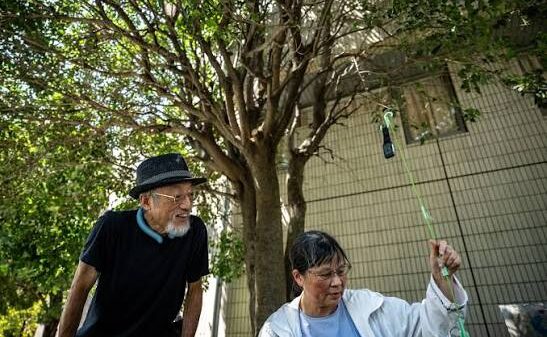
The creator of this intellectual and practical transformation is a few people who have influenced it, among them Professor Li Xiaoyun of China Agricultural University. Professor Li, based on decades of research and practical experience in rural China, especially in ethnically diverse and economically mar-ginal areas such as Yunnan, has refuted all conventional beliefs about rural development.
The main point he made was very misleading in its simplicity, as villages never fail at first due to a lack of resources; they fail because they are not organised. Since rural economies did not revolve around ag-riculture but diversified into tourism, processing, services, and digital trade, villages were being treated more like businesses, but under an administration-oriented set of institutions rather than an economic one.
The government required them to report and socialize, and there was a shortage of time and expertise for the village leaders to conduct business. Farmers, in their turn, were supposed to learn marketing, fi-nance, and branding, the skills none of them had been taught. The outcome was the structural discrepan-cy between rural ambition and rural capacity.
Another suggestion from Professor Li is to consider villages as economic organizations while maintain-ing their social and cultural nature. Such reasoning led to more feasible innovations, the most notable being the idea of the Village CEO. The villages under this model maintain the same model, but the land and assets are collectively owned by the villages, and they have professionally trained managers, usually the youthful return migrants, as key figures to oversee daily economic operations.
The Village CEO does not substitute farmers or village heads. Rather, the role partially separates man-agement and ownership, letting professionals handle marketing, finance, and coordination, while the villagers have the right to make decisions and share benefits. This model has been tested in several areas and has contributed to national-level discussions on rural governance and talent revitalization.
Professor Li’s insight is not only that new roles can be proposed, but also that it is a development ques-tion. The essence of rural revitalization, he said, is the reconstruction of institutions that enable people to act in a modern economy.
The Central Role of Land in China’s Experience
The fact that China could experiment with such institutional innovations is strongly related to its land system. In China, village collectives own land in rural areas. The rights to the long-term and hereditary use are owned by individual households, whereas the land is not freely sold in the open markets.
This is a setup with far-reaching consequences. Through collective ownership, the village can share land-use rights for agriculture, tourism, or industrial initiatives without necessarily depriving households of their ownership portions. Land is turned into a common good that can be mobilized to advance devel-opment while maintaining social stability. It also allows the village-level planning to be coordinated so that land use is synchronized with the overall economic interests.
Over the years, China has brought about reforms that have made it more flexible, while maintaining col-lective control, such as separating ownership, contract, and management rights. The reforms enabled it to enlarge farming, translate investment, and create non-farm rural industries.
There is no tension absent in the system. Land use and compensation, decision-making conflicts, and quality of governance remain diverse. Nonetheless, the collective land system offered a legal basis on which the rural revitalization could be based.
Bangladesh’s Land Reality: A Different Starting Point
The rural land system in Bangladesh is of a different nature. Land ownership is private, very fragmented, and insecure. A majority of farmers own very small plots, often less than one acre. Landlessness and informal tenancy are common, and distress sales caused by floods, illness, or debt slowly accumulate in fewer hands.
This organization presents severe limitations to rural development. The fragmentation restricts the mech-anization and economies of scale. Informal tenancy does not encourage long-term investment in land improvement. Land consolidation initiatives have been strongly opposed by social and political groups, as land is a major source of security for rural families.
In contrast to China, Bangladesh cannot use collective ownership to marshal land for village-wide pro-jects. Neither would it be desirable nor feasible to impose such a system. However, disregarding land institutions is also a problem. Land determines the type of rural development that can be achieved.
The Chinese experience is that land is not to be emulated; rather, it should be viewed as a key institu-tional variable. Rural revitalization in Bangladesh should be creative in private property through secure tenure, voluntary cooperation, and the development of rural industries less reliant on land consolidation.
What Bangladesh Can Learn—and Adapt
The rural revitalization efforts in China offer several lessons that can be strongly emulated in Bangla-desh.
To start with, rural development should not be seen as a conglomeration of short-term projects, but ra-ther as a long-term national priority. As China’s experience demonstrates, there should be policy continu-ity, legal support, and cross-sector coordination. In their absence, the rural projects fail to gain any steam or support.
Second, infrastructure is as important as institutions and people. Another problem in Bangladesh is the poor organizational and managerial capacity in the rural economy. It may be helpful to adapt some con-cepts first put forward by Professor Li Xiaoyun, e.g., professional management in cooperatives, produc-er groups, or local enterprises, to help rural projects grow and become self-sustaining.
Third, the rural economies should not be based solely on agriculture. Villages in China grew into pro-cessing, tourism, cultural industries, and services, making the country less vulnerable and leaving it with a choice. In Bangladesh, where climate change is threatening the country’s agricultural survival, diversi-fication is not a choice but a necessity.
Fourth, the rural revitalization is a process that takes time. In China, there was experimentation, failure, and learning with time. The project-based development model practiced in Bangladesh offers few oppor-tunities to incorporate such learning, which is often constrained by short funding cycles. There has to be a movement towards longer-term, adaptive programming.
A Bangladesh-Specific Path to Rural Prosperity
Rural revitalisation in Bangladesh will not look the same as in China. It will probably become more de-centralised, more based on NGOs and community organisations, and more climate-resilience-oriented. The principle underlying it, however, remains the same: villages are to be considered partners in devel-opment, not recipients of aid.
Universities can make a greater contribution by engaging with rural communities on a long-term basis. Local governments should be empowered, not just administrative units. Young people and women can be placed in leadership roles in rural areas rather than as beneficiaries of training programs.
Professional rural management, suitably modified to local standards, might help fill the gap between desire and ability, as Professor Li Xiaoyun’s ideas have helped do so in China.
From Policy to Prosperity
The Rural Revitalization Strategy of China shows that village re-vitalization does not occur by coinci-dence. They revive with a policy vision coupled with institutional innovation, effective leadership, and long-term commitment. The role played by Professor Li Xiaoyun is that rural revitalization does not involve money or infrastructure, but rather the organization of villages to work together in a reforming economy.
Bangladesh is at a crossroads, just as China was a decade ago. The decline of the rural areas is not some-thing in future. However, to make it back, one has to go past the disjointed projects to institution-building, talent building, and serious land and governance work.
It will not be the route of China as it is of Bangladesh. However, the point is that when rural regions are at the center of national development, it is possible to make them prosper through policy, after all.
*(Dr Pervez is professor (agricultural extension & Rural develment) at the university of Rajshahi, Bang-ladesh and Zhao Wenjie is an associate professor, at the College of International Development and Glob-al Agriculture at China Agricultural University, Beijing, China).