
























Staff reporter:
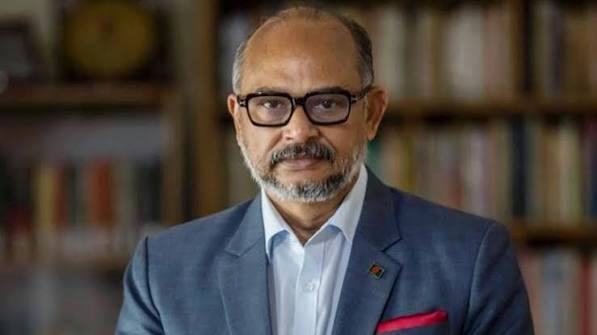
Environment, Forest and Climate Change Minister Abdul Awal Mintoo has said international financing and technological support are essential to ensure a just transition in addressing climate change.
He said adequate, predictable and accessible financing, technology transfer and capacity-building support from developed countries are crucial to ensuring a just transition in climate action.
In particular, climate-vulnerable and least developed countries, including Bangladesh, require international assistance that does not create additional debt burdens, the minister said.
He said protecting livelihoods, creating employment opportunities, promoting social justice and strengthening climate resilience must be given the highest priority to ensure that the benefits of climate action reach ordinary people.
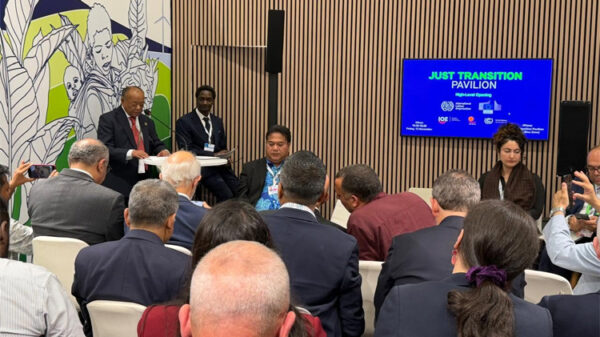
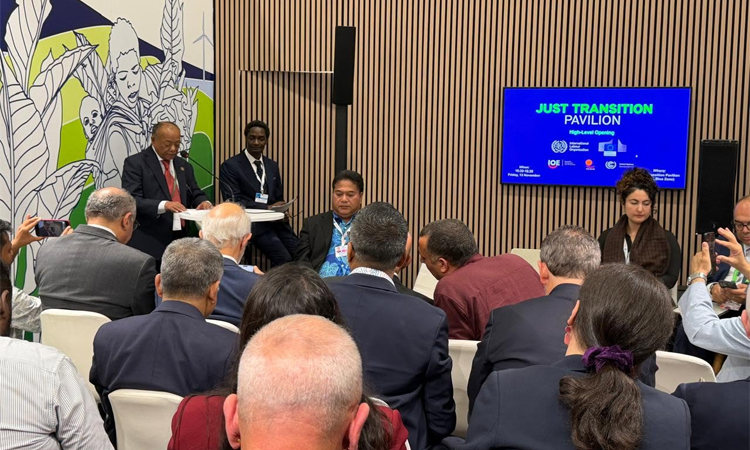
The minister made the remarks on Friday while addressing a high-level panel discussion titled “From Climate Commitments to Decent Work: Advancing a Just Transition for All” at the official opening of the Just Transition Pavilion in the Blue Zone of the 31st Conference of the Parties (COP31) in Antalya, according to a message received here.
Mintoo said Bangladesh is among the countries most vulnerable to the adverse impacts of climate change.
For Bangladesh, a just transition means not only moving towards a low-carbon economy but also protecting the livelihoods of climate-affected people, strengthening climate resilience, and creating employment opportunities for all through environmentally sustainable economic activities, he said.
He emphasised that no community should be left behind in this process.
The minister said that Bangladesh has incorporated a dedicated and costed chapter on Just Transition into its Nationally Determined Contribution (NDC 3.0) Implementation Plan.
The chapter was developed in collaboration with the government, employers, workers’ representatives and the International Labour Organization (ILO). This initiative aims to integrate climate action with employment generation, social protection and inclusive economic development.
Mintoo said the government has set a target of increasing the share of renewable energy in total electricity generation to 20 percent by 2030.
This includes a plan to generate 5,500 megawatts of electricity from rooftop solar installations, he said.
He said the initiative is expected to play an important role in creating green jobs, developing a skilled workforce and promoting entrepreneurship in the renewable energy sector.
The environment minister further said that the government has undertaken a programme to plant 25 crore trees over five years.
“Nearly 3.6 crore saplings have already been planted. The programme is expected to create approximately 350,000 green jobs.”
In addition, he said, the government has adopted a plan to excavate and restore 20,000 kilometres of canals to support agriculture, fisheries, rural employment and climate resilience.
The minister said meaningful participation of workers, employers, women, youth and climate-vulnerable communities in decision-making processes must be ensured to achieve a just transition.
At the same time, he said, skills development suited to emerging and evolving labour markets, improved working conditions and stronger social protection systems are essential.
Particular emphasis should be placed on harnessing new employment opportunities in renewable energy, environmentally sustainable industries, climate-resilient agriculture and ecosystem restoration, Mintoo said.
He further stated that affordable financing, modern technology and technical assistance must be made available to small and medium-sized enterprises to facilitate their transition towards cleaner production systems.
Special attention must be given to ensuring that such transitions do not adversely affect existing employment or the competitiveness of industrial enterprises, he said.
The environment minister said Bangladesh supports the establishment of a country-driven and request-based Just Transition Mechanism under the guidance of the Conference of the Parties serving as the meeting of the Parties to the Paris Agreement (CMA).
The mechanism should give special priority to the needs of least developed and highly climate-vulnerable countries, he said.
He also stressed the importance of translating international climate commitments into concrete actions that deliver measurable benefits to local communities.
The event was jointly organised by the International Labour Organization (ILO) and the European Commission, in collaboration with the International Organisation of Employers (IOE), the International Trade Union Confederation (ITUC), and the United Nations Framework Convention on Climate Change (UNFCCC).
The high-level panel discussion was moderated by Moustapha Kamal Gueye, Director of the Policy Coherence Hub at the ILO.
Auria Kitina, Minister of Employment and Human Resources of Kiribati; Dr Mahmoud Mohieldin, Special Envoy of the United Nations Secretary-General; Joan Carling, Executive Director of Indigenous Peoples Rights International; and representatives of women’s and youth organizations, were also present.