



























Staff Reporter:
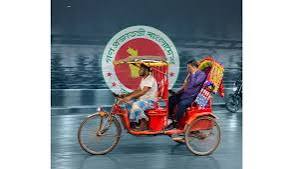
Registration of battery-run rickshaws in 13 city corporations across the country begins today, with the government planning to bring the vehicles under a legal regulatory framework before issuing driving licenses to their operators in phases.
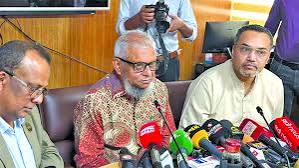
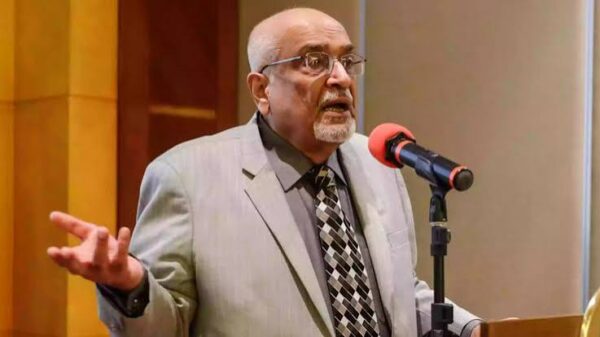
State Minister for Local Government, Rural Development and Cooperatives Mir Shahe Alam disclosed the descision at the Secretariat on Sunday while briefing reporters on the rules for slow-moving battery-powered three-wheelers in city corporation areas.
He said the registration process would bring e-rickshaws, which have largely operated without a formal regulatory framework for 15 to 30 years, under legal management.
The legal basis for registration was established through an amendment to the Local Government (City Corporation) Act, 2009, passed in 2026.
The relevant provision was incorporated into Section 120, and the rules have been formulated, vetted by the Law Ministry and published in the official gazette, he said.
As a result, there is no longer any legal obstacle to starting the registration process, he added.
Registration and renewal fees
Under the new rules, registration of an e-rickshaw with a two-passenger capacity will cost Tk 8,000, while its annual renewal fee after a fitness inspection will be Tk 4,000.
For a four-passenger e-rickshaw, the registration fee has been set at Tk 10,000, with a renewal fee of Tk 500 after one year.
E-rickshaws will be allowed to operate for a maximum of 12 years, according to the rules.
An additional Tk 1,000 will be charged for displaying a fitness certificate containing a QR code issued by the respective city corporation.
Seven-member committee to regulate production
The government has formed a seven-member committee to oversee e-rickshaw production and recommend approval of manufacturing companies, the state minister said.
The committee comprises representatives from the Local Government Division, Bangladesh University of Engineering and Technology (BUET), city corporations, police traffic departments and district administrations.
He said the vehicles must be manufactured according to designs approved by BUET, adding that existing e-rickshaws would also have to be modified to comply with the approved designs.
E-rickshaw fares will be determined after the registration process begins, through consultations among vehicle owners, traffic authorities and city corporations.
The fare will be fixed on a per-kilometre basis, the state minister said.