







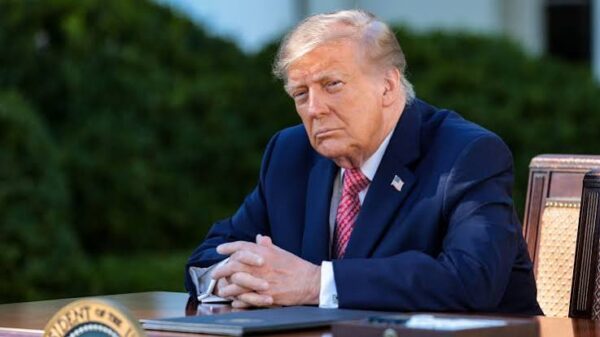















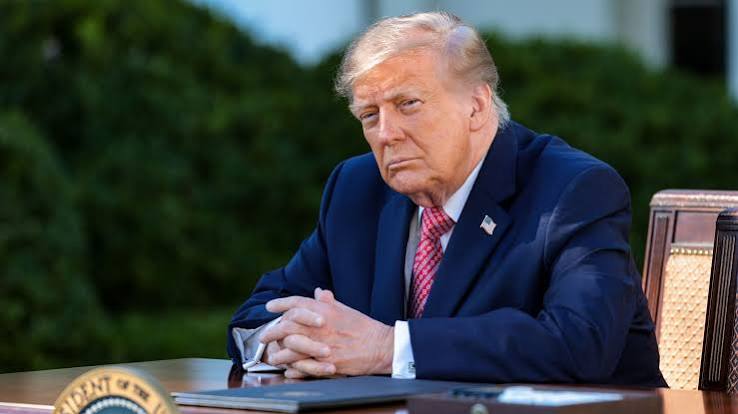
WASHINGTON, Oct 27, (Net) – President Donald Trump’s strategy for the US midterm elections has one main ingredient — more Donald Trump. But his historic unpopularity may hinder Republicans instead of helping them.
Trump has blitzed the campaign trail in the month before the November 3 vote, jetting across the country for near-daily rallies in the fervent belief that he alone can fire up his MAGA base.
Add a sprinkle of insults painting Democrats as communists or fans of “transgender mutilization”, add some promises of cash if Republicans win, and you have Trump’s recipe for defying the polls.
“Trump believes that he is the answer to all the Republicans’ woes, and is rushing to tell everyone who will listen,” Peter Loge, director of George Washington University’s School of Media and Public Affairs, told AFP.
At a rare Republican Party midterms convention in Dallas in September, Trump admitted as much.
“Pretend I’m on the ballot, just one more time,” the second-term president said.
– ‘Historically unpopular’ –
By turning the 2028 midterms into a referendum on his presidency, Trump is counting on his own history of political upsets, from his shock 2016 election win to the 2024 comeback.
The problem this time is that Trump’s own approval rating has hit record lows in recent polls, and is the lowest for any president heading into midterm elections since 1946.
“On balance Donald Trump’s presence in campaigns will probably hurt Republicans — partly because the president’s party always does badly in the midterms, but also because he’s historically unpopular,” said Loge.
Trump may get his base to the polls, but there are “not enough of those dedicated Trump voters to make a difference.”
With Republicans fearing they could lose control of both the House and the Senate in a Democratic “blue wave,” there have been increasing signs of desperation.
Trump has changed his plans to repeatedly rally in states that once seemed solidly Republican red, particularly Texas. And he says he expects to spend $400 million in campaign cash on the midterms.
– Harsh rhetoric –
The desperation has spilled into Trump’s rhetoric.
As the campaign has worn on, Trump has peppered his freewheeling rallies with ever more polarizing and violent language.
He has branded Abdul El-Sayed, the Muslim, left-wing Democratic Senate candidate in Michigan, a “jihadist,” used anti-trans slurs against another Democrat, called Democrats communists and stepped up his diatribes against the media.
That’s when he’s not veering off into bizarre tangents.
In recent days, for example, he has obsessed about both men’s and women’s behinds, from Ohio Senator Jon Husted to rapper Nicki Minaj.
But while diehard supporters may cheer Trump’s raucous speeches, ordinary Republicans may be turned off. And even if they can’t stomach switching to Democrats, they may simply stay at home.
– More money, more problems –
Billionaire Trump’s other strategy is to throw money at the problem — but only if Republicans win.
He has promised a $5,000 dividend for every adult American if Republicans keep control of Congress — despite questions about whether it would be legal and how he would fund the $1 trillion cost.
Yet polls show most Americans doubt that they will ever get the $5,000 payments.
Trump is also offering goodies for voters hit by high fuel costs from the Iran war, including bailouts for farmers and easing sanctions on Canada to help border towns.
But Trump’s efforts to bring down oil costs have had mixed results. His Iran war has stalled, but he is widely reported to be considering fresh strikes with Israel after the midterms.
A diesel deal with Russia has meanwhile sparked accusations that Trump is selling out Ukraine.
Trump’s most important midterms strategy may be what he does afterwards.
Questions are already mounting about whether he will challenge a midterms loss like he did in the 2020 presidential election.
Trump on Monday announced $1 million rewards for information leading to vote fraud convictions, and last week he ordered a preemptive lawsuit to block the Alaska Senate result if the Republican incumbent loses.
“I’m skeptical that President Trump will go quiet into that good night,” said Loge.