

























Staff reporter:
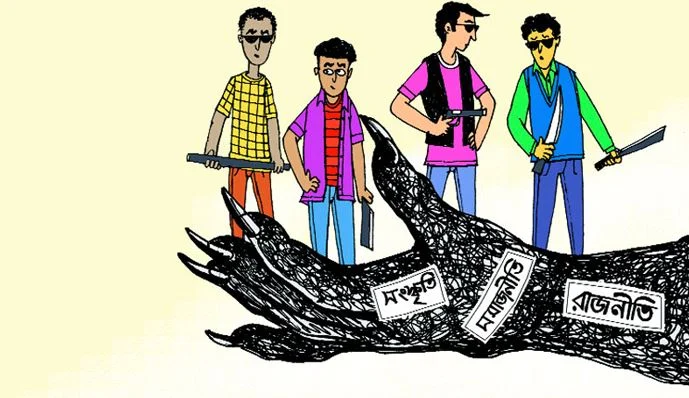
Combating juvenile gangs in Bangladesh requires more than arrests and police raids, says experts, calling for stronger family ties and greater community vigilance, action against adults who exploit minors for criminal activities, responsible use of social media, and effective rehabilitation programmes to prevent young people from being drawn into crime.
Sociologists and criminologists say family conflicts, weak parental supervision, irregular school attendance, a lack of constructive recreational activities and the influence of criminal networks can push some adolescents towards delinquency.
They stress that authorities must address the underlying causes of juvenile crime while identifying and supporting vulnerable youths before they become involved in criminal activities.
According to law enforcement sources, around 386 juvenile gangs are active across the country, including 159 in Dhaka metropolitan areas and 227 in other metropolitan cities and districts.
Alongside operations against gang members, law enforcement agencies are strengthening intelligence surveillance to identify alleged masterminds, patrons, shelter providers and individuals linked to drugs and illegal firearms.
Experts emphasise that juvenile gang activity is not merely a law-and-order issue. It is also closely connected to family relationships, educational engagement, social surroundings and adolescent psychological development.
They, therefore, advocate a coordinated approach involving law enforcement agencies, parents, educational institutions, local administrations and community organisations.
Md. Rezaul Karim Shohag, chairman of the Department of Criminology at the University of Dhaka, told BSS that inadequate parental supervision, strained relationships between parents and children, family disputes, irregular school attendance and limited opportunities for constructive use of leisure time can increase adolescents’ vulnerability to criminal groups.
He observed that some young people initially become involved through peer groups, neighbourhood hangouts, motorcycle outings or the sharing of photographs and videos on social media. In certain cases, these associations can subsequently become linked to drug abuse, mugging, extortion, violence and the carrying of weapons.
Sjohag said some adult criminals exploit adolescents for illegal activities, believing that their younger age may expose them to less legal and social scrutiny.
He stressed that parents and educational institutions must work alongside law enforcement agencies to identify vulnerable adolescents early. Counselling, continued access to education, family support and rehabilitation should be prioritised to help them avoid criminal involvement or return to normal life.
Professor Dr. Fatema Rezina Iqbal, chairman of the Department of Sociology at the University of Dhaka, told BSS that juvenile gangs emerge from a combination of factors rather than a single cause.
She said parents should remain attentive to whether their children attend school regularly, concentrate on their studies, maintain healthy friendships and display significant changes in behaviour.
They should also be aware of their children’s activities outside school, online content consumption and potential exposure to drugs.
Iqbal urged parents to exercise caution when allowing children and adolescents to use smartphones.
She suggested that families carefully consider smartphone access for children up to the higher secondary level, while noting that basic mobile phones could be an alternative when communication with working parents is necessary.
The DU teacher also expressed concern that excessive time spent on social media and online platforms can interfere with young people’s studies, sleep and daily routines, particularly when it replaces sports, cultural activities and face-to-face social interaction.
Adequate playgrounds, cultural programmes and positive family relationships are essential for healthy adolescent development, she said, adding that strict law enforcement alone cannot solve the problem.
Experts cautioned, however, that clothing, hairstyles or moving around in groups should not be treated as evidence of criminal involvement.
Instead, adults should assess behavioural changes, educational circumstances and family backgrounds before offering appropriate support.
Wing Commander MZM Enthekhab Chowdhury, director of the Law and Media Wing of the Special Response Battalion (SRB), told BSS that operations are being conducted based on updated lists of juvenile gangs.
He said authorities are working to identify and take legal action against gang members as well as alleged ringleaders, patrons, shelter providers and individuals connected to drugs and illegal weapons.
According to him, intelligence gathering, field-level verification and coordinated operations are being used to address juvenile gang activity, mugging, extortion, terrorism, drug trafficking and weapons-related offences.
The objective, he said, is not simply to increase arrests but to identify and dismantle the networks behind criminal activities and prevent offences from recurring.
Enthekhab Chowdhury identified Mohammadpur, Adabor, Basila, Mirpur and Pallabi as areas in Dhaka where juvenile gang activity has been reported. Uttara and Jatrabari were also among the areas mentioned.
Citing a recent Dhaka Metropolitan Police (DMP) list, he said 32 juvenile gangs were recorded under the Mirpur division and 26 under the Tejgaon division.
At the police-station level, the list included 14 groups in Pallabi and 16 in Mohammadpur. He noted that the location and activity of these groups could change over time.
DMP Deputy Commissioner Md Akter Hossain of the Media and Public Relations Division told BSS that operations to arrest juvenile gang members were continuing across the capital based on updated lists.
He said many suspects had already been arrested and legal proceedings, including the filing of cases, were being pursued against them.
According to Hossain, the capital has 1,219 listed juvenile gang members aged between 16 and 25.
The Special Response Unit (SRU) and Detective Branch (DB) are working to apprehend those involved, while initiatives are also being taken to raise awareness among parents.
Additional Inspector General of Police (Crime and Operations) Md Sayedur Rahman told BSS that neither gang members nor those providing protection and support to them would be spared from legal action.
He stressed, however, that preventing adolescents from being drawn into crime was just as important as bringing offenders to justice.
Experts and law enforcement officials have emphasised stronger beat policing in neighbourhoods, regular patrols in identified hotspots and awareness programmes in educational institutions.
Meetings with parents and community-level initiatives are also considered important in preventing juvenile crime.
Experts say responses to adolescents involved in criminal activities should take account of their age, the nature of the offence, the extent of their involvement and the applicable law.
Depending on individual circumstances, support may include counselling, family-based interventions, continued education, skills training and rehabilitation through appropriate facilities.
At the same time, adults who recruit or exploit minors for criminal purposes must face effective legal action.
Young people who wish to leave criminal groups should have access to practical pathways back into society.
Ensuring regular school attendance, providing psychological support, expanding opportunities for sports and cultural activities, and offering vocational training could help adolescents use their time constructively and build positive connections within their communities.
Experts believe sustainable progress against juvenile gangs will depend on combining effective policing with stronger family relationships, supportive schools, local administrative action and community participation.
While those involved in criminal activities and the networks supporting them must be held accountable, the social and family-related factors that make adolescents vulnerable to crime also need to be addressed.
Improved communication between parents and children, school-based counselling, access to recreational facilities and effective rehabilitation programmes can help reduce the risk of young people entering criminal networks.
Breaking criminal networks, holding exploitative adults accountable and ensuring that vulnerable adolescents receive guidance and opportunities are all essential to keeping young people away from crime in the long term.