



































Staff reporter :
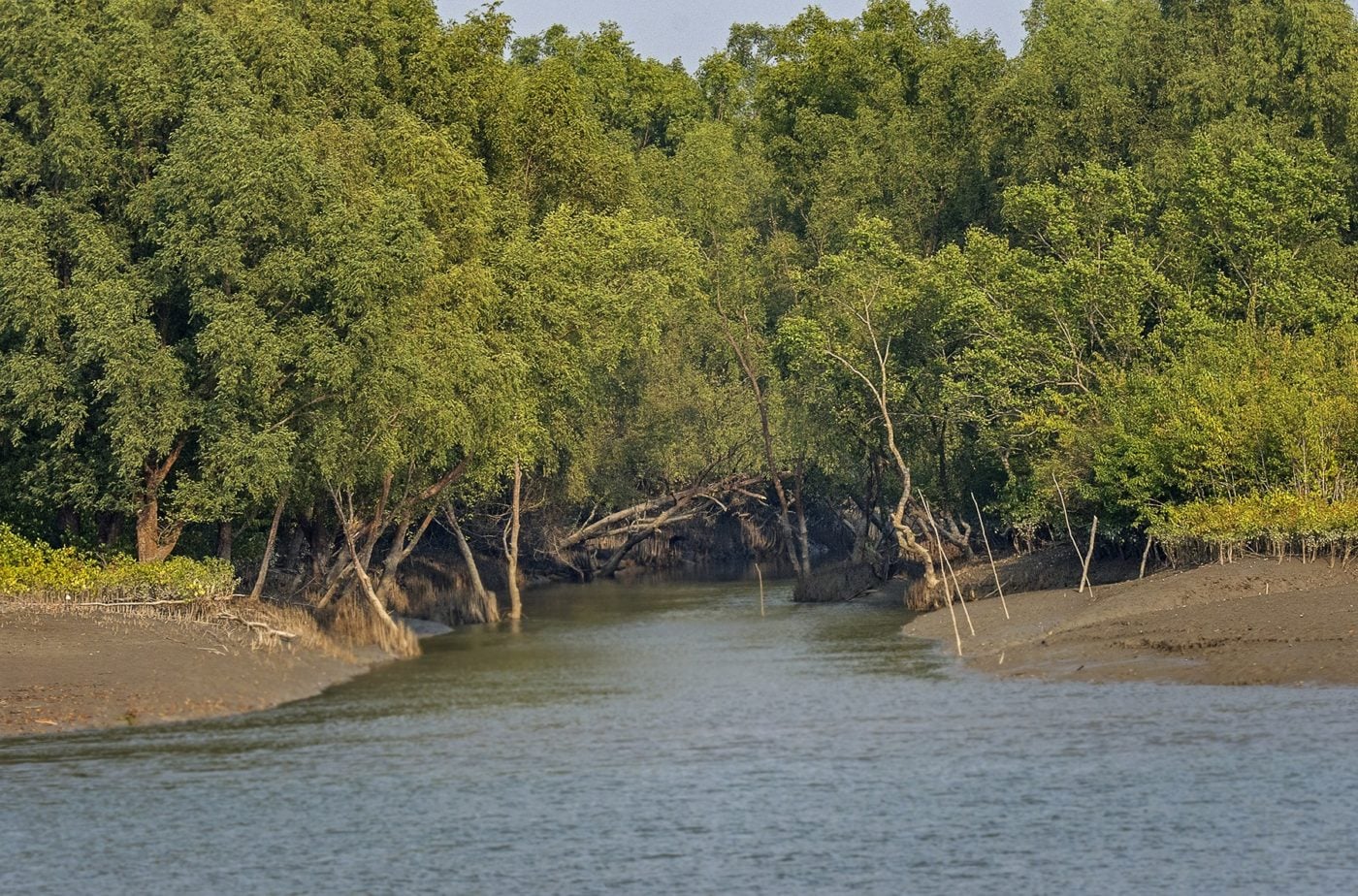
Growing air pollution from industries and factories operating around the periphery of the Sundarbans poses a severe, long-term threat to the ecology of the world’s largest mangrove forest, experts have warned.
They noted that atmospheric pollution is increasingly undermining the ecological health of the Sundarbans — the natural tiger habitat in Bangladesh — by disrupting plant physiology and weakening the forest’s overall resilience.
“Air pollution directly hinders plant development. When industrial dust deposits on leaves, it blocks sunlight and clogs stomata, severely disrupting photosynthesis and stunting growth,” Dr Monirul H Khan, a professor at the Department of Zoology of Jahangirnagar University, told BSS.
Photosynthesis is the vital chemical process by which green plants utilise sunlight, water, and carbon dioxide to synthesise nutrients for energy while releasing oxygen into the atmosphere.
Prof Monirul emphasised that because vegetation forms the foundation of the food web, restricted plant growth inevitably triggers a cascading negative effect on the wild animals and the broader ecosystem of the Sundarbans.
A recent study, jointly conducted by the Center for Environmental and Geographic Information Services (CEGIS) and the Arannayk Foundation, painted a grim picture of atmospheric degradation in the forest, detecting alarming levels of fine particulate matter (PM2.5) and dust (PM10) across several key locations.
The field research was carried out across the Khulna, Satkhira, Sharankhola, and Chandpai ranges of the Sundarbans during January and February in both 2024 and 2025.
According to the data, PM2.5 concentrations in the Sharankhola range reached a staggering 102 micrograms per cubic meter, while PM10 levels peaked at 114 micrograms per cubic meter. The Chandpai range recorded the second-highest density of pollutants, with PM2.5 at 89.3 micrograms per cubic meter and PM10 at 98.1 micrograms per cubic meter.
Prof Monirul pointed out that the proliferation of heavy industries and cement factories in the immediate vicinity of the forest is directly responsible for the deteriorating air quality. “Industrial pollution acts as a slow poison. It has a cumulative, long-term impact, meaning the catastrophic damage won’t show immediate, obvious symptoms,” he added.
Malik Fida A Khan, former executive director of CEGIS, stated that rapid industrialisation in the country’s southwestern region is heavily compromising the adjacent forest air quality. He highlighted that cement factories rely on raw clinker processing, which releases massive quantities of fine dust (PM10) and hazardous respirable particles (PM2.5) into the path of prevailing forest winds.
Stressing the urgency of identifying all contributing sources of emissions, Fida A Khan warned, “If the highly polluting cement factories operating around the periphery cannot be relocated or shut down, saving this vulnerable mangrove forest will become an impossible task.”
Echoing Prof Monirul’s concerns, he reiterated that the toxic particulate matter damages the vegetation silently, and the full scale of the ecological collapse may only become undeniably visible a decade from now.
To mitigate the crisis, the CEGIS-Arannayk study recommended the immediate setup of long-term atmospheric monitoring stations, with a strict focus on tracking PM2.5 and sulfur dioxide (SO2). It also emphasised the necessity of integrating real-time meteorological data — including temperature, humidity, wind velocity, and rainfall patterns — to accurately model and forecast how industrial emissions disperse into the conservation zones.
The Bangladesh portion of the Sundarbans spans roughly 6,017 square kilometers, serving as a globally recognised UNESCO World Heritage Site and a critical sanctuary for a rich, highly specialised ecosystem of mammals, reptiles, birds, and aquatic life.