



































Patrick Branco Ruivo, head of the SETE company that operates the Eiffel Tower, is being forced to step down by the end of this year following a major controversy over “gender-bias.”
On Tuesday, SETE announced in a statement that Patrick Branco Ruivo would relinquish his duties at the end of the year.
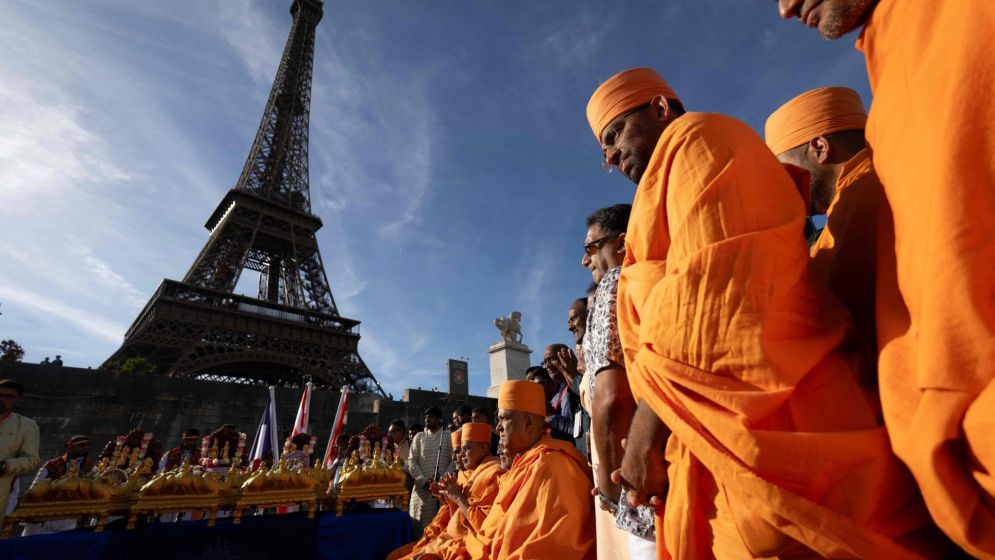
The controversy stems from an incident in early September when female employees were instructed to stay out of view during the Eiffel Tower visit of a delegation from the hardline Hindu religious organization named BAPS (Bochasanwasi Akram Purushottam Swaminarayan Sanstha).
It was alleged that Patrick Branco Ruivo gave the instructions to this end.
The decision triggered a strike by Eiffel Tower employees, creating widespread outrage and criticism both in France and globally.
An internal investigation was subsequently launched to examine why such a directive was issued.
SETE stated that its investigation uncovered several issues and shortcomings regarding the planning of official visits and the coordination of the 5 September Hindu group visit. These failures ultimately resulted in female employees being removed from their duties during the tour.
The organization acknowledged that this created an “unacceptable situation,” which led staff to stage a one-day strike and temporarily shut down the world-famous tourist landmark.
At the time, employees released a statement condemning policies that sidelined, transferred, and rendered women invisible in the workplace simply because of their gender.
According to staff accounts, several women were instructed to leave their posts and wait in separate rooms, while men were assigned to replace them in certain areas. While the Hindu delegation was present, female workers were ordered not to enter or walk through specific zones.
Expressing shock at the situation, the workers noted that such treatment directly contradicts values of equality and non-discrimination. They emphasized that because the Eiffel Tower is a national symbol of France, it must set a standard in both the values it promotes and how it treats its employees.
SETE acknowledged that the BAPS delegation had requested limited interaction with women, but admitted that accepting such conditions was a mistake. Following the incident, BAPS expressed regret for “any distress or inconvenience caused.”