





















Staff Reporter:
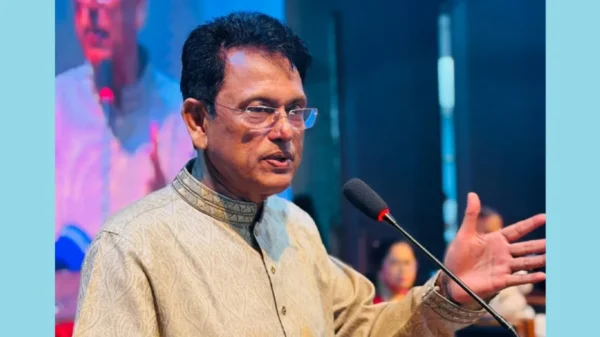
Home Minister Salahuddin Ahmed has called for maintaining the spirit of the historic July Mass Upris-ing and “Iron-clad national unity” to build a fascism-free Bangladesh.
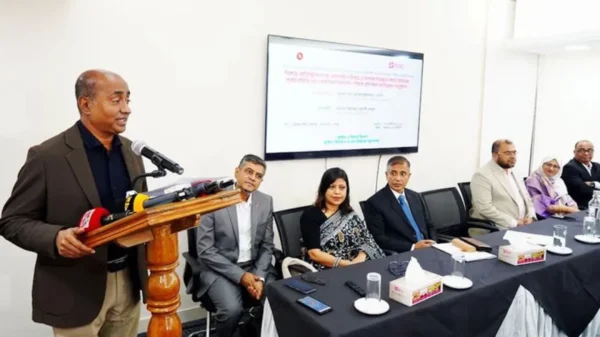
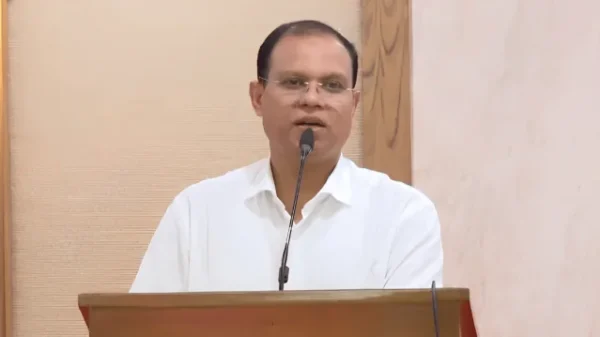
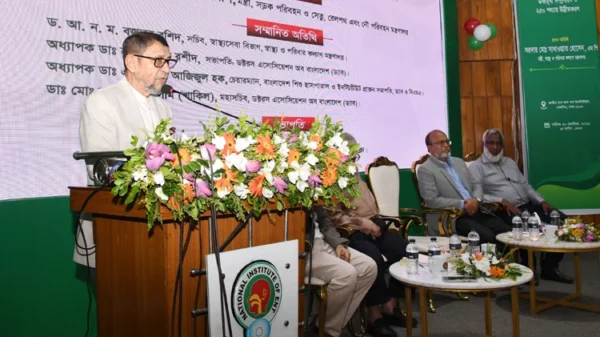
He made the call while addressing a discussion titled “Role of University Teachers in the Fall of the Fas-cist Government” as the chief guest at Nawab Nawab Ali Chowdhury Senate Building auditorium of Dhaka University (DU) yesterday afternoon, marking the second anniversary of the July Mass Uprising.
The discussion was jointly organized by the Dhaka University White Panel and the University Teachers’ Association of Bangladesh (UTAB).
Professor Dr Md Morshed Hasan Khan, convener of the Dhaka University White Panel and secretary general of UTAB, chaired the programme.
BNP Senior Joint Secretary General Ruhul Kabir Rizvi and Dhaka University Vice-Chancellor (VC) Professor Dr. ABM Obaidul Islam addressed the programme as special guests.
Salahuddin Ahmed said the victory achieved through 17 years of continuous democratic struggle and the blood of hundreds and thousands of martyrs cannot be used as a tool by any particular group to “sell its version of the spirit” of the uprising.
He called for completing democratic reforms of the state structure through democratic practices and tol-erance, without falling into provocative traps aimed at creating conditions for the resurgence of fascism.
Ahmed said the interim government formed on August 8, 2024, under Article 106 of the Constitution was the outcome of the aspirations of the country’s democracy-loving people.
The Home Minister said the fall of “fascist Sheikh Hasina” came through the student-people’s uprising against 17 years of repression, enforced disappearances, killings and deprivation of voting rights.
“The politics of the Awami League and Sheikh Hasina died in Dhaka and was buried in Delhi,” he said, adding that the people of Bangladesh could no longer be misled through politics centered on “selling the spirit” of the uprising.
“Constitutions of all democratic countries across the world have been amended over time in line with the needs and demands of society,” he said.
Similarly, he said, initiatives had been taken to amend Bangladesh’s Constitution democratically to meet the aspirations and expectations of the people following the mass uprising.
He expressed hope that the Indian government would understand the matter and stop playing the “Hasina card.”
At the program, family members of those killed during the July Uprising shared their experiences.
They included Mir Mahbubur Rahman Snigdha, brother of martyr Mir Mahfuzur Rahman Mugdho, Shafiul Alam, father of martyr Wasim Akram; Md Abu Hossain, brother of martyr Abu Sayed, and Nazma Khatun Lipi, mother of martyr Ekramul Haque Sajid.
A special honour was also presented to the family members of the martyrs in tribute to those who sacri-ficed their lives during the July Mass Uprising.
Later, the Home Minister visited a special photography exhibition organized to mark the July Uprising.
Teachers and students from different universities, social and political figures, and representatives of civil society attended the discussion.