




























ISLAMABAD, Pakistan, July 14, 2026 (Net) – Cradling an Asian koel in his hands, wildlife officer Za-heer Ahmed gently stretched its wings as part of a health checkup to rehabilitate birds hit with dehydra-tion or heatstroke in Pakistan’s capital.
Pakistan — one of the most vulnerable countries to the effects of climate change — experienced its sec-ond-warmest year since 1960 in 2025, according to government data.
Temperatures in Islamabad this summer have pushed past 40C.
“In the past, because of kite flying, the string used to damage their wings,” said Sakhawat Ali, director of the Islamabad Wildlife Management Board which oversees the Margallah Wildlife Rescue Centre in Islamabad.
“But for the last one or two years, most of the cases we have been receiving involve birds that are dehy-drated and suffering from heat stress.”
The wildlife rescue centre, located at the foot of the Margalla Hills, was once the site of the notorious Islamabad Zoo where neglected elephants and underfed lions were kept in cages.
The zoo was shuttered in 2020.
On the overgrown grounds where large dinosaur sculptures still stand, wild animals have been brought in for rehabilitation from across Pakistan, including bears and monkeys abused by their private owners.
Scientists warn that extreme weather events such as heatwaves are becoming more frequent and intense as a result of human-induced climate change.
Ahmed said the centre can receive up to 30 calls a day in summer from locals about distressed wildlife, including birds, adding that their top priorities are to provide medical attention, food and water.
The feathered creatures are kept in quarantine, sometimes for several weeks, until they are fit to be re-leased.
Birds face the heightened threat of forest fires, which can overlap with their breeding seasons, Ahmed said.
“Birds’ nests also get burned. The birds themselves also get burned a little,” says Ahmed. “So their entire habitat is being destroyed.”
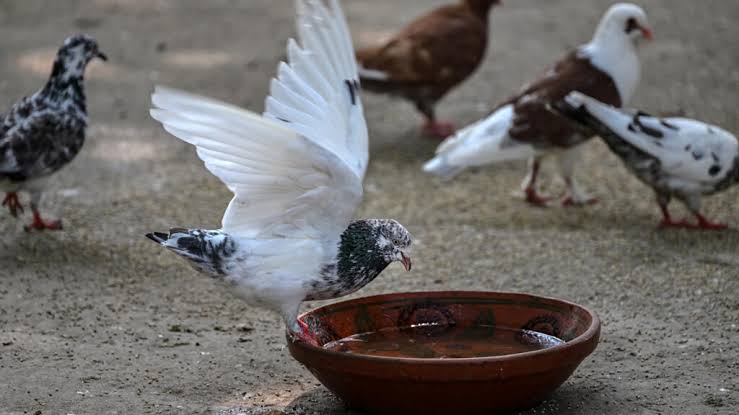
Ali encouraged residents to put out bowls of water for their friendly fowls to drink, bathe and keep cool.
The Islamabad Wildlife Management Board, a government agency, is looking into whether climate change is disrupting birds’ breeding seasons and food sources, which could diminish their populations.