

























Staff Reporter:
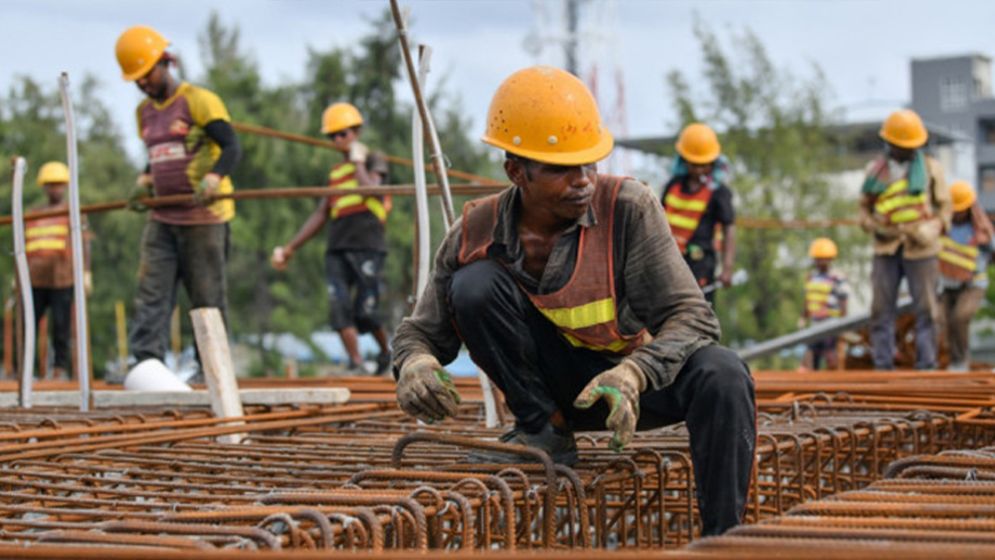
Bangladesh’s share of skilled migrant workers has remained almost unchanged over the past five years, leaving the country heavily dependent on Middle Eastern labour markets and limiting access to new global job destinations.
Migration experts say the shortage of skilled workers prevents Bangladesh from entering high-demand labour markets in other regions. As a result, potential new labour markets remain largely out of reach, creating long-term risks for the country’s overseas employment sector.
The issue has gained urgency amid growing uncertainty in the Middle East due to ongoing regional tensions. Millions of Bangladeshi migrants currently work in the region, and their remittances play a crucial role in supporting the national economy. However, experts say previous governments showed limited initiative in developing skilled manpower.
Analysts also highlight structural weaknesses in the country’s education system, which remains largely certificate-oriented. Although Bangladesh has established several technical and vocational institutions, many fail to attract students because of poor training quality and inadequate facilities.
Experts say the new government must prioritise technical and vocational education in practical terms rather than rhetoric. They suggest introducing compulsory technical training for students to prepare a skilled workforce capable of entering diverse international labour markets. Such measures could also boost remittance inflows.
Data from the Bureau of Manpower, Employment and Training (BMET) shows that 1.13 million workers went abroad in 2025. Among them, only 4 percent were professionals and 22 percent were skilled workers, while 74 percent belonged to semi-skilled or unskilled categories.
The figures show little improvement in recent years. Skilled workers accounted for 23.62 percent of migrants in 2024, while professionals made up 4.59 percent. In 2023, skilled workers represented 24 percent and professionals 4.14 percent. The proportion of skilled workers stood at 22.73 percent in 2022 and 21 percent in 2021.
Shariful Hasan, head of the migration programme at BRAC, said Bangladesh began its migration journey to the Middle East in the 1970s and still remains largely dependent on the region.
“We now send more workers to Saudi Arabia than before, but remittance from that country has not increased proportionately because most of the workers are unskilled,” he said. “Bangladeshi workers also pay some of the highest migration costs, while countries like India, the Philippines and Nepal send skilled workers at lower costs and earn more.”
He also criticised the country’s education system for focusing mainly on academic certificates instead of practical skills.
“We need compulsory technical education for all students. Our training centres exist, but they lack qualified instructors and modern equipment. As a result, students lose interest,” Hasan said, adding that Japan and several European countries offer significant labour market opportunities for skilled workers.
The Refugee and Migratory Movements Research Unit (RMMRU) also notes that Bangladesh mainly participates in semi-skilled and low-skilled labour markets, while the number of professional migrants remains very low.
Experts attribute the situation to the limited quality of training provided by BMET centres, lack of internationally recognised certifications, insufficient budget allocations and staffing shortages.
Meanwhile, rising tensions in the Middle East have heightened uncertainty for around six million Bangladeshi migrants in the region. Airspace restrictions and visa complications have already disrupted travel plans for many workers. Experts warn that a prolonged conflict could threaten jobs, reduce new migration opportunities and ultimately affect remittance inflows.
BMET statistics also highlight the heavy concentration of Bangladeshi migrants in a few countries. In 2025, about 67 percent of migrant workers — more than 754,000 people — went to Saudi Arabia. Qatar received about 10 percent, followed by Singapore with 6 percent, Kuwait with 4 percent and the Maldives with nearly 4 percent.
Migration experts say Bangladesh could diversify its labour markets if it develops a skilled workforce with international certifications and stronger language training. Countries such as Japan, which faces a severe labour shortage, have already opened opportunities in sectors including caregiving, industrial packaging, welding and automobile mechanics.
However, experts say Bangladesh still struggles to seize these opportunities because of a lack of skilled workers and language proficiency.
Migration analyst Asif Munir said policymakers often focus on sending large numbers of workers abroad rather than improving their skill levels.
“If Bangladesh sends skilled workers, the country can increase remittance even with fewer migrants,” he said. “The government should modernise training centres and emphasise language education and international certification.”