





















Staff Reporter:
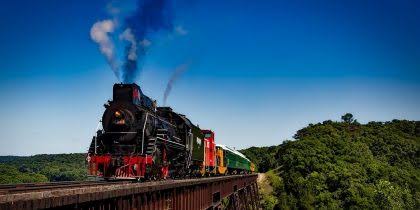
The National Railway Day is being observed yesterday across the country, highlighting the historic contribution of railways to the country’s transport system and renewed efforts to develop a safe, affordable, modern and environment-friendly rail network.
The government has undertaken a range of development initiatives focusing on expanding railway infrastructure, constructing new rail lines, procuring modern locomotives and coaches, improving passenger services and gradually bringing all districts under the railway network.
The history of railways in this region dates back to November 15, 1862, when train services began on the 53-kilometre route between Darshana in Chuadanga and Jagati in Kushtia.
Commemorating this historic journey, November 15 has been observed as the National Railway Day since 2020.
As part of its modernisation drive, the government has placed emphasis on developing Bangladesh Railway as a safe, affordable and environment-friendly mode of mass transportation.
The proposed budget for the 2026-27 fiscal year has allocated Tk 9,940 crore for the Ministry of Railways, including Tk 5,440 crore under the Annual Development Programme (ADP).
Expanding rail connectivity to all districts in phases is another key priority. Initiatives include the construction of a broad-gauge railway line from Madhukhali through Kamarkhali to Magura town and a new dual-gauge line between Bogura and Sirajganj.
Feasibility studies are also being advanced for extending rail connectivity to Sherpur and Rowmari.
Plans are also underway to extend railway services from Chaumuhani to Lakshmipur, Jhanjail to Durgapur and Sylhet to Jaflong.
To strengthen operational capacity, the Executive Committee of the National Economic Council (ECNEC), at its meeting on October 7, approved a project worth Tk 2,769.86 crore to procure 30 new metre-gauge diesel-electric locomotives.
The project, approved at a meeting chaired by Prime Minister Tarique Rahman, is scheduled for implementation between July 2026 and December 2029.
In addition, initiatives have been taken to procure 260 new broad-gauge coaches, prepare for the introduction of electric trains on the Narayanganj-Dhaka-Joydebpur route, install modern signalling systems and enhance the capacity of railway workshops.
Modernisation of major railway stations, improved facilities for women passengers, breastfeeding corners and wider use of digital technology to improve passenger services are also part of the ongoing initiatives.
Several major infrastructure projects, including the Padma Bridge Rail Link, Jamuna Railway Bridge, dual-gauge line construction on the Dhaka-Tongi-Joydebpur section, expansion of the Dhaka-Narayanganj railway route and rehabilitation of railway lines in different regions, are also expected to strengthen the country’s rail connectivity.
Despite these initiatives, Bangladesh Railway continues to face several challenges, including ageing tracks and locomotives, manpower shortages, accidents at level crossings, train delays and lengthy project implementation processes.
Improving passenger services, ensuring railway safety and increasing the railway’s share in freight transportation remain important priorities.
Railway officials and concerned stakeholders believe that planned infrastructure development and greater use of modern technology could further enhance the railway’s contribution to the national economy, trade and connectivity.
Rail transport can also help ease pressure on roads while reducing transportation costs and environmental pollution.
On the National Railway Day, the expectation is that timely implementation of the ongoing development initiatives will transform Bangladesh Railway into a more modern, safe, efficient and passenger-friendly transport system, ensuring accessible rail connectivity for people across the country.