































Staff reporter:
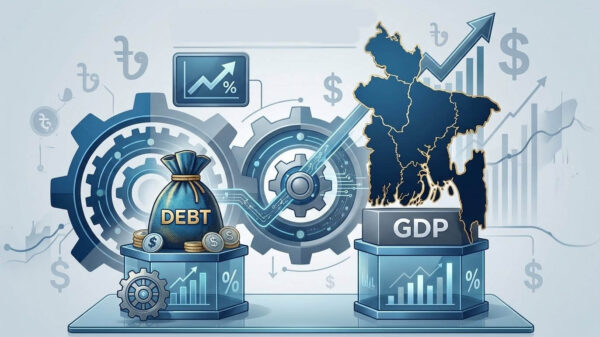
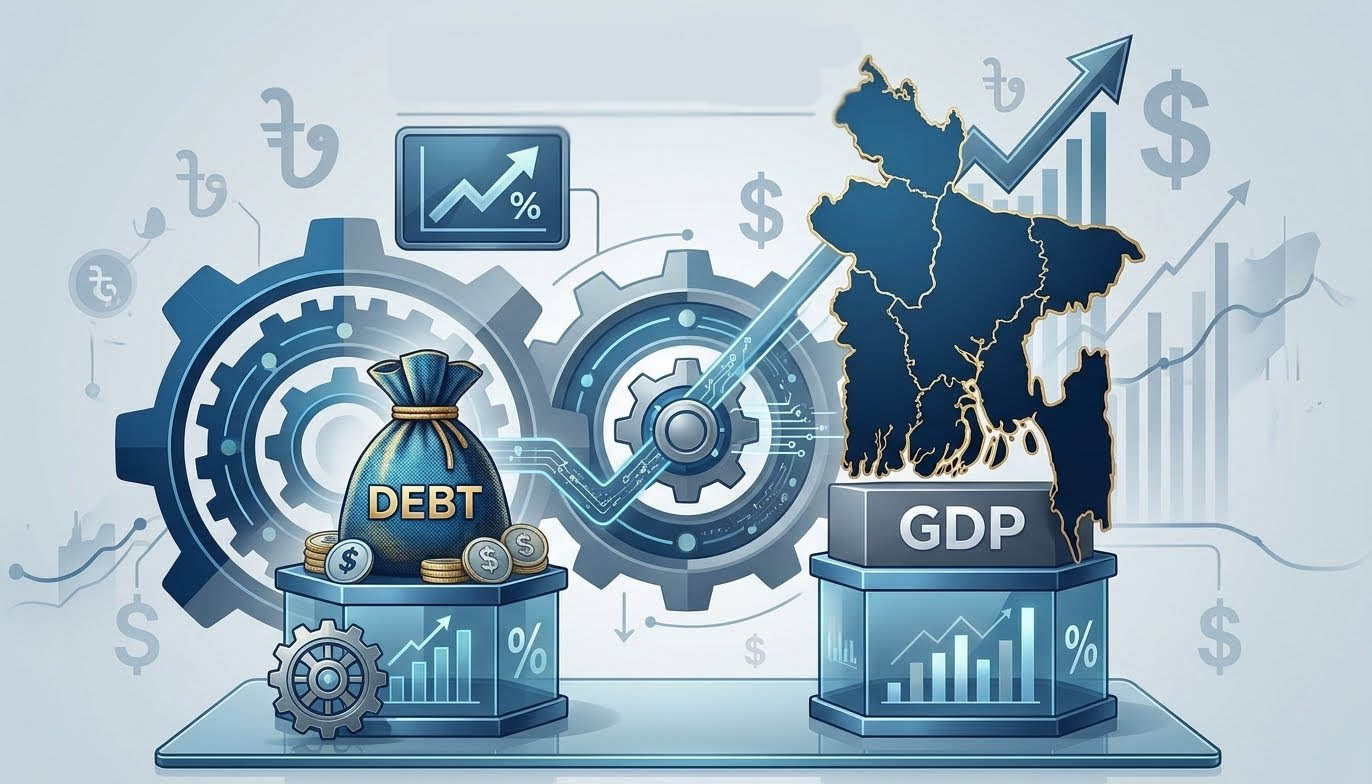
Bangladesh’s government debt-to-GDP ratio is projected to remain significantly lower than those of India, Pakistan and several other South Asian countries, highlighting the country’s relatively moderate public debt burden amid challenging global economic conditions.
According to the IMF-based figures for 2026 provided in the dataset, Bangladesh’s government debt is estimated at around 40 percent of gross domestic product (GDP), compared with around 83 percent for India, around 70 percent for Pakistan, around 95 percent for Sri Lanka, around 131 percent for the Maldives and around 116 percent for Bhutan.
Nepal’s ratio is projected at around 49.36 percent.
The comparison places Bangladesh in a relatively favourable position among several major South Asian economies in terms of government debt relative to the size of their economies.
The figures indicate that Bangladesh’s projected debt ratio is less than half of India’s and substantially below those of Pakistan and Sri Lanka.
The gap is even wider compared with the Maldives and Bhutan, where government debt is projected to exceed the size of annual economic output.
The figures are based on the IMF-related dataset supplied for this comparison. They should be interpreted as estimates or projections for 2026 rather than final audited outcomes.
A comparatively lower debt-to-GDP ratio can provide a country with greater flexibility to finance essential public services, infrastructure, education, healthcare and other development priorities, provided that borrowing remains sustainable and public resources are used efficiently.
For Bangladesh, maintaining this relative position will depend on strengthening revenue mobilisation, improving expenditure efficiency, expanding productive investment and ensuring that new borrowing generates adequate economic and social returns.
The comparison also highlights the importance of managing debt-servicing costs, particularly as governments across the region face pressure to finance development needs while responding to inflation, external economic uncertainty and competing demands on public spending.