





















Staff Reporter:
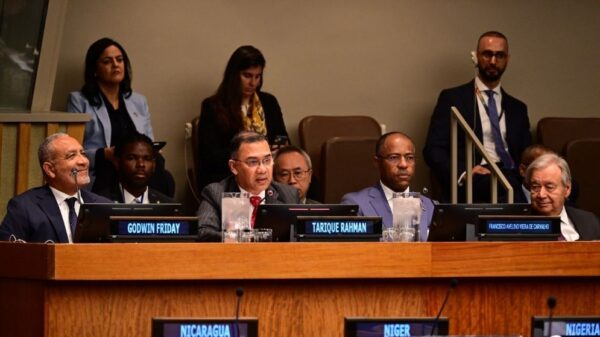
The political atmosphere in Bangladesh is currently tense and stifling. On 12 February, through a free, fair, and neutral election, the BNP formed the government under the leadership of Tarique Rahman. The BNP assumed the responsibility of running the country under adverse conditions. Due to the misrule, flawed policies, and corruption of the Yunus government, the country’s economy is in crisis. The private sector is on the verge of destruction. Thousands of factories are closed, leaving hundreds of thousands of workers unemployed. New investment has halted due to lawsuits and harassment against business owners.
The law and order situation has collapsed. Public life is disrupted by mob violence and the rampage of teen gangs. Inflation has risen, driving the prices of daily essential commodities beyond the reach of common people. Instability in the administration, anarchy in educational institutions, and social turmoil are at their peak. It was amid such a dire situation that the BNP government assumed power. Just a few days after the formation of the BNP government, the Iran War broke out. Global energy supplies were disrupted, and fuel prices surged rapidly. The Iran War triggered a worldwide economic crisis.
The BNP government immediately faced a harsh reality. The government initiated all-out efforts to tackle both inherited problems and global crises. The Prime Minister has been working day and night to resolve these issues. Everyone knows and understands that an overnight recovery from such a situation is impossible. Yet, some are vocal in criticizing the seven-month-old government. Certain circles are attempting to blame the government irrationally. A few political parties are publicly declaring that the government cannot be given much time. A section of civil society has resumed its old game of seizing power. At a time when unity and a peaceful environment are needed to resolve the national crisis, attempts are being made to create instability in the country. These signs are familiar to the people of Bangladesh. In the past, artificial instability was engineered to hinder democracy and depoliticize the nation. By creating a similar situation, a military-backed civil government seized power in 2007.
Is such a situation emerging suddenly, or is it being intentionally engineered? To find the answer, we must look back a little. If we look at the picture of Bangladesh in late 2006, it closely resembles today’s scenario. In late 2006, political parties were pitted against each other, engaging in bloody violence for power. Across the country, trade and commerce were brought to a standstill through blockades of roads and railways and various political programs. At that time, members of civil society went all out to inflame conflict between the two sides. Their divisive writings and statements on television and in newspapers confused the nation. A certain circle provoked political parties toward conflict rather than compromise, aiming to create a complex situation in the country. Taking advantage of this opportunity, the 1/11 government led by Dr. Fakhruddin Ahmed seized power. The actions taken by the 1/11 government immediately after taking power to destroy the country and pursue depoliticization made it clear that the events occurring in Bangladesh from late 2006 onward were entirely planned and deliberate—a meticulous execution of a blueprint. Is the same thing happening again?
Bangladesh’s civil society seeks opportunities to seize power whenever possible. To achieve this, they create political divisions and speak out against elected governments. However, Bangladesh’s experience with two civil-led governments has not been pleasant.
The 1/11 government led by Dr. Fakhruddin in 2007 had three main agendas. The first goal was to create divisions within politics and, through those divisions, incite terrorism and violence to fuel public aversion to politics. The second agenda of the 1/11 government was to destroy the economy, making the country self-reliant-deficient and dependent on foreign loans, forcing us to act as slaves to donors. The mission of the key players of 1/11 was to harass patriotic businessmen and industrialists who create employment for millions, ruining their image through false cases and media trials, thereby stagnating and destroying the economy. Thirdly, they aimed to establish long-term rule by a civil society loyal to foreign powers. The country would run not by the will or interests of the people, but according to the prescriptions of influential foreign actors. The civil rulers would act as the “trusted managers” of foreign masters.
Now, let us analyze the position of the interim government led by Dr. Muhammad Yunus in light of the actions of the 2007 Fakhruddin government. Just as Dr. Fakhruddin Ahmed’s government initiated depoliticization and attempted to create divisions among political parties, the Yunus government did the exact same thing.
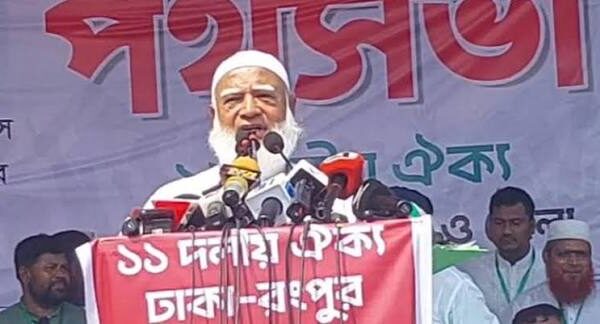
The primary objective of the “National Consensus Commission” formed by Dr. Yunus was to create permanent political division rather than seeking unity. The Yunus government’s deception regarding the July Charter and its unauthorized referendum created unresolved political issues in the country. The Yunus government had no legal authority to reform the constitution, as constitutional amendments are impossible without parliament. Yet, Yunus deliberately put forward proposals for fundamental constitutional amendments. Consequently, the BNP, NCP, and Jamaat are now facing off against one another, with Jamaat and NCP launching movements. The question is: why did Yunus do this? The reason is clear. Yunus wanted to remain in power for a long time. He himself stated that the people wanted his government to stay in power for 50 years. However, boundless corruption, incompetence, and misrule generated widespread public discontent. In this context, despite his reluctance, Yunus called an election under international pressure. But to ensure that democracy and political stability would not take root in Bangladesh, Yunus left behind several bizarre constitutional amendment proposals. Now, opposition parties have fallen into Yunus’s trap and called for untimely movements, whether knowingly or unknowingly. Power-hungry members of civil society stand to gain from these movements. Opposition political leaders must realize that the government has only just begun its journey. In a democracy, any problem can be resolved through mutual dialogue—that is the beauty of democracy. If opposition leaders observe carefully, they will see that those in civil society who are desperate to find fault with the new government were all beneficiaries of the Yunus government. They did not criticize the Yunus government for a year and a half. Why should political parties become partners in the conspiracy to install another unelected government in Bangladesh?
The government must also remain vigilant in this regard and raise public awareness. Everyone must realize that an elected government is far better than an unelected one.