















Staff Reporter:
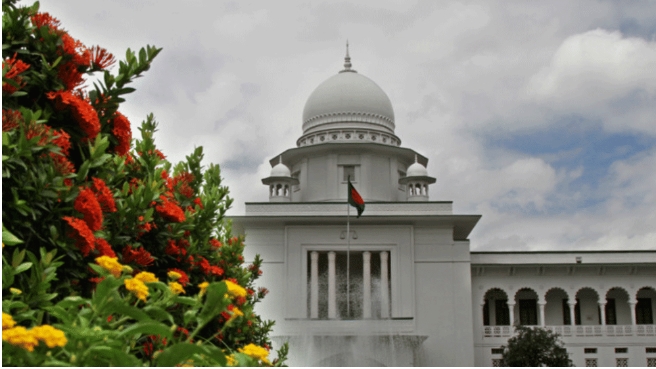
The Appellate Division of the Supreme Court on Thursday upheld a High Court verdict declaring several provisions of the Constitution’s 15th Amendment, including the abolition of the caretaker government system, to be unlawful, effectively restoring the caretaker government and referendum provisions to the Constitution.
A four-member bench of the Appellate Division headed by Chief Justice Zubayer Rahman Chowdhury delivered the verdict at around 9:30am.
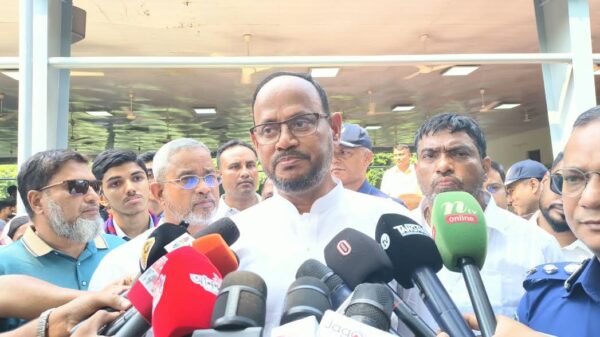
Following the ruling, Attorney General Ruhul Quddus Kajal said in a post on his verified Facebook account that the appeal against the High Court judgment on the 15th Amendment had been dismissed.
He said the Appellate Division upheld the High Court’s ruling, resulting in the annulment of Article 7B of the Constitution, the reinstatement of the caretaker government system and the constitutional provision for referendums, while affirming that only the Supreme Court has the authority to enforce fundamental rights.
The attorney general added that the parliament would decide on the other changes introduced through the 15th Amendment.
During the hearing, senior advocate Sharif Bhuiyan represented the appeal filed by Dr Badiul Alam Majumdar. Senior advocate Mohammad Shishir Manir appeared on behalf of Jamaat-e-Islami, while Barrister ASM Shahriar Kabir represented freedom fighter Mofazzel Hossain.
Earlier on 11 December 2025, a six-member bench of the Appellate Division, headed by the then Chief Justice Dr Syed Refaat Ahmed, had adjourned the hearing after holding hearing in the apex court on several other days.
The 15th Amendment, which was incorporated in 2011, had brought changes to 54 provisions of the Constitution.
BNP, Jamaat-e-Islami, five eminent citizens, Shujan Secretary Dr Badiul Alam Majumder, and Freedom Fighter Md Mofazzal Hossain from Naogaon filed writ petitions in August 2024, challenging the legality of the Amendment.
On 17 December 2024, the High Court had declared some provisions of the 15th Amendment unconstitutional, including those abolishing the caretaker government system, and reinstated the provision for referendum in the Constitution.
However, the HC did not strike down the amendment as a whole. Provisions such as the recognition of the Father of the Nation and the declaration of 26 March were left for parliament to retain in line with public sentiment.
Against this backdrop, the writ petitioners filed separate appeals, seeking full annulment of the 15th Amendment.
However, Dr Sharif Bhuiyan said that if the entire 15th Amendment were repealed, some problems may arise, saying, “The court can provide protection for those issues that create problems. We can say these things in court.”