






















Israel and Hezbollah agreed a ceasefire on Friday, a US official said, after deadly exchanges between the two sides in Lebanon once again put a deal to end the Middle East war under strain, less than two days after it was signed.
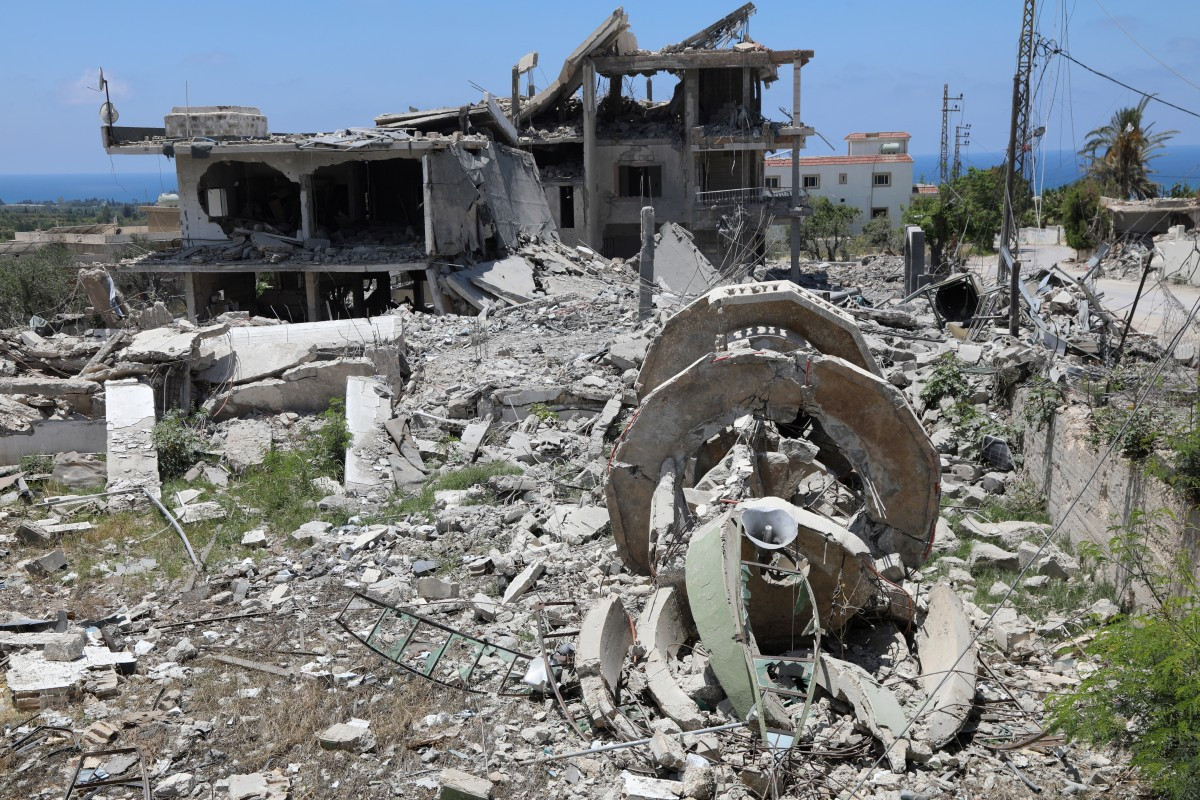
Lebanese authorities reported 47 people were killed in Israeli airstrikes and Israel announced the deaths of four of its soldiers, the highest combined casualty count since the US and Iran struck their deal.
Talks that were scheduled to take place between the US and Iran in Switzerland to build on the deal and work towards a lasting settlement were postponed, with no new date announced, but US Secretary of State Marco Rubio and Lebanon’s President Joseph Aoun held a call.
The Lebanese presidency said Aoun thanked Rubio for US support but stressed “the need for Israeli at-tacks on Lebanese territory to cease through the achievement of a comprehensive ceasefire”.
Rubio, according to the US State Department, insisted on the importance of Lebanon carrying through on its efforts to disarm the Hezbollah armed group, which is fighting Israel in the south of the country.
“They discussed the next round of negotiations, scheduled for June 23 to 25 in Washington, where the two sovereign governments will make progress toward a lasting peace,” a spokesman said. “Secretary Rubio reiterated the need to disarm Hezbollah and to re-establish control over all Lebanese territory.”
Israel’s ambassador to the United States, Yechiel Leiter, insisted in a social media post that Israel was committed to an immediate ceasefire in Lebanon, but only “if Hezbollah honours the agreement and ceases its hostilities”.
The deal signed this week by President Donald Trump and his Iranian counterpart Masoud Pezeshkian aims to end a war that began on February 28 with US-Israeli strikes that killed supreme leader Ayatollah Ali Khamenei.
The agreement was also meant to halt the fighting in Lebanon, which Iran has always insisted should be covered under any accord, turning Israel’s ongoing campaign there into a source of frustration for Wash-ington.
Israel’s military said Friday that it had struck more than 80 Hezbollah targets in Lebanon and killed doz-ens of members of the Iran-backed group.
‘Permanent war’ –
But a US official told AFP a truce between Israel and Hezbollah, beginning immediately, had been bro-kered by US and Qatari mediators following talks with Israel and Iran. A Gulf diplomat confirmed the ceasefire.
Even after the truce was announced, Lebanese state media reported an Israeli airstrike on the country’s south in the Jezzine region.
Leiter, however, denied this, saying: “At 11:30 this morning, Israel halted all offensive operations; Hez-bollah and Iranian claims to the contrary are bold lies.”
A previous truce nominally agreed in April did nothing to stop attacks by either side, and Prime Minister Benjamin Netanyahu had said just hours earlier that the Israeli army would make Iran-backed Hezbollah pay a “heavy price” for its attacks.
Far-right Israeli National Security Minister Itamar Ben Gvir went even further, saying after the soldiers’ deaths that “all of Lebanon must burn”.
Iran’s Foreign Minister Abbas Araghchi accused Israel of only being interested in “permanent war”.
‘No urgency’ –
Preparations had been made to host Iranian and US delegations led by Tehran’s top negotiator Moham-mad Bagher Ghalibaf and US Vice President JD Vance at the Swiss resort of Burgenstock, overlooking Lake Lucerne.
The talks were due to kick off a two-month period of negotiations to discuss outstanding issues not cov-ered by the initial deal, notably Iran’s nuclear programme.
Switzerland’s foreign ministry confirmed the discussions had been postponed but said it “remains ready to facilitate these talks”.
Iranian foreign ministry spokesman, Esmaeil Baqaei, said there was “no urgency to hold the meeting” but that it was planned “in the coming days”
48 hours notice –
A key aspect of the deal was the immediate re-opening of the Strait of Hormuz, the key shipping bottle-neck whose closure caused global energy prices to rise.
A total of 25 commercial vessels crossed the newly-reopened strait on Thursday, the highest number since mid-April, according to data from maritime tracking firm AXSMarine published on Friday.
American forces on Thursday lifted their parallel naval blockade of Iranian ports, the US military said, noting that American warships “will remain in the general area”.
Iran’s maritime authority said on Friday that all ships seeking to cross the Strait of Hormuz should sub-mit a transit request “48 hours in advance”, despite its reopening.–Net