


























A Correspondent:
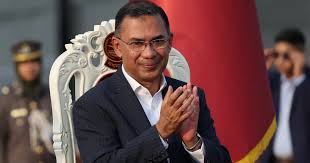
Khulna’s once-thriving industrial belt is witnessing renewed prospects for investment, production and employment as the government moves to reopen several long-closed state-owned jute mills under private management, fulfilling a major electoral pledge of Prime Minister Tarique Rahman.
Within nine months of assuming office, the government has leased several closed mills to private entrepreneurs, while some factories have already resumed production and others are undergoing renovation or preparing to launch new industrial ventures.
The initiatives have raised hopes of restoring economic activities in the Khalishpur-Daulatpur industrial zone, which once served as a major industrial hub of the country.
For decades, thousands of workers depended on state-owned jute mills in Khalishpur, Daulatpur, Atra and Dighalia. The factories produced yarn, hessian, sacks and other jute goods, supporting the livelihoods of workers and businesses across the region.
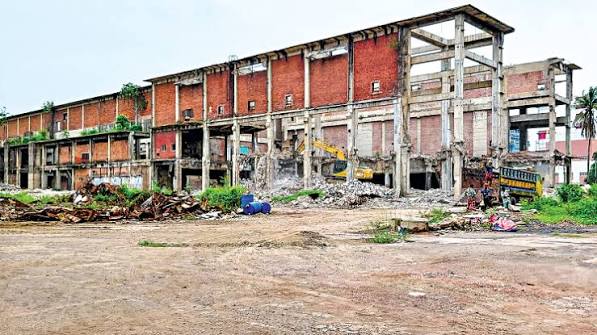
However, the then Awami League government shut down all 25 state-owned jute mills under the Bangladesh Jute Mills Corporation (BJMC) on July 1, 2020, citing mounting losses and maintenance costs. The closure left thousands unemployed and brought industrial activities in the area to a virtual standstill.
The present government has taken initiatives to lease the closed mills to private entrepreneurs to attract investment, resume production and create employment.
An assessment of the leased factories shows that production of jute goods has resumed at Jashore Jute Industries (JJI) and Carpeting Jute Mills in Rajghat of Jashore and Eastern Jute Mills in Atra of Khulna.
At Khalishpur Jute Mills, leased to Radiant Pharmaceuticals, production has started in one of its three units under the name of Radiant Jute Mills Limited. Renovation and preparatory work are underway at the remaining two units.
Towhid Faraz, accounts lead and finance and accounts officer of the company, told BSS that production began in the current fiscal year.
“Around 700 people have already been employed, and another 700 to 800 jobs are expected to be created once the factory becomes fully operational,” he said.
He said production was being expanded gradually, creating employment opportunities for local people.
The reopening has brought relief to former workers who struggled to support their families after the mill’s closure.
Talking to BSS, Kohinoor Begum, 42, a female worker at the factory, said her family had faced severe hardship following the closure and had sometimes been forced to beg for food. She was now able to work again and support her family, he added.
Another worker, Soleman, said many former employees had taken up rickshaw and pushcart pulling to survive, but their earnings were insufficient to meet family expenses. He expressed hope that production would expand further.
Meanwhile, Daulatpur Jute Mills was leased to UniWorld Footwear Technology. However, the factory has reportedly remained laid off since February 26, 2026, with only 13 officers and employees working there.
Crescent Jute Mills in Khalishpur was leased to Biswas Poultry and Fish Feeds. The company is installing machinery to produce flour, semolina and pulses instead of traditional jute goods.
Mohammad Shamim, project manager of the company, said machinery installation and other preparatory work were underway. Production is expected to begin within two months, subject to completion of the work, creating jobs for more than 100 people.
At the historic Platinum Jubilee Jute Mills, leased to HAMKO Group on August 18, 2026, plans are underway to manufacture batteries, mattresses, pillows, foam products and electric bikes alongside jute goods.
Contacted, A T M Mostafa, managing director of HAMKO Group, said work at the factory was progressing rapidly. The company plans to establish its head office there and set up several manufacturing units.
He said discussions had also been held with representatives of a Chinese company over the proposed industrial ventures. The group is considering giving recruitment priority to women from Khulna.
Star Jute Mills in Dighalia was leased to PRAN Group on October 12, 2026. Renovation work is underway, although the company has yet to announce a specific date for large-scale production.
Employment figures also indicate renewed activity at some factories. According to available information, Carpeting Jute Mills has 378 workers and 25 officers and employees, while Eastern Jute Mills has 605 workers and 25 officers and employees. Crescent Jute Mills reportedly employs 50 workers and 64 officers and employees. Several hundred people have also been employed at the operational unit of Khalishpur Jute Mills.
Experts said reopening factories and attracting investment were positive developments for Khulna’s industrial economy.
However, they cautioned that establishing industries unrelated to jute on former jute mill premises should not automatically be considered a revival of the traditional jute industry.
They said new ventures in batteries, electric bikes, foam, flour and pulses could generate employment, but their contribution to jute growers, traders and the jute-based economy needed to be assessed separately.
Expanding jute production, diversifying jute products and ensuring market access would be essential to restoring the industry’s former economic significance, they added.
Whip of Jatiya Sangsad and Khulna-3 lawmaker Rakibul Islam Bakul said the government’s commitment to reopening mills closed during the previous regime had been fulfilled.
“Prime Minister Tarique Rahman has already taken initiatives to reopen the closed mills in this region. The owners are working to resume their factories quickly so that more workers can get employment,” he said.
He expressed hope that Khulna’s industrial zone would soon regain its previous vibrancy.
During the election campaign ahead of the 13th parliamentary election, BNP Chairman Tarique Rahman pledged at a rally at Khalishpur Probhati School ground to revive the industrial zone. After winning the February 12 election and becoming Prime Minister, he initiated steps to reopen the city’s mills and factories.
According to BJMC, the government signed lease agreements with two private business groups on August 11, 2026, to reopen three long-closed state-owned jute mills.
Under the agreements, PRAN-RFL Group secured National Jute Mills in Sirajganj and Star Jute Mills in Khulna, while HAMCO Group took over Platinum Jubilee Jute Mills.
The three mills are expected to generate at least 11,629 jobs, attract around Tk 619 crore in investment and achieve a combined annual turnover of about Tk 1,175 crore once fully operational.
The government has decided to reopen 20 of the 25 closed BJMC mills under private management through leasing arrangements. So far, leases for 14 mills have been completed and possession handed over to the lessees, with production already resumed at nine, BJMC officials said.