














Staff Reporter:
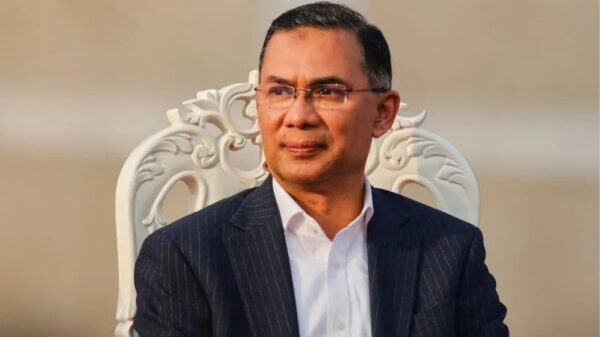
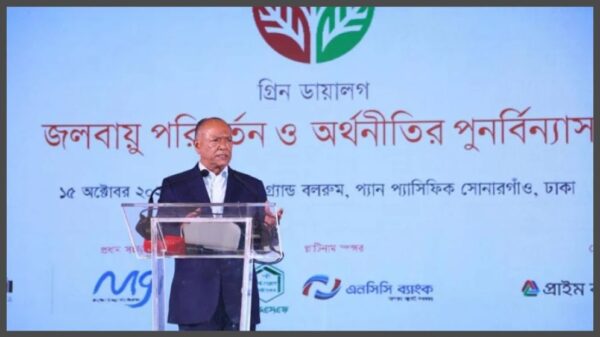
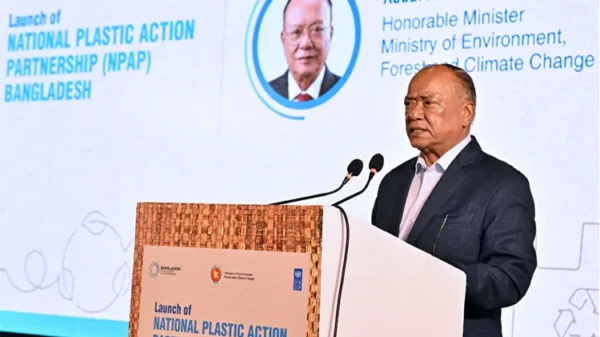
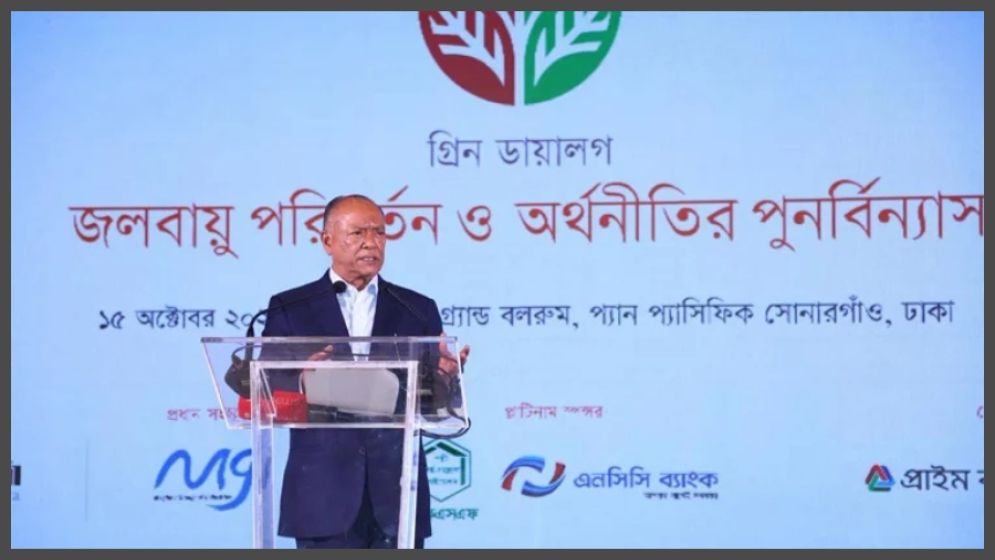
Environment, Forest and Climate Change Minister Abdul Awal Mintoo today said Bangladesh must make its economy more resilient to tackle the impacts of climate change.
“Climate change is no longer a future concern; it has become a real challenge for the country’s economy, agriculture, industry and people’s lives,” he said.
The minister made the remarks as the chief guest at a discussion titled “Green Dialogue: Climate Change and Economic Restructuring”, organised by Bangla Daily Bonik Barta at Hotel Sonargaon in the capital, said a handout.
Rising temperatures, floods, droughts and salinity are reducing productivity and creating new risks for economic activities, he said, stressing the need to build a climate-resilient economy, make advance preparations and strengthen adaptation and preventive measures to tackle these risks.
Highlighting the country’s economic situation, Mintoo said Bangladesh is currently facing various challenges, including slowing growth, inflation, investment constraints and pressure on the energy sector.
According to the World Bank’s updated forecast, Bangladesh’s economic growth could reach 3.4 percent in the 2025-26 fiscal year, he said.
Although the figure was not a final estimate, the prevailing situation has further highlighted the need to strengthen economic resilience, the minister said, adding that climate change-related losses and damage could put additional pressure on the economy.
“Therefore, climate risks must be considered seriously in economic planning and development activities,” he said.
Highlighting the importance of agriculture, Mintoo said the sector is one of the main pillars of the country’s food security, rural employment, poverty reduction, market stability and social protection.
Although irrigation facilities have improved in the country, agriculture remains largely dependent on weather conditions, he said, adding that as a result, climate-related changes, including excessive rainfall, droughts, floods and rising salinity, posed major risks to agricultural production.
Timely adaptation strategies and preventive measures must be adopted to reduce these risks, the minister added.
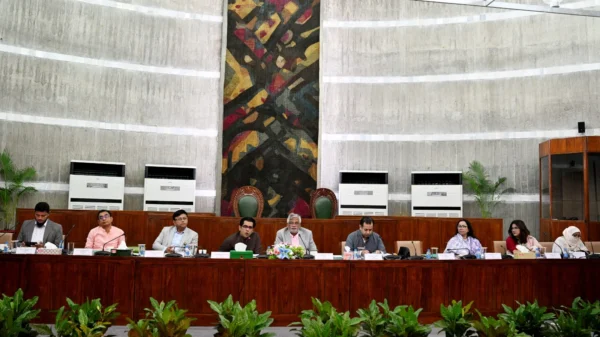
Prime Minister’s Special Assistant on Environment, Forest and Climate Change Affairs Dr Md Saimum Parvez spoke at the event as the guest of honour while lawmakers Nayab Yusuf Ahmed, Md Abdul Mannan and Sultana Jesmen were present.
Bonik Barta Editor and Publisher Dewan Hanif Mahmud moderated the panel discussion while participants included Meghna Group of Industries Chairman and Managing Director Mostafa Kamal; TK Group Director Mohammad Mustafa Haider; United Commercial Bank PLC Chairman and Ananta Group Managing Director Sharif Zahir; Palli Karma-Sahayak Foundation Managing Director Md Fazlul Kader; HAMS Group Managing Director Engineer Shafiqul Rahman; Centre for Policy Dialogue Distinguished Fellow Dr Fahmida Khatun; and Infrastructure Development Company Limited (IDCOL) Acting Managing Director SM Monirul Islam.
During the panel discussion, speakers emphasised environmentally friendly industrialisation, the expansion of renewable energy, improved energy efficiency, climate financing, sustainable agriculture and stronger public-private partnerships.
They also highlighted the need for long-term planning and effective policy support to address the economic losses caused by climate change.
At the event, HAMS Garments Limited and Infrastructure Development Company Limited (IDCOL) received recognition for their special contributions to environmentally friendly industrialisation and climate financing.
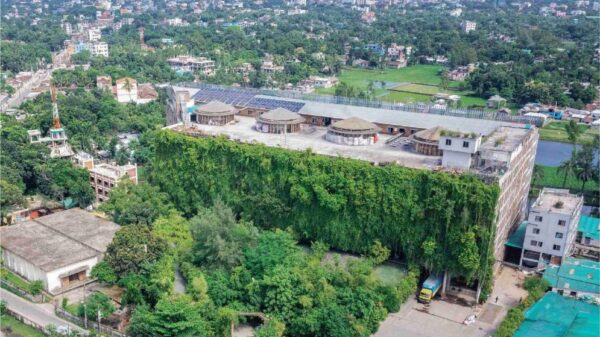
HAMS Garments achieved a score of 108 out of 110 under the international LEED Platinum certification, securing a leading position globally, according to the statement.
IDCOL was recognised for bringing US$23 million in carbon revenue into the country in return for reducing carbon emissions through solar home systems.
Environment Minister Abdul Awal Mintoo and other invited guests handed over the crests to representatives of the two organisations.
More than 400 representatives from government policymaking bodies, economic institutions, industries, environmental and development organisations, and public and private institutions attended the event.