
























Staff Reporter:
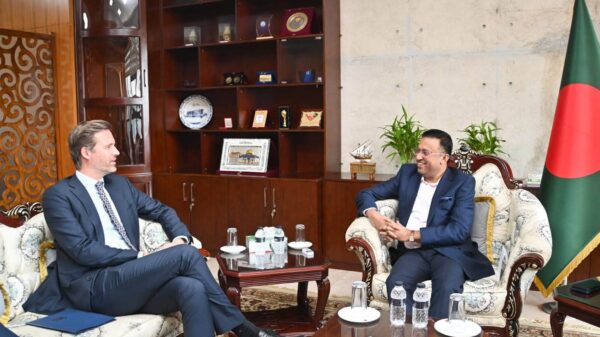
Health and Family Welfare Minister Sardar Md Sakhawat Hussain said the government is committed to gradually raising the allocation for the health sector to five percent of GDP and recruiting 25,000 midwives in the public healthcare system within the next few years.
“Midwives play a vital role in ensuring safe, dignified and life-saving healthcare for every mother and newborn. Through their services, the quality of antenatal care, safe delivery, emergency medical referrals and postnatal care can be improved,” he said.
The minister said while speaking at a minister-level roundtable titled “Accelerating Midwifery and South-South Partnerships for Health Security: From Crisis to Resilience” in Berlin, Germany, yesterday.
The government of Bangladesh considers investment in midwives not as an expenditure but as an effective national investment in reducing maternal and newborn deaths and lowering overall healthcare costs, he said.
“Infrastructure at 62 educational institutions in the country is being modernised to improve the quality of midwifery education,” Sakhawat said, adding that initiatives have also been taken to introduce hands-on training, simulation-based education and technology-driven learning systems.
He further said regional cooperation is extremely important to address the shortage of health workers. To this end, Bangladesh is strengthening knowledge exchange, faculty exchange and joint training programs with Nepal and Pakistan, he continued.
The minister appreciated the contributions of development partners, particularly the United Nations Population Fund (UNFPA), to expanding maternal and reproductive healthcare services.
Referring to the important role of midwives during climate-related disasters and humanitarian assistance operations for the Rohingyas in Cox’s Bazar, he said they are working on the front lines to ensure continuity of life-saving maternal healthcare services even during crises.
“The government of Bangladesh is committed to continuing efforts to enhance the skills of midwives and invest in them to protect women, children and the country’s future economy,” Sakhawat added.