






























Staff Reporter
State Minister for Foreign Affairs Humaiun Kobir has said Bangladesh’s foreign policy must be guided
by national interest, combining strong international partnerships with strategic autonomy while avoiding
dependency.
“We want strong partnership, but we also want strategic autonomy. We want cooperation, but we do not
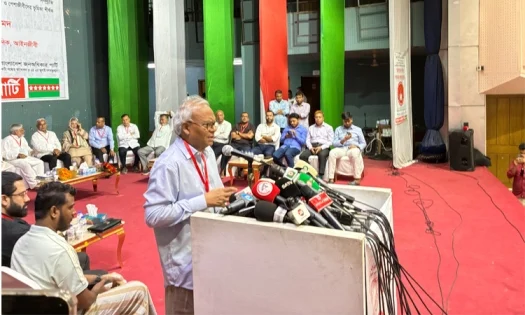
want dependency,” he said while addressing the concluding day of the Bay of Bengal Conversation at
Hotel Sonargaon yesterday.
“Bangladesh’s foreign policy must serve Bangladesh’s national interests,” he added.
Kobir said serving the national interest means protecting the country, safeguarding its security, expanding
economic opportunities and creating the external conditions necessary for national development.
Bangladesh’s approach, he said, is to engage with all countries on the basis of mutual respect, mutual
benefit and national interest.
The state minister said the world is changing rapidly as power shifts, technology transforms statecraft and
economic competition becomes increasingly strategic.
For Bangladesh, he said, these changes create both challenges and opportunities, requiring foreign policy
to do more than merely respond to developments.
“Our foreign policy must therefore do more than respond to change. It must help Bangladesh shape the
future,” he said.
Referring to intensifying strategic competition among major powers, Kobir said Bangladesh does not
view international relations as a choice between competing camps.
“Our policy is not to choose sides. Our policy is to choose what is best for the national interest of
Bangladesh,” he said.
“Where interests converge, we will cooperate. Where opportunities exist, we will engage. Where
differences arise, we will manage them through dialogue and diplomacy,” he added.
Kobir described the approach as “strategic maturity in an age of competition.”
He said Bangladesh maintains important relationship with major powers and regional partners with each
relationship having its own characteristics and importance.
Turning to the Indo-Pacific, Kobir said the Bay of Bengal is increasingly at the centre of geopolitical and
economic transformation and Bangladesh must turn its geographical position into a strategic opportunity.
“The Bay of Bengal connects South Asia and Southeast Asia. It connects major markets, vital sea routes
and growing economies,” he said.
“We want the Bay to remain a space of peace, stability and cooperation. We do not want it to become a
theatre of confrontation by any means,” he added.
Kobir said Bangladesh would use its presidency of the 81st session of the United Nations General
Assembly to again raise the profile of the Rohingya issue on international multilateral platforms.
The government would also intensify bilateral engagement with development partners in the region and
beyond while seeking greater financial and political support for resolving the crisis, he said.
“The ultimate objective must be the safe, voluntary, dignified and sustainable return of the Rohingya
people,” he added.